Your agent pilot probably looked safe while it stayed in advisory mode. The harder question starts when someone asks whether it can take live action, such as updating a live system, sending a customer email, approving an exception, or changing a record without creating an audit problem. An AI agent governance framework gives technology leaders policies and controls for agent behavior, with approval paths, runtime boundaries, and logs that support enterprise oversight, especially when agents move from recommendations into action.
This ranking compares three framework approaches for secure enterprise deployment. Each option is judged on auditability and control, plus predictability and fit with complex enterprise systems, because governance only matters if it holds up at the point where an agent can change something real.
What is an AI agent governance framework?
AI agents are different from conventional automation because they can plan and reason before taking action through large language models, which creates non-deterministic, path-dependent behavior. That gives them much of their value, but it also creates the governance problem: the same goal can produce different action paths based on context and tools, as well as prompts, retrieved data, and intermediate decisions.
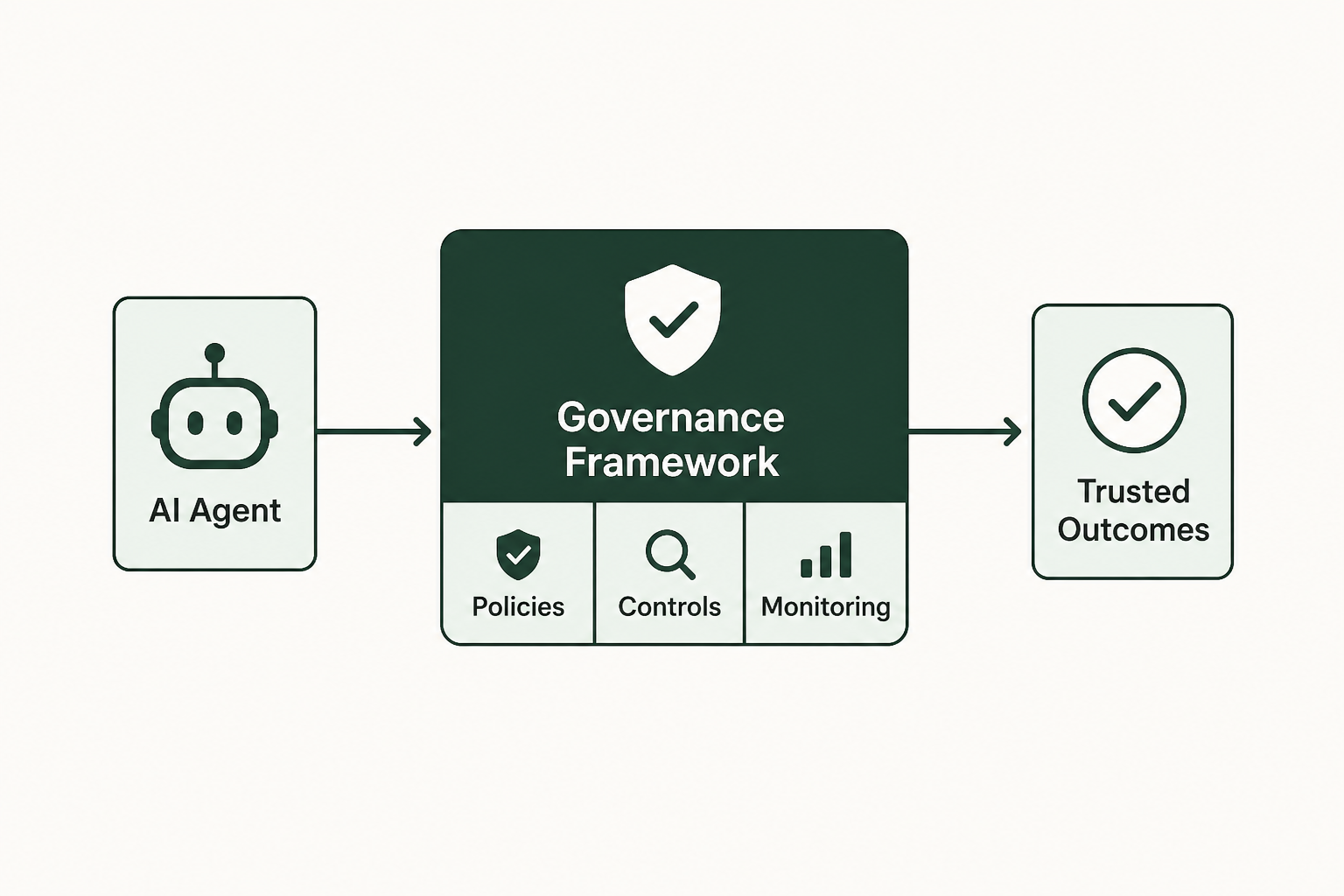
In practical terms, a governance framework defines what the agent may do and how actions are checked. It also defines who approves exceptions, what gets logged, and how the enterprise proves what happened later. It is closer to an operating control system than a policy memo.
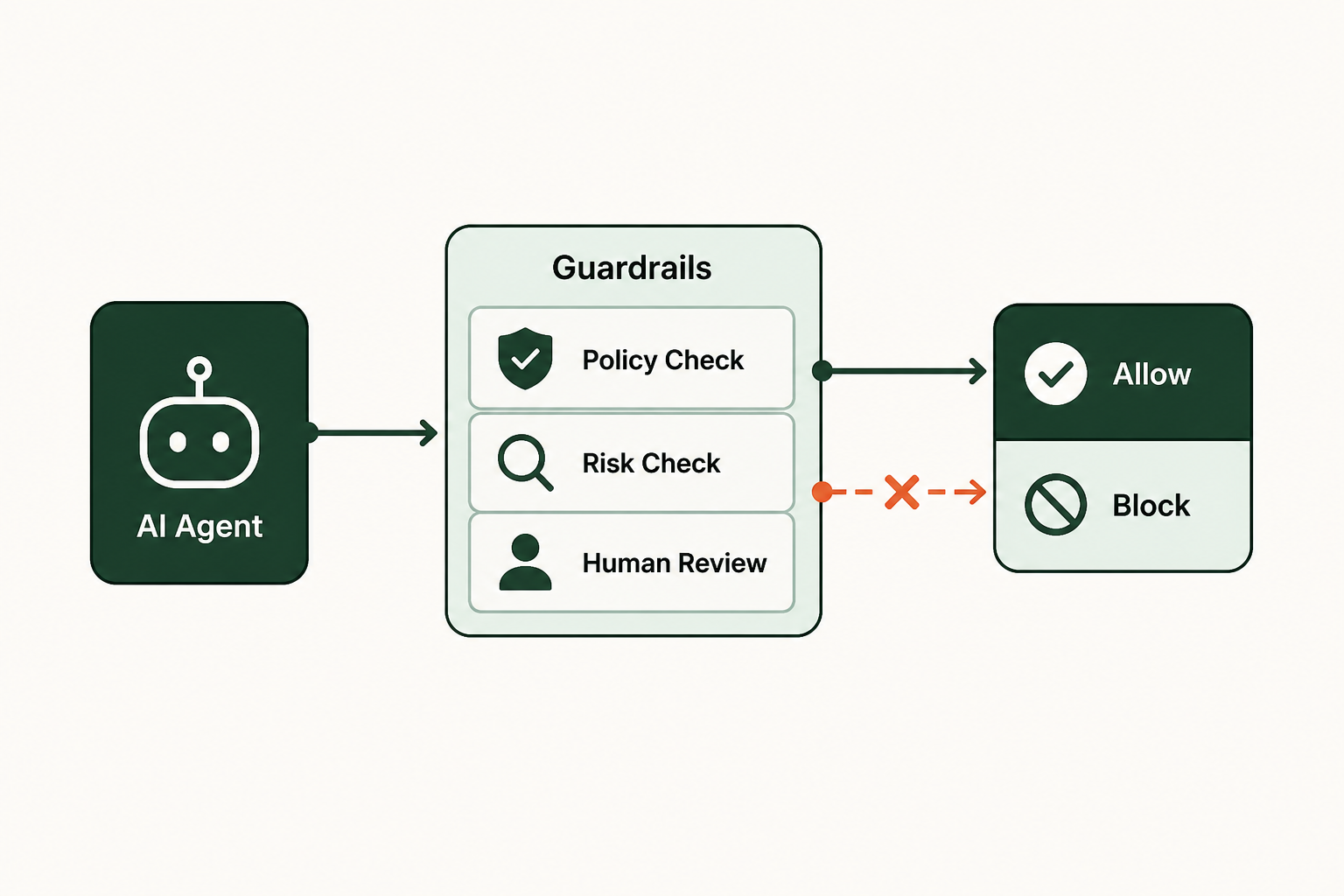
That distinction matters because prompts are not enforcement. Prompt compliance is probabilistic, and an agent can ignore or misread instructions or be manipulated into overriding them. Access controls help, but they mostly block categories of action. They do not reliably govern sequences, such as reading a database and then sending the wrong data through email. For teams still defining safe operating boundaries, AI agent guardrails are part of the picture, but governance has to reach the point of execution.
 What is an AI agent governance framework?
How we evaluated AI agent governance frameworks
With that definition in place, the evaluation criteria are straightforward. The strongest options are the ones that can govern agent action when workflows touch regulated processes and sensitive data, or when they involve legacy systems, no-API systems, and high-consequence customer or operational tasks. This is not a ranking of generic AI ethics guidance or model-development utilities. It focuses on whether the framework can control execution when an agent is allowed to act.
The State of Agentic AI Security and Governance describes security and governance for autonomous AI systems across frameworks and governance models, along with global regulatory standards. That broad scope is useful because enterprise buyers are not trying to solve a narrow prompt problem. They need to approve controlled action across systems while preserving a reliable record for security and compliance teams, as well as operations.
Auditability and compliance
For regulated enterprises, auditability cannot be patched on after deployment. It has to capture what the agent saw and what it decided. It also has to show which systems it called, which controls applied, and why an action was allowed, blocked, escalated, or retried. High-risk AI obligations under the EU AI Act become effective in August 2026 for systems that make or support consequential decisions affecting rights, safety, or access to services, so governance needs to map agent behavior to reviewable evidence, not dashboard summaries alone.
Control and predictability
Control means more than permissioning. RBAC, IAM, and tool whitelisting can prevent broad action categories, but they cannot fully govern action sequences once an agent has multiple permitted tools. A strong framework therefore needs deterministic workflows around the agent, especially for write actions and sensitive lookups, as well as irreversible steps and exception handling.
Integration with enterprise systems
The last criterion is operational fit. Enterprise agents rarely operate in a clean API-only environment. They touch enterprise systems and legacy systems. They also touch internal portals, spreadsheets, service desks, CRMs, ERPs, and systems with fragile or missing integration surfaces. A governance approach that only works where modern APIs exist leaves a large part of the operating environment outside controlled execution.
The top 3 AI agent governance frameworks ranked
Based on those criteria, the ranked summary below favors governed execution over agent design elegance. That is intentional. In most enterprise deployments, risk appears when an agent changes something in a system of record, not when it drafts a plausible plan.
| Rank | Framework approach | Best for | Headline strength | Main trade-off |
|---|---|---|---|---|
| 1 | Agentic Harness | Enterprises moving agents into live system action | Governed execution through deterministic workflows and an execution layer | Focuses on controlled execution rather than creating the agent itself |
| 2 | Agent engineering frameworks | Teams building custom agents and agent logic | Flexible development patterns for agent behavior | Governance can remain embedded in code, prompts, or tool design |
| 3 | Integration and orchestration platforms | API-centric environments with many system connections | Connecting tools, APIs, and process steps | Orchestration does not automatically prove policy-bound agent action |
The practical distinction is simple: some options help build the agent, while others connect the systems. The strongest governance option controls the action path between them.
1. Agentic Harness: best for governed execution
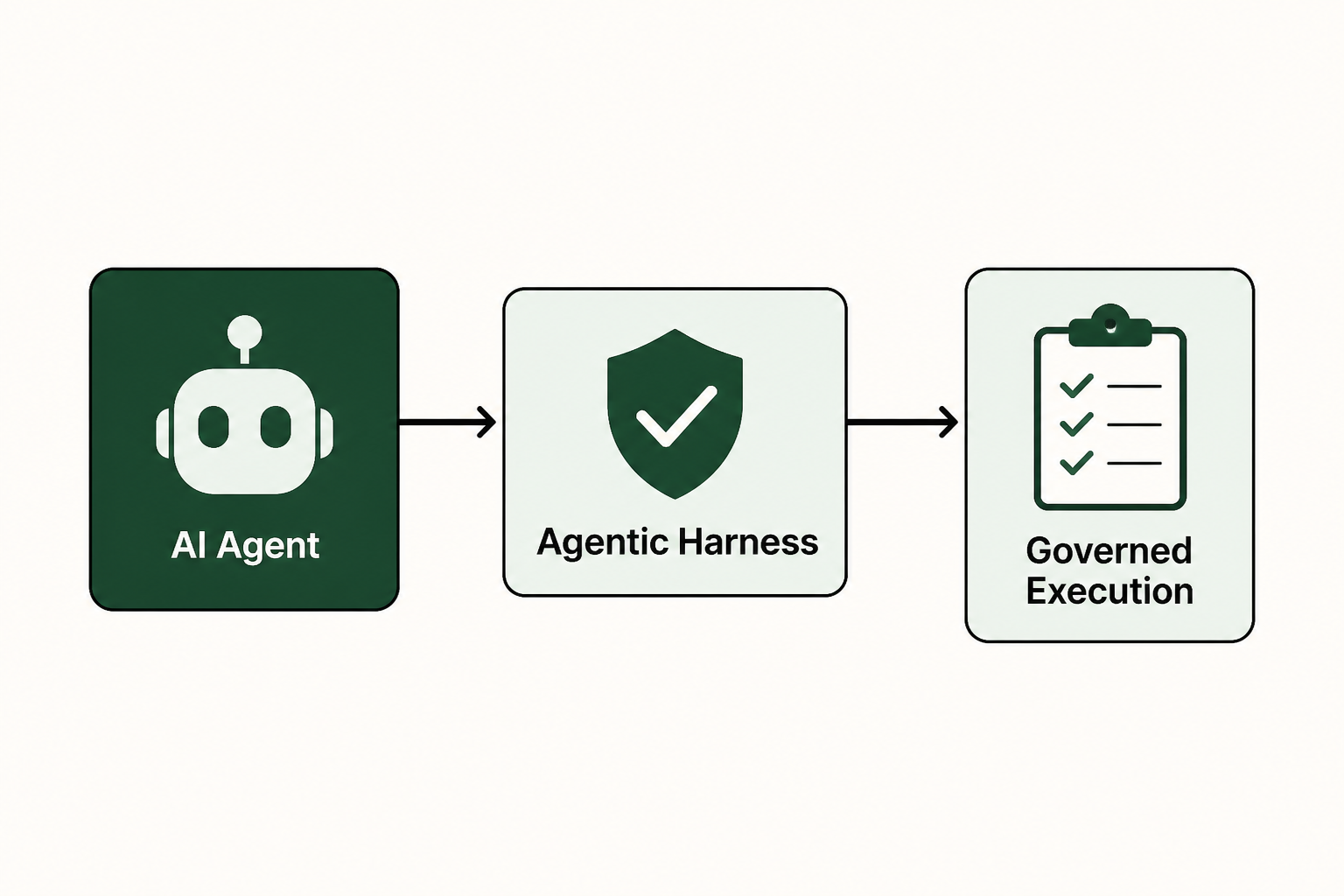
The top-ranked approach starts from a system-level premise: agents can reason, but the enterprise still needs controlled hands. An Agentic Harness is the operating layer around an AI agent. In plain English, the agent remains the brain that interprets context and proposes work. The enterprise-controlled layer provides the hands that touch systems, check policy, manage state, verify outcomes, and recover from failure.
This approach is best for CIOs, CAIOs, Heads of AI, enterprise architects, and security leaders. It fits leaders who need agents to act inside regulated or mission-critical workflows without treating every action as an unmanaged model decision. Its strength is governed execution. The execution layer mediates between the agent and enterprise systems, so the organization can define what is allowed before the action reaches the system of record.
Standout strength: deterministic workflows
The core strength of the Agentic Harness is the use of deterministic workflows around non-deterministic reasoning. The agent can interpret context and propose a path, but the actual steps that change a record, send a message, approve an exception, or call a sensitive system follow bounded execution rules.
That matters because predictable runtime behavior is easier to audit than an agent chain left to improvise every operational step. The brand proof for this approach includes 100% predictability in runtime, deployment in days, up to 80% lower token costs, and 0 engineering resources for supported deployments. Those are execution claims, not claims that all AI risk disappears. Human review, policy design, and exception handling still matter.
 1. Agentic Harness: best for governed execution
For teams evaluating the category, the governed execution layer is the decisive concept: it keeps agent reasoning separate from the controlled system actions that the enterprise must approve, observe, and evidence.
Trade-off: focus on execution, not agent creation
The trade-off is deliberate. An Agentic Harness is not primarily a custom agent development toolkit. It does not try to be the place where every prompt, memory strategy, or reasoning pattern gets invented. Its value appears when a useful agent has to move from advice to action, especially where compliance and control matter, along with audit trails and cost discipline.
That makes it the top pick for enterprises that already have agents, copilots, or internal AI prototypes and need governed execution across production processes.
2. Agent engineering frameworks: best for custom agent development
The second approach solves a different problem: building the agent itself. Agent engineering frameworks are useful when the main job is designing custom agent behavior, including tool use and planning loops. They also support retrieval patterns, memory handling, task decomposition, and multi-agent coordination. For AI teams with deep engineering capacity, that flexibility can be valuable because the team controls the agent's internal design.
The governance weakness is where the logic lives. If policy checks, escalation rules, approvals, and failure handling are coded directly into the agent flow, governance can become scattered. It may sit across prompts and tool definitions, plus custom scripts and developer conventions. That can work in a controlled pilot, but it becomes harder to explain when security or compliance asks for a clear record of what the agent was allowed to do and what actually happened.
This category is best for teams whose primary need is building differentiated agent behavior, not deploying agents into high-consequence enterprise operations. It can also fit research, internal experimentation, or narrow agent tools where actions are low-risk and reversible.
The main trade-off is separation of concerns. Agent engineering frameworks help create the brain. They do not necessarily provide the execution layer that governs the hands. If the enterprise wants deterministic workflows around live actions, that control usually has to be added through additional architecture and policy services, with logging, approval systems, and operating procedures around them.
3. Integration and orchestration platforms: best for connecting APIs
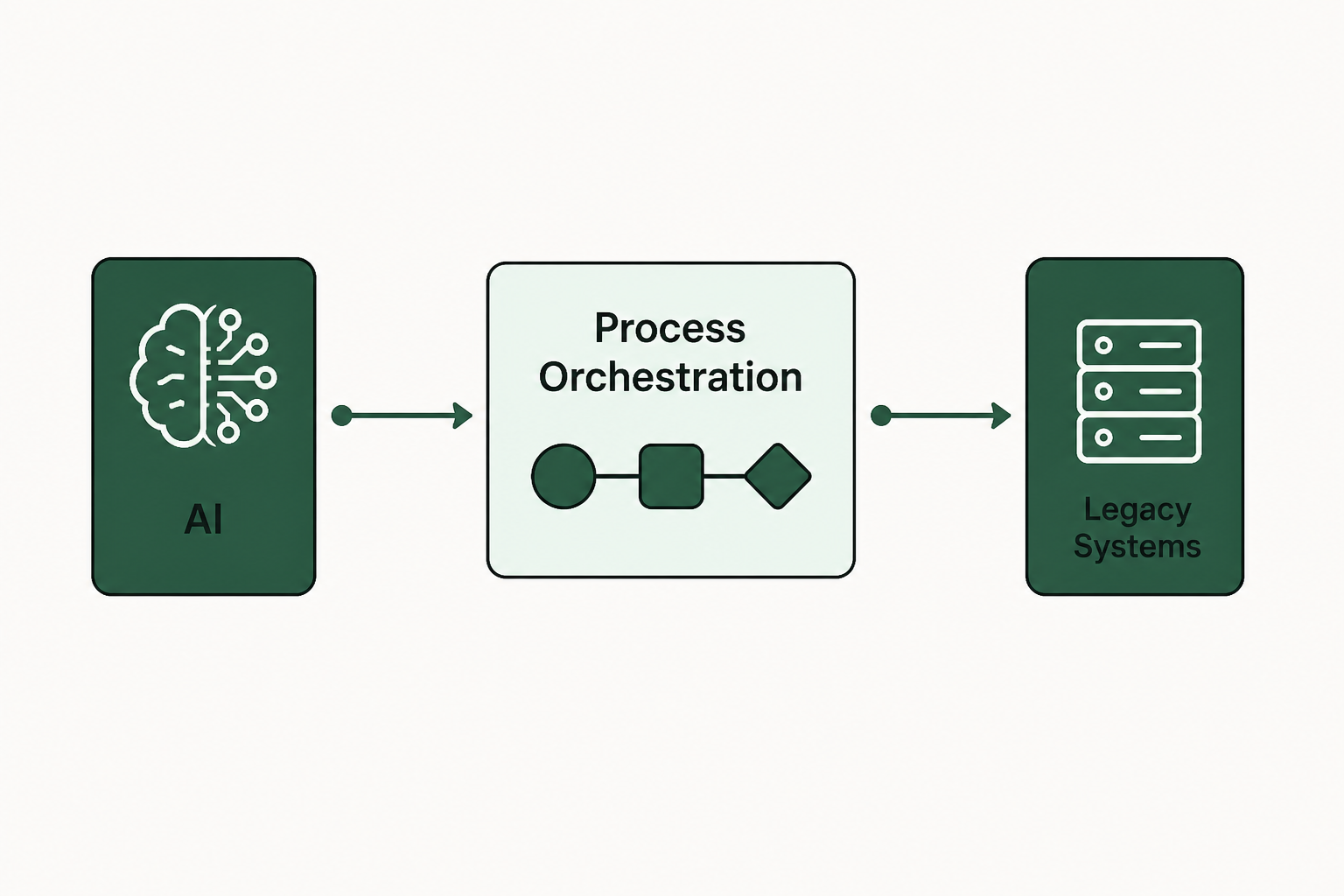
The third category starts from connectivity rather than agent behavior or governed execution. Integration and orchestration platforms are strongest when the problem is moving data or triggering steps across API-accessible applications. They can coordinate workflows and route events. They can also call services and connect tools that already expose reliable integration points.
That is useful, especially in organizations with modern cloud applications and well-documented process flows. But agent governance introduces a harder problem than ordinary system integration. If an AI agent can reason across context, select tools, and combine permitted actions, the enterprise still needs to govern action sequences, not individual connectors alone. Access control can block categories, but it cannot always distinguish harmless use from a problematic sequence when the agent has both read and send permissions.
Integration and orchestration platforms do well at connecting APIs and moving structured work across known paths. What they leave unresolved is the governed execution problem between agent reasoning and consequential system changes, especially when sensitive data and human approvals are involved, or when no-API systems and exception recovery are part of the workflow. Upware centers on the governed execution layer between agents and enterprise systems instead, using the Agentic Harness to mediate policy-bound action rather than treating orchestration as sufficient control.
The trade-off for this third-ranked category is clear. It is often a practical foundation for API connectivity, but it is not, by itself, an AI agent governance framework for regulated agent action. Enterprises may still need a separate control model for verification checkpoints and audit evidence, as well as state management and failure recovery.
Who should skip these frameworks?
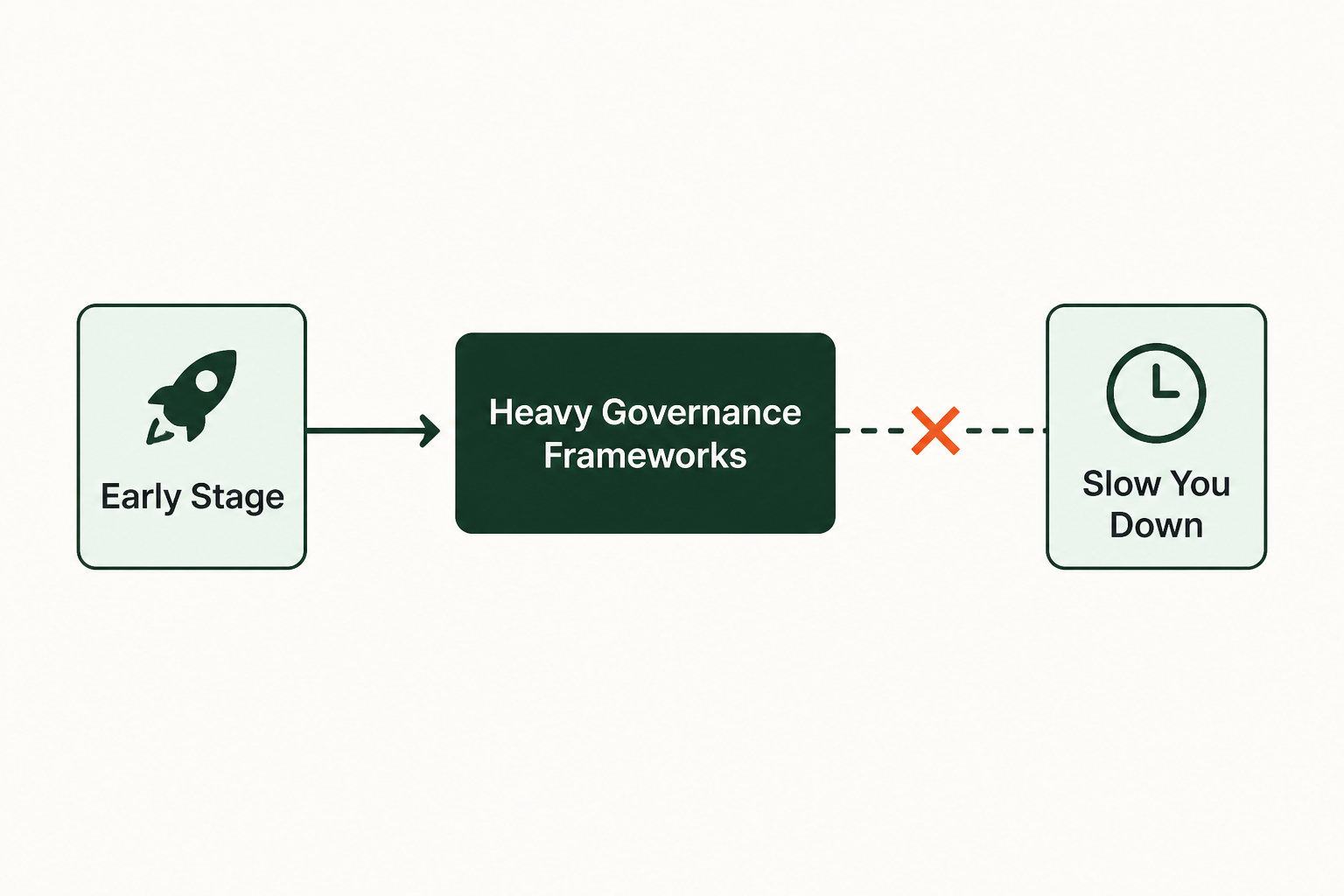
An enterprise-grade AI agent governance framework is excessive if the agent only summarizes documents, drafts internal text, or answers questions without touching systems, sensitive data, approvals, or customer-facing decisions. In those cases, lighter controls, usage policies, review workflows, and ordinary security measures may be enough.
Teams should also pause if they cannot define the actions they want governed. A framework cannot rescue an unclear operating model where business owners and AI teams are not aligned with security and operations. Governance works best when the organization can say, with precision, which system changes are allowed, which require approval, and which must be blocked.
Skip this category, or delay it, when the work has these characteristics:
- The agent only advises and never changes enterprise systems, so there are no consequential actions.
- The team is still testing prompts, retrieval, or agent behavior in a sandbox, so there is no production path.
- Governance decisions require alignment across business, security, legal, and operations, but no agreed owner exists.
- The workflow does not need a decision trail beyond ordinary application logs, so there is no audit requirement.
The category is most relevant when agents cross the line from assistance into controlled action.
 Who should skip these frameworks?
The verdict: start with your execution layer
Once the options are separated by the problem they solve, the recommendation is direct: start with the execution layer rather than the agent interface. The decisive issue is not whether an agent can produce a plausible plan. The issue is whether the enterprise can control and audit what happens when that plan touches real systems, with verification, approval, and recovery built into the process.
The Agentic Harness ranks first because it treats governed execution as the center of the operating model. Deterministic workflows and policy checks sit between agent reasoning and enterprise systems. So do state management, verification, and failure recovery, which is where most production risk appears. Agent engineering frameworks remain useful for custom development, and integration platforms remain useful for API connectivity, but neither category fully answers the audit question by default.
For a CIO, CAIO, or Head of AI, the practical test is direct: if the agent acts, can you prove what it saw and decided, plus what it called and changed? If the answer is unclear, the framework selection should begin there.
Advance your AI agent governance framework strategy.
Discover how our solution integrates with your systems for governed execution, or consult with an expert to tailor your approach.
Frequently asked questions
What is the main benefit of an AI agent governance framework?
The main benefit is controlled, auditable agent action. Prompts can reduce the chance of policy-violating behavior, but they do not enforce policy when an agent ignores or misreads instructions, or when manipulation pushes it to bypass them. Access controls help limit what categories of tools an agent can use, but they do not fully govern sequences of permitted actions. A governance framework closes that gap by defining how agent actions are checked and logged, then escalated and reviewed.
How do I get started with implementing AI agent governance?
Start with one production workflow where an agent needs to take bounded action, then define the permitted actions and required approvals. Failure paths and audit evidence should be defined before expanding. For many enterprises, the first practical step is to place a governed execution layer between the agent and the systems it touches. The strongest starting point is a workflow that already has business ownership and clear risk boundaries, with measurable consequences if the agent acts incorrectly.
What are the most common mistakes to avoid when governing AI agents?
The most common mistake is treating prompts as controls. Instructions are useful, but prompt compliance is probabilistic. Another mistake is assuming RBAC, IAM, or tool whitelisting fully solves governance, even though access control cannot always prevent risky sequences once multiple permissions are granted. A third mistake is logging only technical metrics, such as latency or token usage, while missing the decision trail needed for audit and incident review, as well as compliance. Explore governance frameworks. Safeguard your AI agent deployment.