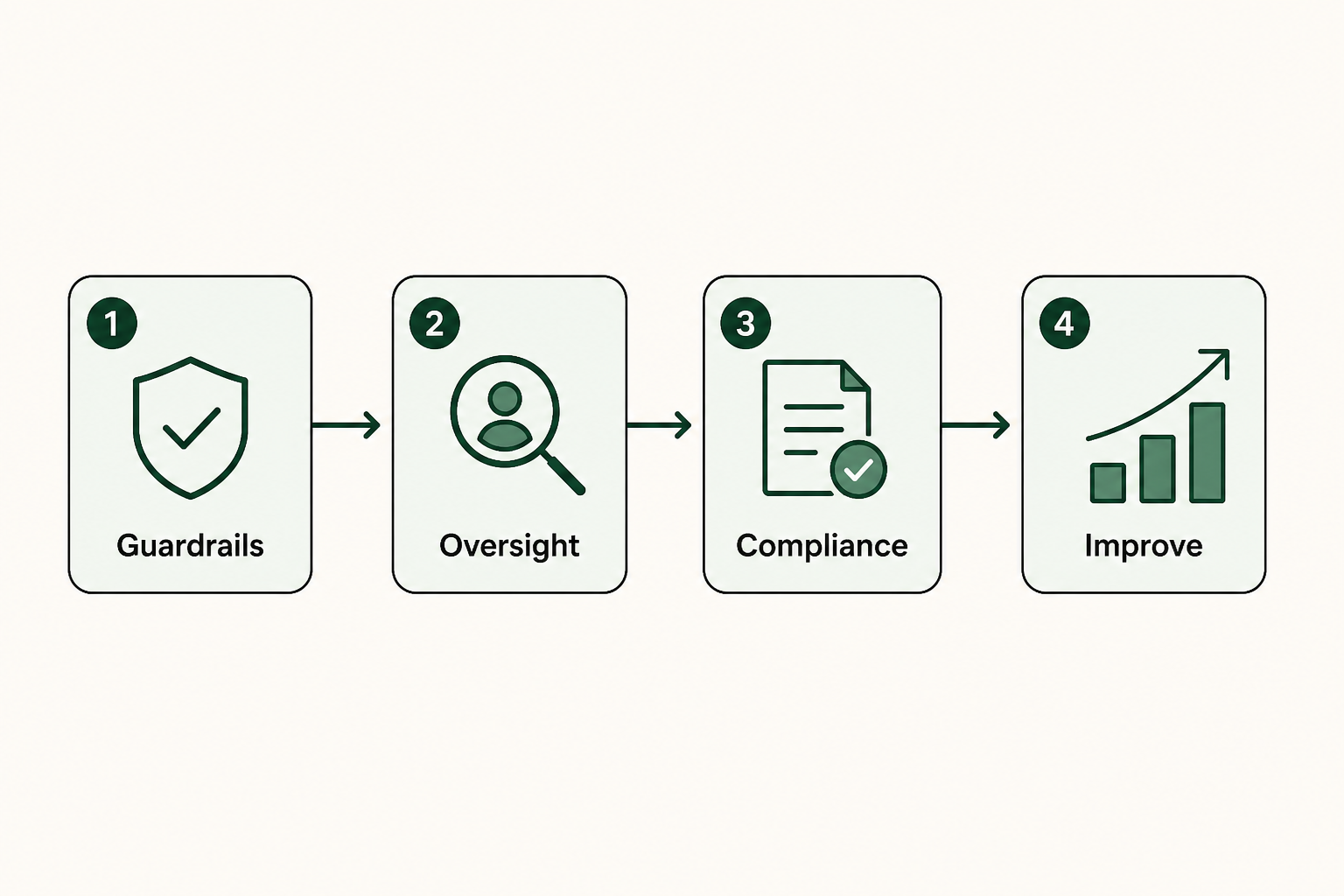
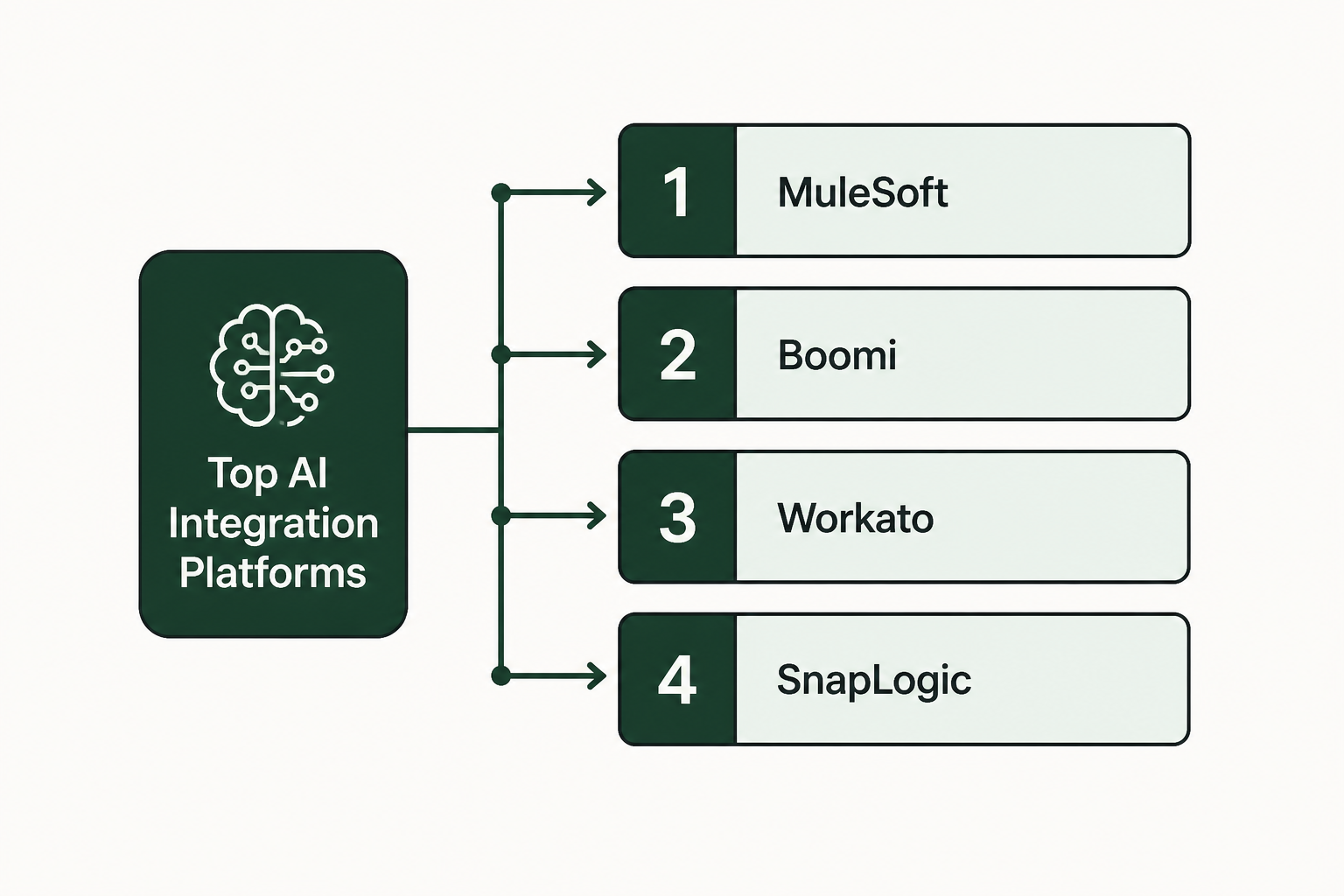
AI pilots tend to fail at the handoff from reasoning to action. The agent can interpret a request and draft a response, and it may also recommend the next operational step, but the work still lives inside ERP screens, admin portals, mainframes, CRM records, and homegrown tools. Process orchestration solves that gap by coordinating automated tasks across diverse systems, including legacy platforms, so AI agents can act through governed execution instead of open-ended access. For enterprise leaders, the first evaluation should focus on three capabilities, starting with governed execution and system connectivity through an Agentic Harness, then deterministic workflows.
What is process orchestration for AI agents?
Process orchestration for AI agents is the controlled coordination of work across systems, people, rules, and automated steps. The goal is to prevent an agent from becoming a free-form operator inside enterprise systems. The orchestration layer defines the allowed action, the required sequence, the controls that apply, and the audit trail.
Forrester describes process orchestration platforms as tools that define and automate end-to-end workflows while monitoring them, ensuring that tasks are executed in the correct sequence and that data is seamlessly transferred between systems.com/blogs/announcing-the-evaluation-of-the-adaptive-process-orchestration-market), making sure tasks happen in the right order and data moves between systems. For AI, that definition becomes more operational: the agent can decide what action is needed, but governed execution determines how that action is carried out.
That distinction matters because enterprise AI is moving from chat into system-level work. Deloitte describes AI agent orchestration as a key element for intelligent automation, with open-source and proprietary communication protocols shaping how agents coordinate work, as predicted in 2026. Protocols help agents talk to each other, but they do not solve the harder enterprise problem: an agent still needs a controlled way to touch ERP screens, admin portals, mainframes, CRM records, and homegrown applications without turning every use case into a custom build.
How we evaluated process orchestration capabilities
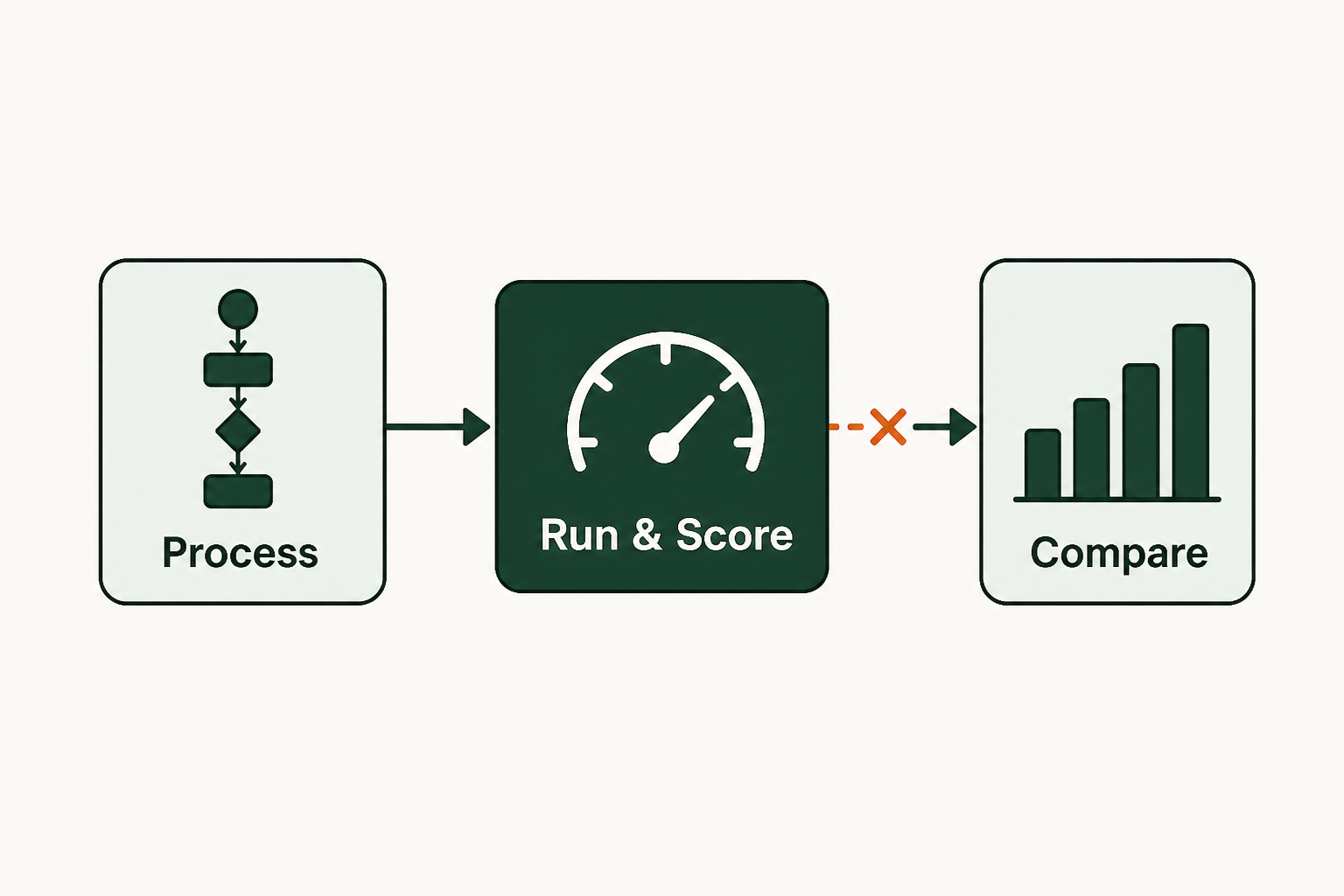
Once process orchestration is defined as execution control, the evaluation becomes more precise. The ranking below favors capabilities that make AI agents usable in enterprise systems without granting broad access or pushing every integration into engineering. The scope is intentionally narrow: this is about agent execution across legacy systems and no-API systems, not general iPaaS, data migration, or model development.
The three criteria are:
- The platform should constrain what the agent may do, record what happened, and support audit requirements across systems.
- The tool should reach systems that lack modern APIs, including homegrown portals and older enterprise applications.
- It should execute work through repeatable steps with predictable runtime behavior and cost discipline.
Deloitte's human capital research for 2026 found that the ability to dynamically orchestrate work ranked as the top trend, with 88% of leaders saying it was extremely or very important to accelerate how people, skills, and resources are orchestrated.com/us/en/insights/topics/talent/human-capital-trends/2026/orchestrating-for-agility.html) to accelerate how people, skills, and resources are coordinated. That is a useful signal, but enterprise AI needs a tighter operating model than broad work coordination.
Control and governance
For agentic work, governance cannot sit beside the automation as a policy document. It has to be part of the execution path. A process orchestration platform should create governed execution by limiting actions and enforcing approval points, with every cross-system change visible enough to investigate later.
Legacy and no-API system connectivity
The practical test is whether the orchestration approach can reach the systems that actually run the business. If the agent only works where a clean API already exists, it may improve a narrow task while leaving the important workflow untouched.
Efficiency and predictability
The final criterion is whether the platform keeps agent execution cost-disciplined. Deterministic workflows matter because they turn an agent's intent into a bounded sequence of actions rather than an open-ended loop of prompts, retries, and tool calls.
 How we evaluated process orchestration capabilities
3 core capabilities for enterprise AI integration
These criteria point to a clear order of operations. The strongest process orchestration approach for AI starts with control, then solves connectivity, then makes execution predictable. That order is deliberate. A connected agent without governance creates risk. A governed agent without connectivity stays trapped in a demo. A connected and governed agent without deterministic workflows becomes hard to budget, audit, and trust.
| Rank | Capability | Headline strength | Main trade-off |
|---|---|---|---|
| 1 | Governed execution layer | Controls how agents change enterprise systems | Requires process owners to define allowed actions clearly |
| 2 | Agentic Harness | Connects agents to legacy systems and no-API systems | Best suited to real enterprise estates, not simple SaaS-only stacks |
| 3 | Deterministic workflows | Makes AI-triggered actions predictable and cost-disciplined | Constrains agent freedom where open exploration is the goal |
The ranking reflects the operating reality. AI agents are the brain, but the Agentic Harness is the hands. Without the execution layer, the brain can suggest work but cannot safely carry it out.
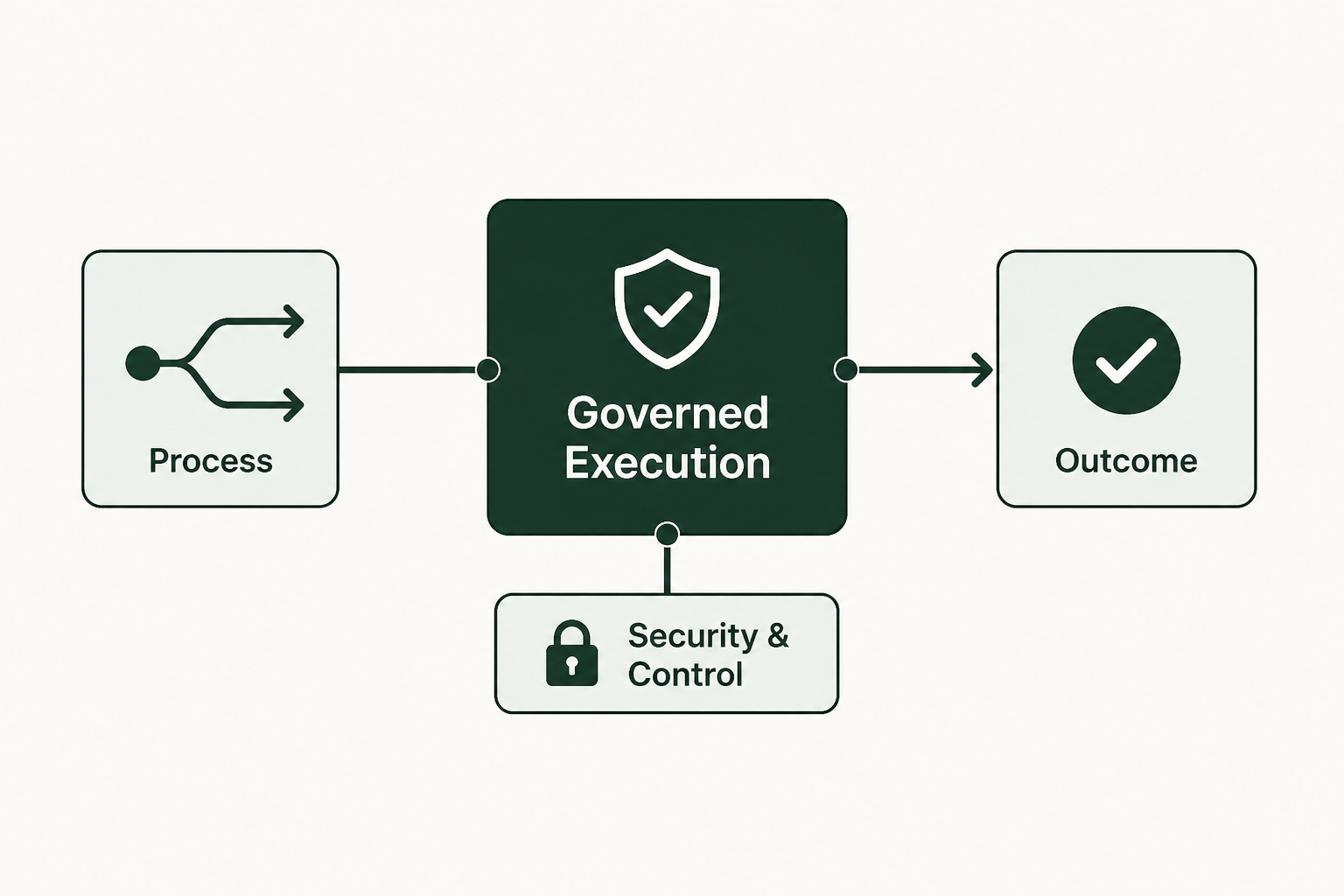
1. The governed execution layer: security and control
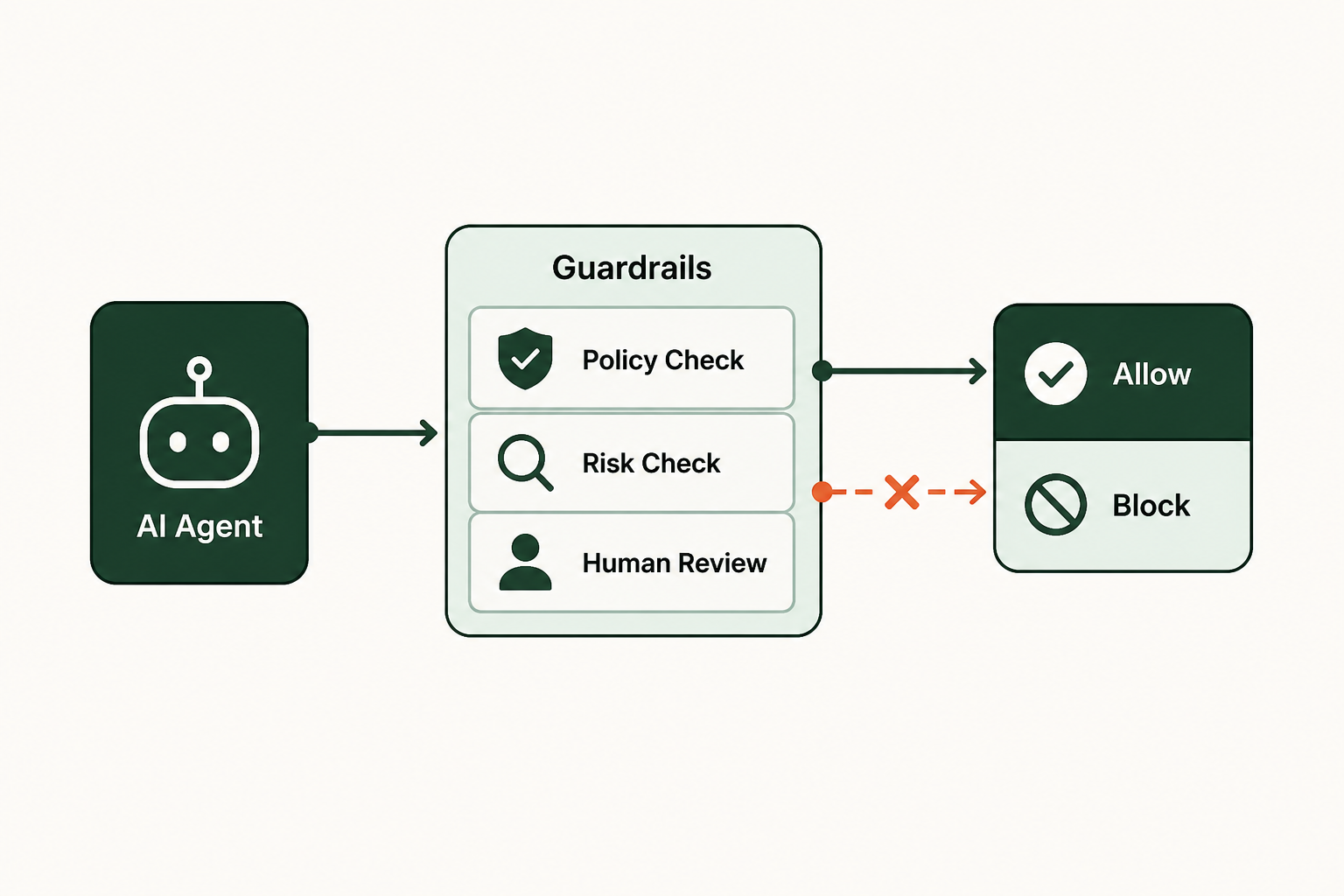
The governed execution layer is the control plane between the agent and the systems it wants to change. It decides which actions are allowed, which ones require human review, which systems can be touched, and what evidence is retained for audit.
This capability ranks first because enterprises do not block agents out of theoretical fear. They block them because integration and authorization collide. A process owner may accept an agent drafting a recommendation, but reject that same agent having unrestricted ERP access. Governed execution gives that owner a narrower and safer choice: allow approved actions through a controlled path, with system-level records of what happened.
A Forbes Technology Council article from 2024 argues that process orchestration can provide organizations with visibility into the performance of their processes, which supports continuous improvement instead of waiting for a failure to expose the weak point.com/councils/forbestechcouncil/2024/06/28/three-ways-to-advance-your-process-orchestration-maturity), which supports continuous improvement instead of waiting for a failure to expose the weak point. For AI agents, that visibility has a sharper role. It shows whether agent-triggered actions followed the right path.
- Best fits enterprises where AI agents need to update records, trigger workflows, or resolve tasks across regulated or mission-critical systems.
- The main strength is that governed execution turns agent intent into controlled system action with auditability.
- The main trade-off is that the organization must define the boundaries of acceptable action before broad deployment.
Teams evaluating this layer should also pressure-test their control model against a guide to safe AI operation, because guardrails outside the workflow are weaker than controls built into execution.
 1. The governed execution layer: security and control
2. The Agentic Harness: connecting to legacy systems
After the control model is clear, the next problem is reach. The Agentic Harness is the controlled infrastructure that lets AI agents carry out work across enterprise systems, including legacy and homegrown applications as well as no-API systems, while keeping execution governed. In plain language, it is the hands for the agent's brain.
This capability ranks second because connectivity is where many credible pilots stall. The agent can answer a question or summarize a case, then recommend a next step, but the workflow still depends on a human switching between screens to update the ERP and check a portal, then reconcile information across systems. Without a controlled connection, the automation ends at advice.
Gartner's description of established process orchestration software, such as SAP Process Integration (PI)-Process Orchestration (PO) as of 2025, points to a familiar enterprise requirement: connecting different applications and systems across heterogeneous environments to support business process design, execution, and monitoring. That matters because AI agents rarely operate inside a single clean system boundary. The Agentic Harness extends that idea to agent execution, especially where standard APIs are missing or incomplete.
Upware uses this model to connect enterprise, legacy, homegrown, and no-API systems through a single gateway for monitoring and governance, with audit, without custom engineering or consultants. Its [Agentic Harness](https://upware.Its Agentic Harness is designed for deployment in days with 0 engineering resources, which makes it relevant when the integration backlog is the reason an AI pilot is not reaching production.
- Best fits enterprises with valuable systems that were never designed for agent access.
- The main strength is that the Agentic Harness reduces the need to build a custom connector for every workflow.
- The main trade-off is that it is most useful where agents need to execute real cross-system work, not just answer questions.
3. Deterministic workflows: ensuring predictable AI actions
Connection alone is not enough. Deterministic workflows convert an AI agent's recommendation or intent into a known execution path, which matters because the model's reasoning may be probabilistic, but the system update cannot be.
Forrester has described adaptive process orchestration as another stage in enterprise automation because it combines AI agents and nondeterministic control flows with traditional deterministic ones, and is considered the next level of maturation in enterprise automation. The useful enterprise pattern is a controlled mix: let the agent interpret context, but route action through deterministic workflows where compliance, cost, and operational safety matter.
Conversational agent platforms can be useful for designing assistants and coordinating agent behavior. What they often leave unresolved is the governed execution layer between agents and enterprise systems, especially where legacy systems and no-API systems are involved. Upware centers on that governed execution layer instead, so the focus stays on controlled action across the systems that already run the business.
The cost angle is operational, not cosmetic. When an agent loops through tools, retries, and prompts, the workflow becomes harder to budget. A deterministic path gives leaders a clearer operating model. Upware reports up to 80% lower token costs and 100% predictability in runtime for its execution model, which is a direct fit for enterprises that need cost-disciplined AI operations rather than open-ended experimentation.
- Best fits workflows where the same business request should produce the same controlled action path.
- The main strength is that deterministic workflows make agent execution easier to test and audit, then budget.
- The main trade-off is that they are less suitable for exploratory tasks where the agent needs broad freedom.
For a wider view of the trade-offs across build, buy, and orchestration approaches, see these enterprise AI integration methods.
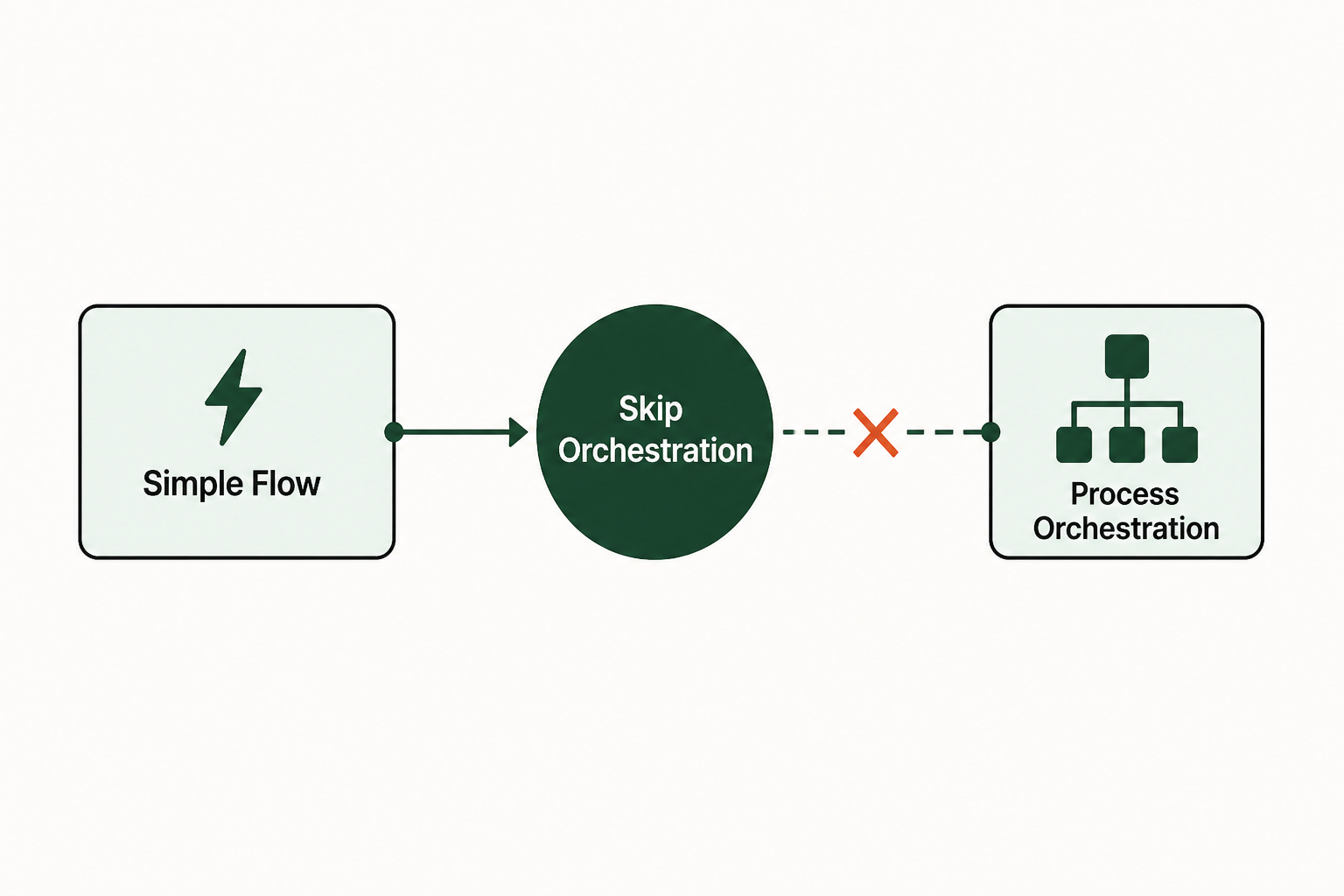
When to skip process orchestration
Process orchestration for AI is a poor fit when the agent does not need to execute work across enterprise systems. If the use case is limited to drafting and search, with summarization or internal Q&A, a governed execution layer may be heavier than the problem requires.
You should also skip this category if your environment is simple enough that all required systems already expose modern APIs, the workflow is low-risk, and the automation team can maintain the integrations without creating a backlog. In that case, lighter tooling may be enough.
The category is also wrong for teams trying to replace human judgment entirely. Governed execution controls how approved actions happen; it does not remove every human decision. A claims exception, a credit override, or a clinical escalation may still need a person in the loop. The point is to make the handoff explicit and auditable rather than burying it inside ad hoc agent behavior.
 When to skip process orchestration
The verdict: prioritize the governed execution layer
The strongest starting point is the governed execution layer, not a broader bet on agent autonomy. The enterprise failure mode is rarely that the model cannot produce a plausible next step. The failure mode is that no one can safely let it perform that step across legacy systems, regulated workflows, and brittle operational processes.
That is why the ranking starts with governed execution, then moves to the Agentic Harness, then to deterministic workflows. The control model comes first because it defines the conditions under which agents are allowed to act. The Agentic Harness comes next because it gives those controlled actions reach across hard-to-access systems. Deterministic workflows make the result predictable enough to run and monitor, then improve.
Deployment speed and engineering effort still matter. A platform that can be deployed in days and requires 0 engineering resources changes the cost-to-value case, but only if it preserves control. For teams comparing guardrail models, Compare AI agent guardrails against the execution path itself, not only against policy language around the agent.
Elevate your AI with powerful process orchestration.
See how to implement governed AI workflows or connect with an expert to review your needs.
Frequently asked questions
What is the main benefit of using process orchestration for AI?
The main benefit is controlled execution across systems. Process orchestration defines and automates the workflow while monitoring it, so an AI agent's output can become an approved action without giving the agent unrestricted access. It also gives leaders visibility into how processes perform, which supports improvement and audit instead of leaving agent behavior as a black box.
How do I get started with integrating AI agents into my legacy systems?
Start with one workflow where the agent already has a clear business purpose but cannot act because the needed systems are legacy, homegrown, or lack APIs. Define the allowed actions and approval points, along with audit needs, before connecting the agent. A governed Agentic Harness model is built for that gap, especially when deployment speed and 0 engineering resources are part of the business case.
How does this approach differ from traditional iPaaS or RPA tools?
Traditional integration and automation categories are useful for connecting systems or automating defined tasks, but agentic execution adds a different control problem. The agent may interpret context and choose a next step, while the enterprise still needs deterministic workflows and governed execution to decide how that step touches systems. Process orchestration for AI sits between the agent and the enterprise estate.
How long does it take to see results from this kind of integration?
Timelines depend on workflow scope, system access, controls, and stakeholder approvals. The relevant proof point here is deployment in days, not instant production without setup. The fastest path is usually a bounded workflow with clear system actions and audit requirements, plus a process owner willing to approve governed execution. Discover your perfect process orchestration solution today.