Safely connecting enterprise systems for governed execution
AI pilots usually break at the same point: the agent can reason about the task, but the work lives inside an ERP, a green-screen flow, or a homegrown admin portal that only a few operators understand. This guide gives you a practical blueprint for legacy system integration that connects agents to core transactional systems through governed actions, assuming you already know the target workflows, system owners, and approval boundaries.
The safest pattern is to connect legacy systems through a controlled execution gateway that exposes approved actions without custom code or direct database access. That matters because integrating AI with legacy systems is cited by 56% of chief supply chain officers as a major challenge, and the pressure does not stop at one department. Another market report found that 68% of organizations depend on at least one legacy software system, while modernization priority at 56% has shifted toward better integration with other tools and platforms.
The fragility of direct access and custom wrappers
Direct database access gives an agent too much surface area. It can expose tables, fields, and state changes that were never meant to be available to an autonomous process. Custom wrappers narrow that surface, but they also create a maintenance path for every screen, endpoint, exception, and entitlement rule. That is where pilot economics start to break: the agent may be useful, but the connection model becomes another engineering backlog.
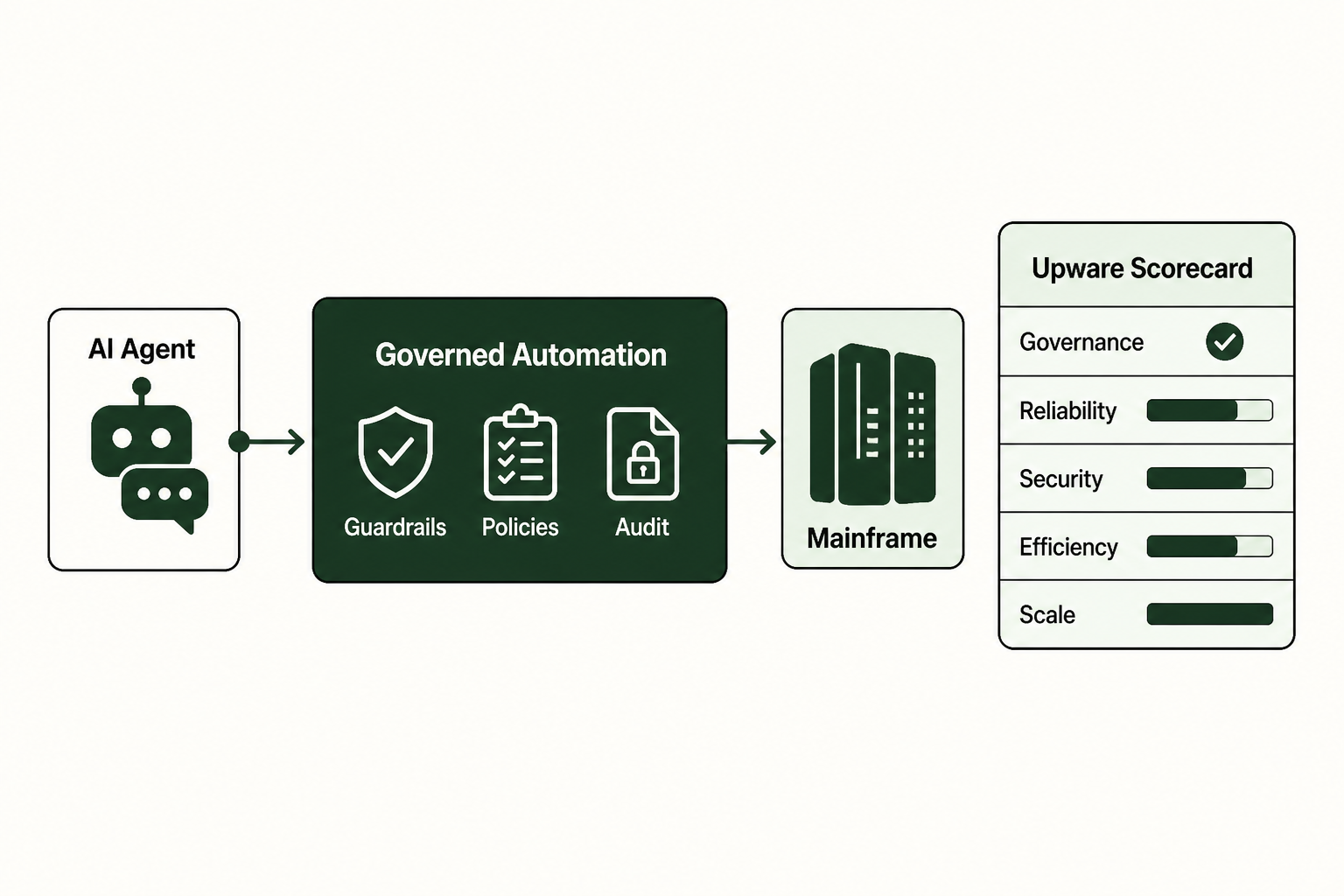
A controlled gateway changes the shape of the problem. Instead of asking the agent to understand the system, you expose only approved actions: read order status, update claim note, create service ticket, release inventory hold. The agent supplies intent and parameters; governed execution controls the actual system change.
governed execution layer vs. traditional integration suites
The better pattern is an execution layer that sits above legacy systems and below autonomous agents. In plain terms, the agent is the brain deciding what should be requested, while the Agentic Harness is the hands that execute only approved actions. That matches the architectural direction of evolving the technology layer deliberately rather than replacing it outright, and it also aligns with business interfaces as a way to preserve existing operational investments.
For a deeper comparison of connectivity options, the related guide on AI agent integration methods is useful context before you standardize the pattern.
Integration prerequisites: inventory and governance baseline
Before any agent touches production systems, establish the operating baseline. The prerequisites are not exotic, but they must be explicit because the agent should never become the place where access policy is guessed, workflow logic is inferred, or system behavior is assumed.
You need four inputs before implementation starts:
- A workflow inventory, listing the business action, source system, destination system, and owner.
- A legacy interface map, covering APIs, terminal paths, admin portals, file drops, scripts, and manual operator steps.
- Role-based entitlements, showing which user or service role may read, write, approve, or reject each step.
- A test data path, so you can validate execution without touching live transactions on day one.
The operational constraint is clear: many organizations rely on internal IT to maintain older systems, so the integration plan cannot assume scarce specialists are available for every change. Use AI agent authorization guidelines to define which agent actions require approval, which are read-only, and which should remain human-owned.
Step 1: deploy an Agentic Harness across legacy endpoints
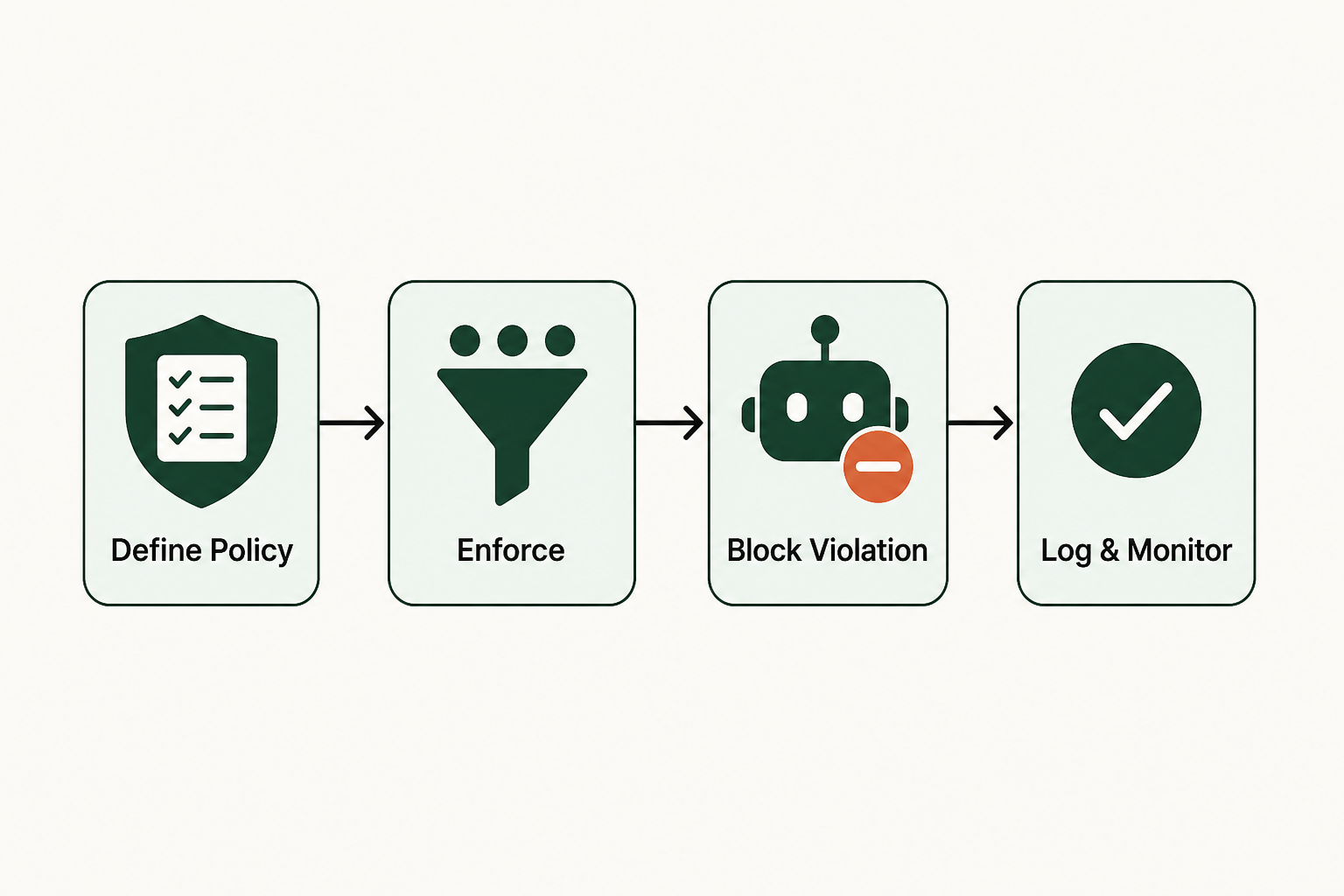
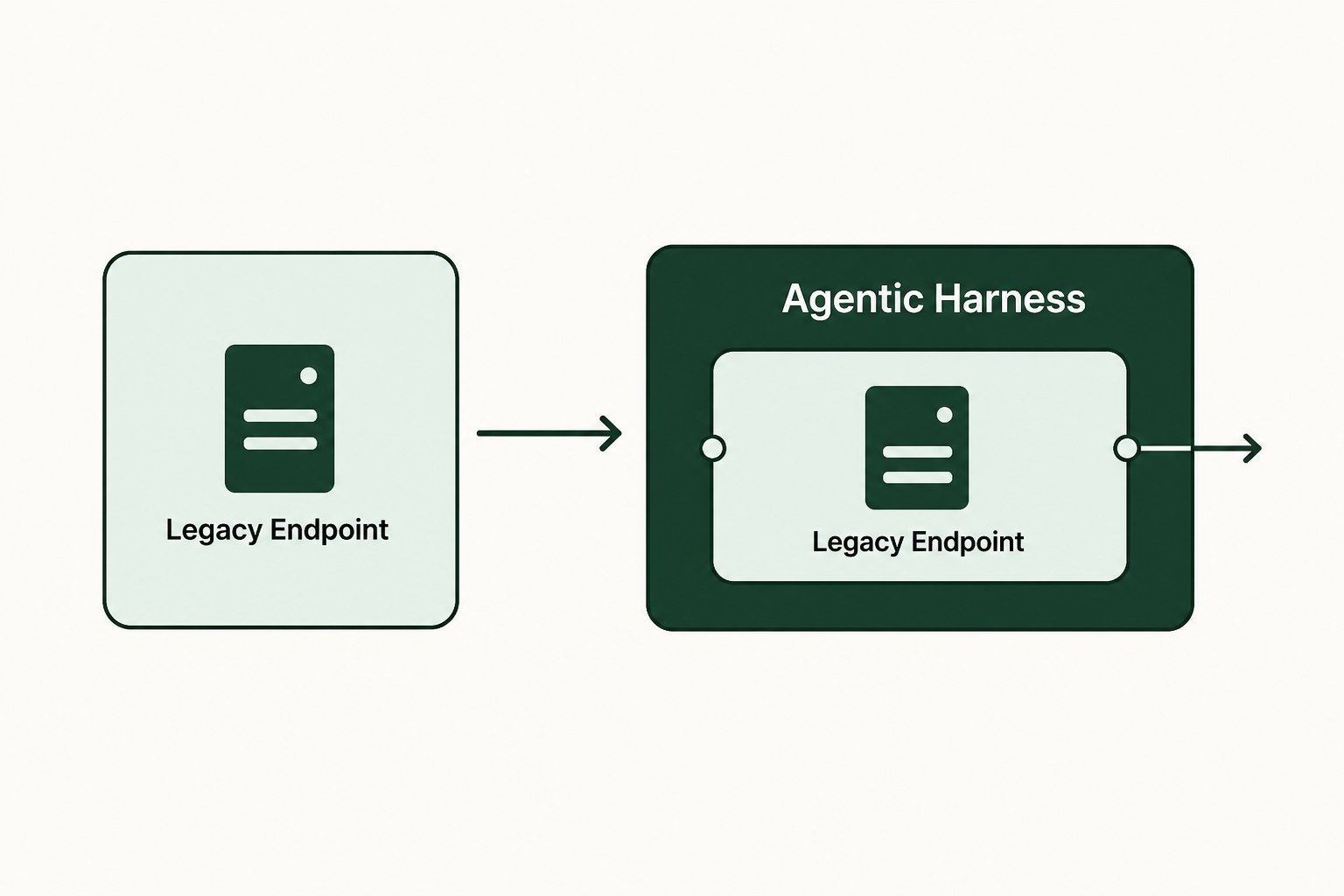
Once the inventory and governance baseline are clear, put a control point between agent intent and system execution. The first step is to introduce an Agentic Harness, meaning a controlled gateway where agents request work and the platform performs only approved system actions. Agents are the brain; the Agentic Harness is the hands.
The reason to start here is simple: legacy endpoints are inconsistent. One system may expose an API, another may require terminal automation, and a homegrown portal may have no integration surface at all. If each connection becomes custom code, the AI program inherits the slowest part of enterprise integration.
Configure the Agentic Harness around action schemas rather than raw system access:
action: update_customer_address
system: legacy_crm
mode: write
required_fields:
  - customer_id
  - verified_address
approval: required_for_high_risk_accounts
audit: capture_prompt_intent_and_system_response
That schema gives the agent a bounded action, not a credential. For terminal-heavy environments, terminal automation across enterprise systems can be wrapped into the same governed execution model, so a green-screen workflow becomes a named action with validation, logging, and access limits.
 Step 1: deploy an Agentic Harness across legacy endpoints
Step 2: construct deterministic workflows for sensitive transactions
After the Agentic Harness exposes bounded actions, define the process paths that sensitive work must follow. Sensitive transactions need deterministic workflows because the agent's reasoning should not decide how a ledger update, account change, or policy adjustment is executed. It can propose the action and provide the required fields, but the execution layer should enforce the sequence.
A deterministic workflow might look like this:
1. Read customer record
2. Validate entitlement
3. Check required fields
4. Route for approval if risk flag exists
5. Execute approved update
6. Record system response
The distinction matters. A language model may summarize an item, classify it, and select from allowed options, but governed execution decides whether a write can happen. That is how you keep existing business logic intact while still allowing agents to operate across legacy systems.
Use strict read and write separation:
- Read actions return only the fields needed for the task.
- Write actions require schema validation and entitlement checks.
- Approval actions create a human review point before state changes.
- Rejected actions return a reason code instead of retrying blindly.
For more detail on this control pattern, see deterministic process orchestration for AI.
Step 3: establish granular authorization and context boundaries
With deterministic workflows in place, tighten the permissions around each step. Authorization is where many agent integrations become too loose. A broad service account may be convenient, but it also hides who requested the action, what context was used, and whether the agent stayed inside its permitted scope.
Create authorization at the step level, not just the application level. Each action should carry its own permission boundary, token constraint, and context limit:
{
  "agent_role": "claims_assistant",
  "action": "add_claim_note",
  "allowed_system": "claims_admin_portal",
  "write_scope": "notes_only",
  "expires_after_step": true
}
Conversational agent platforms, RPA-era automation suites, and integration and orchestration platforms can be useful for building bots. They can also coordinate tasks and move data between systems. They leave unresolved a harder operational question: how an autonomous agent gets permission to change enterprise systems without broad credentials or a custom wrapper for every endpoint. Upware centers on the governed execution layer between agents and enterprise systems, with the Agentic Harness providing the controlled path for action, cost, compliance, and audit.
This is also where no-code policy deployment matters. The platform supports deployment in days and requires 0 engineering resources for integration, while guaranteeing 100% predictability in runtime through governed action schemas. The platform also reports up to 80% lower token costs by limiting unnecessary model calls during process execution.
Download our free legacy integration checklist to map your modernization strategy.
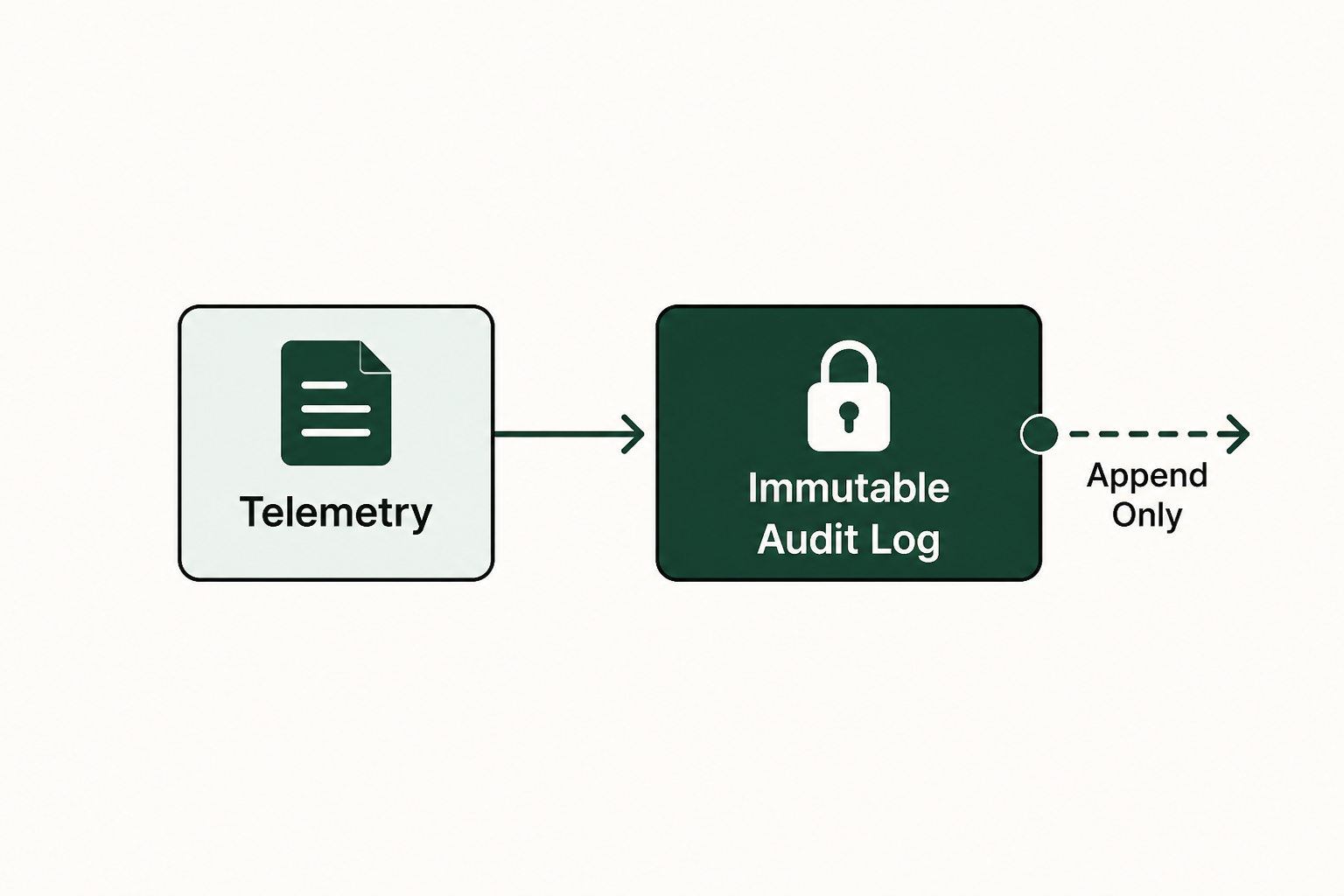
Step 4: implement immutable telemetry and process auditing
Once permissions are granular, the next control is evidence. Every agent-triggered action should be reconstructable, because process owners, auditors, and security reviewers need evidence beyond screenshots, chat transcripts, or developer memory when something goes wrong.
Log the full execution chain:
- Prompt and intent, so the request can be tied to a business purpose.
- Action schema version, so you know which governed path was used.
- Entitlement decision, including approval, rejection, or escalation.
- System response, including success, failure, timeout, or validation error.
- State change, where a write operation occurred.
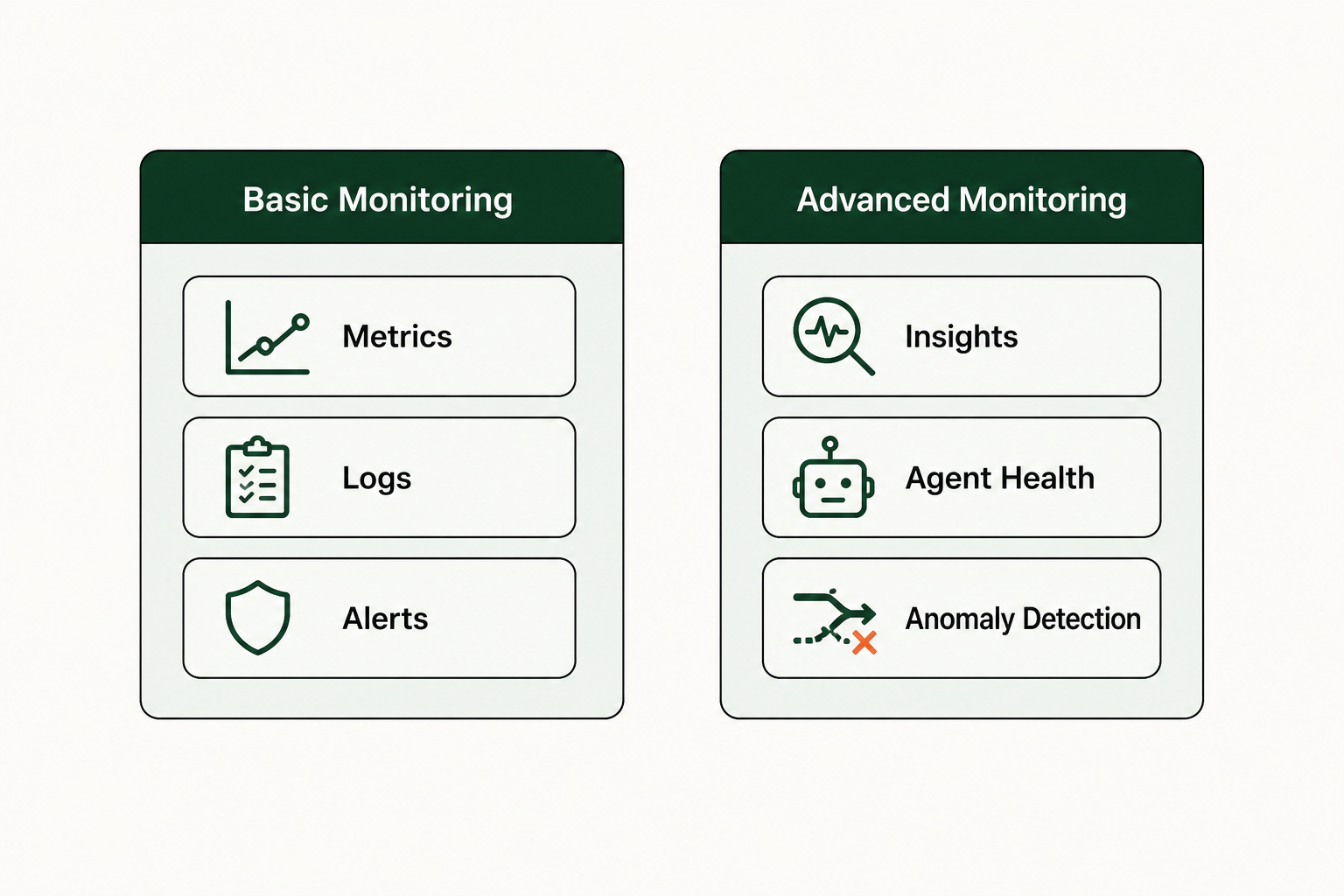
This audit trail should sit in the execution layer, not inside the agent alone. If the agent changes, the system of record for governed execution stays consistent. For implementation detail, the guide to an immutable AI agent audit trail shows how to structure evidence across prompts, decisions, and system outcomes.
 Step 4: implement immutable telemetry and process auditing
Troubleshooting common agent-to-legacy execution failures
After the main controls are live, troubleshooting should focus on the boundary between agent intent and system action. That boundary is where production failures tend to surface, especially when legacy systems behave differently under load, session limits, or small interface changes.
Common failures usually fall into five buckets:
- Session timeouts, where a terminal session drops before the action completes. Confirm that the Agentic Harness records the timeout, closes the session cleanly, and returns a retry-safe error rather than allowing the agent to repeat the write.
- Parameter drift, where the agent sends a field that no longer matches the action schema. The correct result is rejection with a clear reason code, not a partial update.
- Schema drift, where the underlying screen, form, or endpoint changes. Run a controlled test action and compare the expected response to the captured system response.
- Latency spikes, where slow systems cause the agent to reissue a request. Use idempotency keys or action IDs so repeated requests do not create duplicate transactions.
- Prompt injection attempts, where user-supplied text tries to override the system action. The action schema should ignore instructions that sit outside allowed fields.
You can tell the step worked when a failed action is safe by default. That means there is no unauthorized write, no hidden retry, no lost audit record, and no broad credential exposed to the agent. If the issue is broader than a single execution path, use agentic AI risk management strategies to decide whether the workflow needs tighter authorization, better validation, or a human approval point.
Operational success: what governed legacy integration delivers
A finished integration program is not measured by how much autonomy an agent appears to have. It is measured by whether the agent can request useful work across legacy systems while every change still passes through approved actions, deterministic workflows, and an execution layer that records what happened. That does not remove every risk, and it does not remove humans from judgment-heavy decisions.
A working legacy system integration program has three signs: process owners trust the write path, security can inspect every action, and integration no longer depends on custom engineering for each endpoint. Upware's Agentic Harness is designed around that operating model, with governed execution across enterprise systems, legacy estates, homegrown applications, and no-API systems. For estates with older ERP and terminal-heavy workflows, AS400 legacy system integration is a natural next path to evaluate.
Download our free legacy integration checklist to map your modernization strategy.
Run safe AI agent execution across your legacy architecture
Explore the interactive walkthrough on your own, or schedule a session with our integration team to see it live.
Frequently asked questions
What is the main benefit of an Agentic Harness for legacy system integration?
The main benefit is controlled execution. An Agentic Harness gives agents a governed path to act across legacy systems without direct database access or one-off wrappers for every application. It also keeps runtime behavior predictable by forcing work through approved action schemas, which is especially important when the agent touches systems of record.
How do I get started without expanding engineering headcount?
Start with one workflow that has a clear owner, clear entitlement rules, and measurable operational value. Map the read and write actions, define the allowed fields, and deploy the execution gateway around those actions. The platform supports deployment in days and requires 0 engineering resources for integration, so the first use case should prove the governance model rather than turn into a custom build.
Who is this legacy system integration framework designed for?
It is designed for enterprise application leaders, integration leaders, automation leaders, CIOs, and CAIOs who own connectivity across mission-critical systems. The pattern is especially relevant when an organization depends on legacy software, internal IT is already carrying maintenance responsibility, and AI pilots stall because the agent cannot safely reach the systems where work actually happens.
What are the most common mistakes to avoid when connecting agents to legacy core systems?
The most common mistakes are giving the agent broad credentials, letting it write directly to a database, treating prompt instructions as access control, and building brittle wrappers for every workflow. A safer approach is governed execution through bounded action schemas, step-level authorization, deterministic workflows, and an audit trail that can reconstruct every request, decision, and system response.