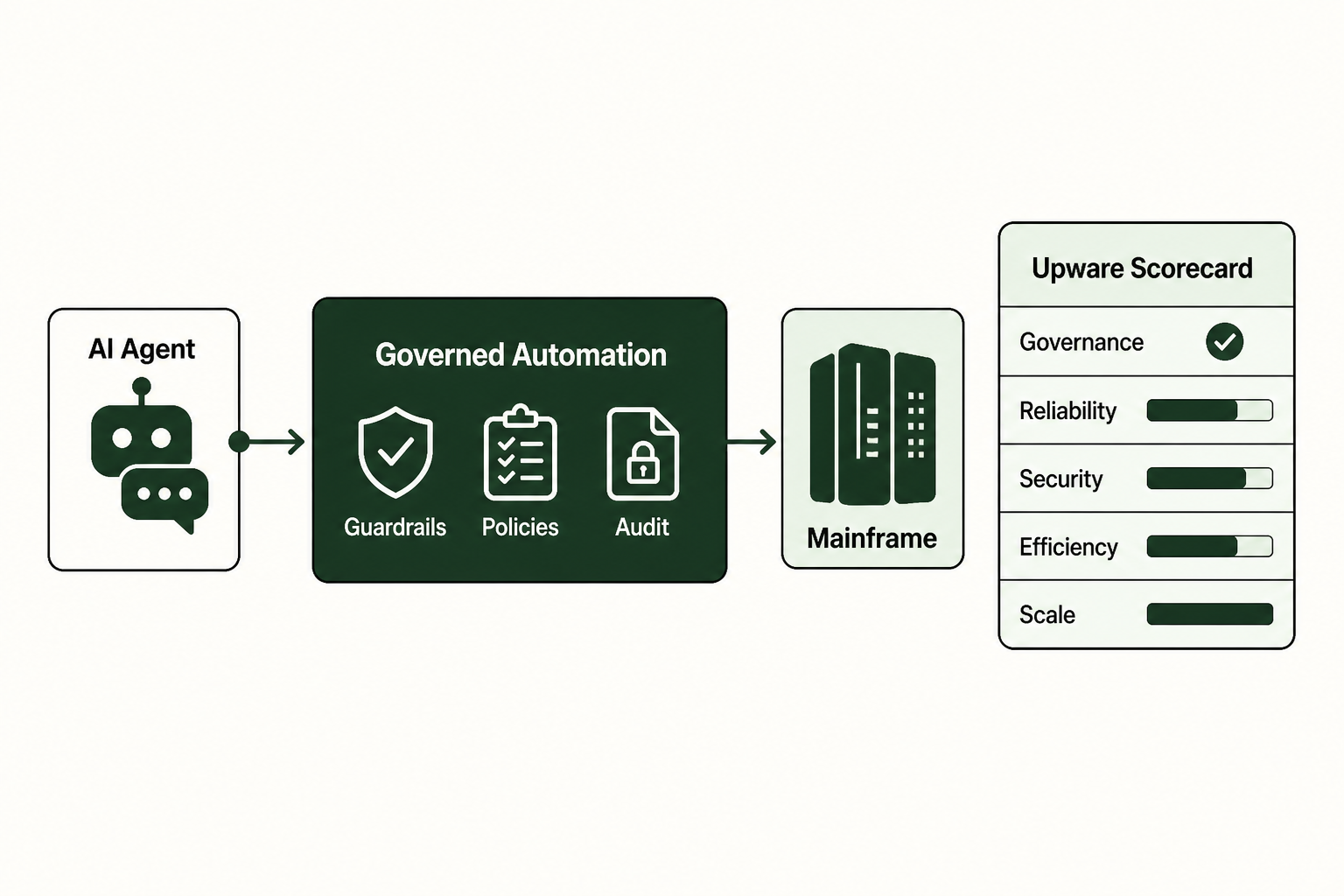
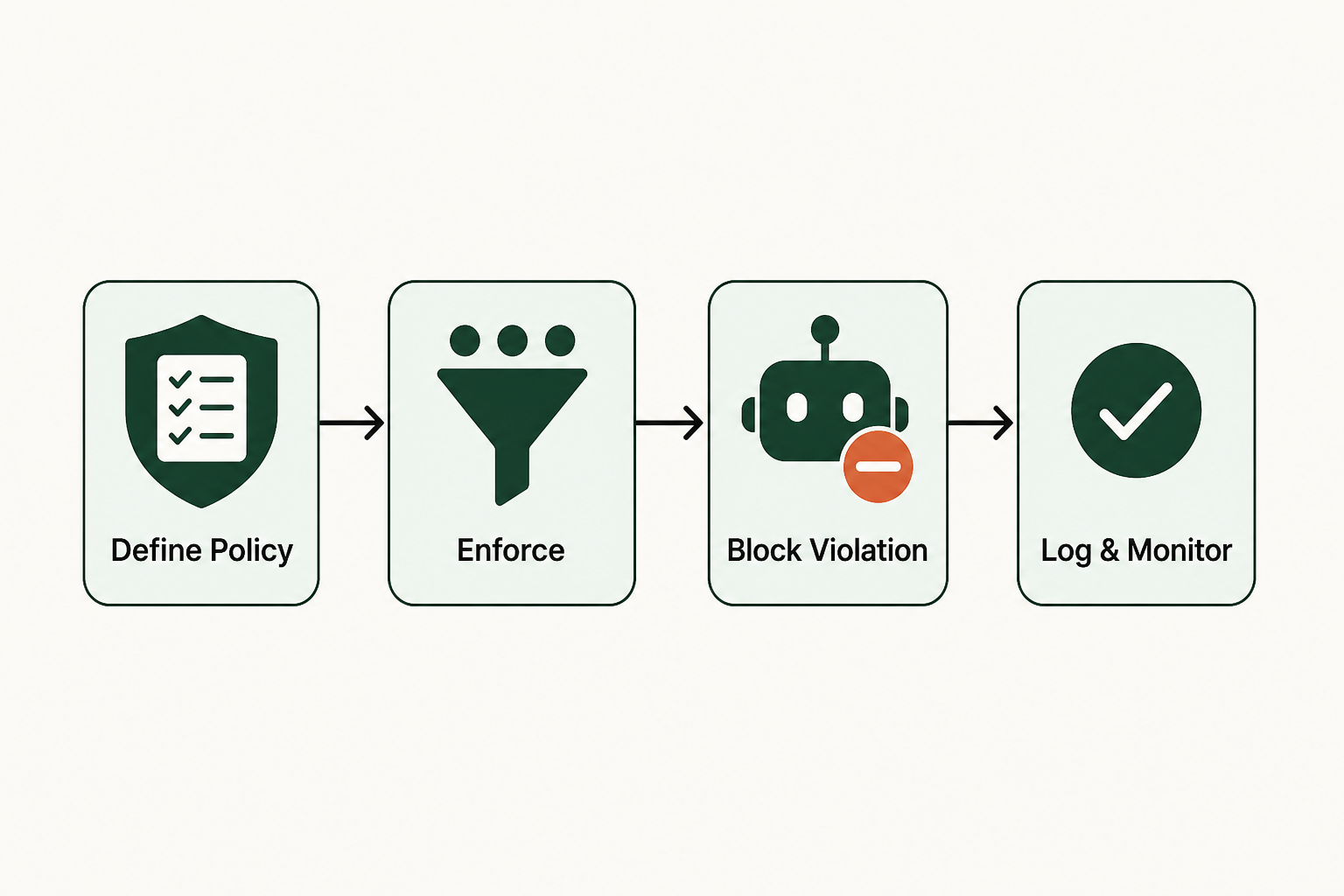
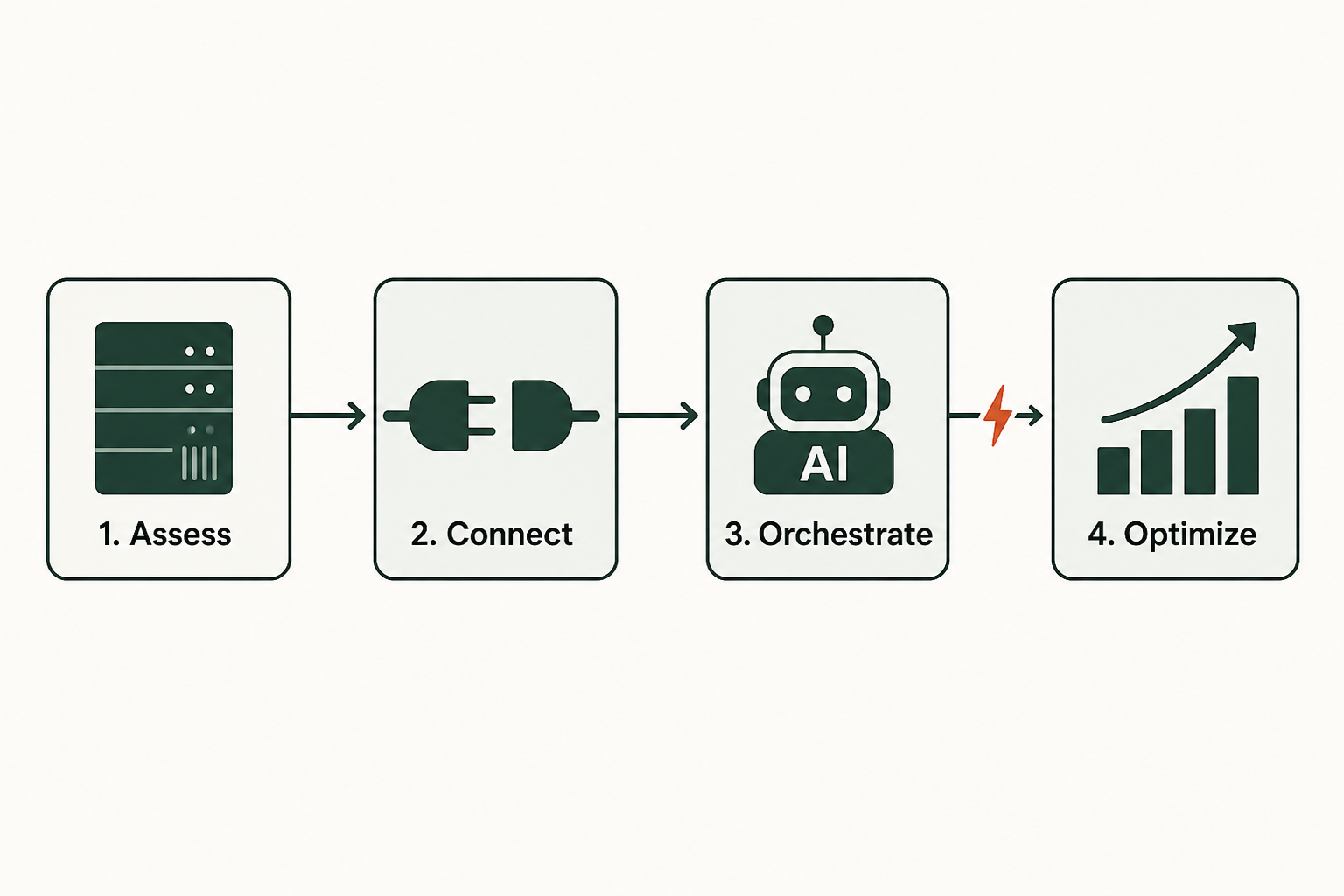
A useful enterprise agent creates an uncomfortable approval problem: it needs enough access to change real systems, yet every write action creates audit and security obligations, plus recovery obligations. The best AI agent monitoring solutions for consequential enterprise work enforce policy before action. They also verify actions, retain audit evidence, and route human approval for critical steps. Token metrics and prompt rules alone do not prove what an agent saw and called, or what it changed and escalated.
For CIOs and CAIOs, as well as Heads of AI, enterprise architects, and security leaders, the real choice is between tools that observe agents and tools that control execution. Pick the wrong layer, and pilots stay trapped in review because the agent can recommend a change but cannot safely carry it out inside enterprise systems.
What to look for in AI agent monitoring: the verdict
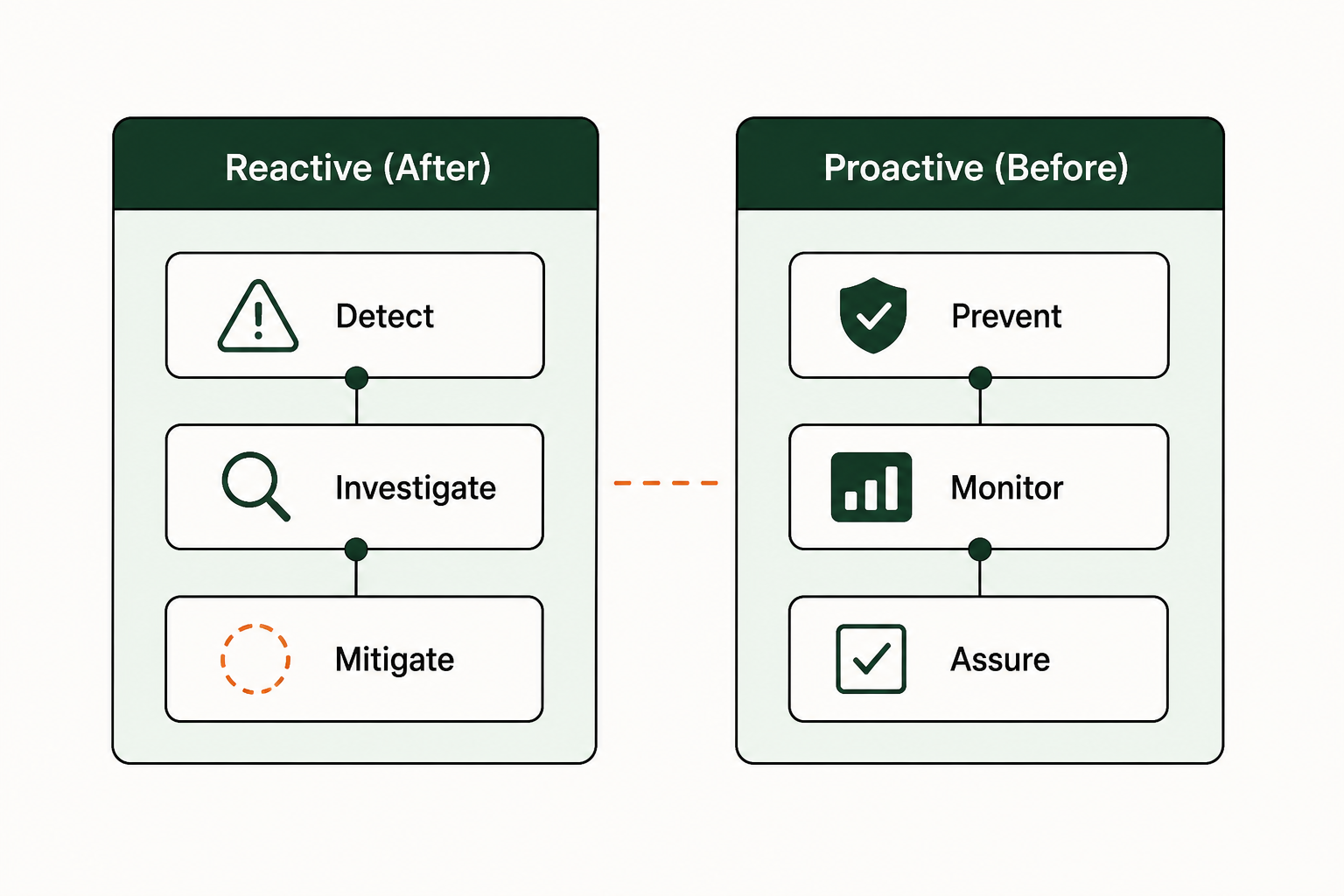
The short answer: choose the approach that governs actions before they happen, rather than one that records agent behavior after the fact. Agent behavior is harder to govern than conventional software because agents make multi-step choices at runtime, use tools, and can delegate across workflows. A governance analysis of AI agents describes the problem as AI agents' non-deterministic and path-dependent behavior means they cannot be fully governed at design time.
A practical verdict for enterprise buyers looks like this:
- Policy enforcement before action: the tool should decide whether an agent is allowed to execute a step before the system changes.
- Verifiable actions: the platform should confirm that the intended action matched the actual system state, especially in legacy systems and no-API systems.
- Audit trails with decision context: logs should show the input, tool call, policy check, approval, execution result, and recovery path.
- Human-in-the-loop controls for consequential steps: humans should approve high-risk actions without manually supervising every routine step.
- Deterministic workflows around agent judgment: the agent can reason, but the execution path for sensitive work should be bounded and repeatable.
That makes AI agent monitoring an enterprise control system, not another dashboard. CIO described AI agent monitoring as "the practice of systematically tracking and analyzing an agent's behavior, outputs, and impact to ensure it operates reliably, fairly," but tracking is only the starting point. In production, oversight has to connect directly to action.
A useful mental model is simple: the agent is the brain, and the Agentic Harness is the hands. The brain reasons and adapts before proposing a path. The hands execute through governed execution and deterministic workflows, with policy checks plus verification and audit. That distinction matters because enterprise agent pilots rarely fail only because the model made a poor prediction. They fail because no one can prove the permitted path from intent to system change.
Core criteria for enterprise AI agent governance
Once the verdict is clear, the evaluation has to move away from surface-level monitoring options and toward governed execution. Agents are being asked to shift from suggestions to live changes in financial systems, service platforms, ERPs, claims tools, identity consoles, and internal portals. A monitoring layer that cannot stop or route action, then verify it, offers thin protection for that work.
The most important criteria are operational, not cosmetic:
- Action control: the solution should mediate write actions, not merely observe prompts, latency, or tool usage.
- Policy depth: policies need to cover roles, systems, data classes, transaction types, approval thresholds, and exception handling.
- Audit quality: the record should be useful to security and compliance teams, operations staff, and business owners after an incident or review.
- Runtime predictability: deterministic workflows should shape the execution path when agents interact with consequential systems.
- Enterprise system coverage: the tool should work across APIs, legacy systems, internal admin portals, and no-API systems where critical work still happens.
- Escalation design: human approval should be reserved for meaningful risk, since manual supervision becomes unsustainable as agents grow in number and complexity, and as their pace increases.
Auditability deserves more weight than many comparison grids give it. A senior AI engineer quoted by IEEE Spectrum said, "I think making AI systems genuinely auditable and transparent is one of the more important engineering problems of the next decade," and that it "doesn't get talked about as much as model capabilities do." That is the right frame for enterprise buyers: monitoring is not a comfort layer. It is part of the control plane for operational change.
 Core criteria for enterprise AI agent governance
Comparison of AI agent monitoring approaches
Those criteria expose a clear split among the main approaches. Agent adoption has moved beyond isolated experiments: KPMG reported that agent deployment held above 50% with more organizations shifting toward orchestrating multiple AI agents across workflows. The share of organizations orchestrating multiple AI agents across workflows doubled from 9% to 18%. That shift changes the buying question. A single-agent pilot can survive on reviews and logs. Multi-agent workflows need governed execution from the start.
| Approach | Action control | Policy enforcement | Audit trail quality | Fit for legacy and no-API systems | Human approval model | Best fit |
|---|---|---|---|---|---|---|
| Basic observability and logging | Low | Low | Medium for technical events, weak for business decisions | Low | Usually outside the tool | Debugging and performance visibility |
| Agent engineering frameworks | Medium | Varies by implementation | Depends on engineering design | Low to medium | Custom-built | Teams building agents in code |
| Integration and orchestration platforms | Medium | Medium | Medium | Medium | Workflow-based | API-heavy process automation |
| RPA-era automation suites | Medium | Medium | Medium | Medium to high | Task-based | Repetitive UI automation |
| Agentic Harness | High | High | High | High | Policy-based and risk-based | Consequential agent actions across enterprise systems |
Basic observability tools help engineering teams see runtime behavior, but they do not usually decide whether a payment change, access update, claim action, or customer record modification is permitted. Integration platforms and RPA-era automation suites can connect systems and automate tasks, but their control model was not designed around stochastic agent decisions made at runtime.
The difference becomes especially sharp in IT and security. PwC's May 2025 AI Agent Survey found that 53% of US businesses deploying AI agents report using them in IT and cybersecurity. Those workflows often involve privileged systems and sensitive data, with high blast radius. A tool that explains what happened only after the action is too late for many of those use cases.
Deep dive: agent engineering frameworks
Agent engineering frameworks are useful when the primary job is building and testing agent behavior, then coordinating it in code. They help technical teams define tools, prompts, memory, routing, and multi-agent patterns. For an AI engineering group, that flexibility can be valuable, especially while the enterprise is still identifying which tasks are suitable for agentic workflows.
Their weakness appears when the work moves from agent design to system execution. Enterprise governance is not solved by giving engineers another place to configure prompts or callbacks. The governance problem for agents is fundamentally different from conventional software or single-query AI systems because an agent can choose different sequences across runs. It can also call tools in a runtime-dependent order and delegate steps to other agents. Design-time review cannot cover every execution path.
The trade-off is straightforward:
- What they do well: agent engineering frameworks help technical teams prototype and compose agent behavior, then experiment with it.
- What they cost operationally: enterprise controls often become custom engineering work, which means policy checks, audit trails, approval routing, and recovery logic must be built and maintained.
- Where they break down: high-consequence workflows expose gaps when agents need bounded access to production systems, especially where business rules sit outside the model.
This category can still be the right choice if your enterprise has a strong AI platform team and a narrow set of controlled use cases, plus enough engineering capacity to build governance around every system action. But it should not be mistaken for a full governed execution layer. The framework helps create the agent. It does not automatically prove that every consequential action was permitted and verified, with a recovery path.
Deep dive: the Agentic Harness for governed execution
The other path starts with the execution layer rather than the agent itself. An Agentic Harness is the controlled infrastructure between agents and enterprise systems. In plain English, it lets the agent reason while the platform controls how work is executed and checked, with approval and records handled by the platform.
For teams defining enterprise AI agent governance, this distinction is practical. The execution layer becomes the place where policies are enforced and deterministic workflows are run. It also captures evidence and escalates exceptions. Agents can act, but sensitive work is not treated as an unmanaged model decision.
Conversational agent platforms, RPA-era automation suites, integration and orchestration platforms, agentic process automation tools, and agent engineering frameworks each handle part of the enterprise problem well: they help teams create agents and connect systems, or automate tasks and coordinate flows. They leave unresolved the question of governed execution when a stochastic agent is about to change a consequential system. Upware centers on the governed execution layer between agents and enterprise systems instead, so the agent's reasoning is routed through policy-bound execution and verification, with audit and recovery.
That is where the Agentic Harness differs materially from a monitoring-only approach:
- The action is mediated: the agent does not directly change the system without passing through controls.
- The workflow is deterministic where it matters: the platform can constrain sensitive actions to approved paths.
- The record is audit-ready: the system captures the context needed to explain what happened and why.
- The deployment model is operationally lighter: Certiv deployment can be achieved in days, and it requires 0 engineering resources, based on the stated implementation model.
- The runtime is predictable: Certiv offers 100% predictability in runtime, which is a claim about execution path predictability, not elimination of all AI risk.
The governed execution layer is also where cost discipline enters the discussion. Certiv can achieve up to 80% lower token costs, which matters because monitoring and governance architectures that call large models repeatedly can become expensive as usage grows.
Recommendations: which approach fits your enterprise?
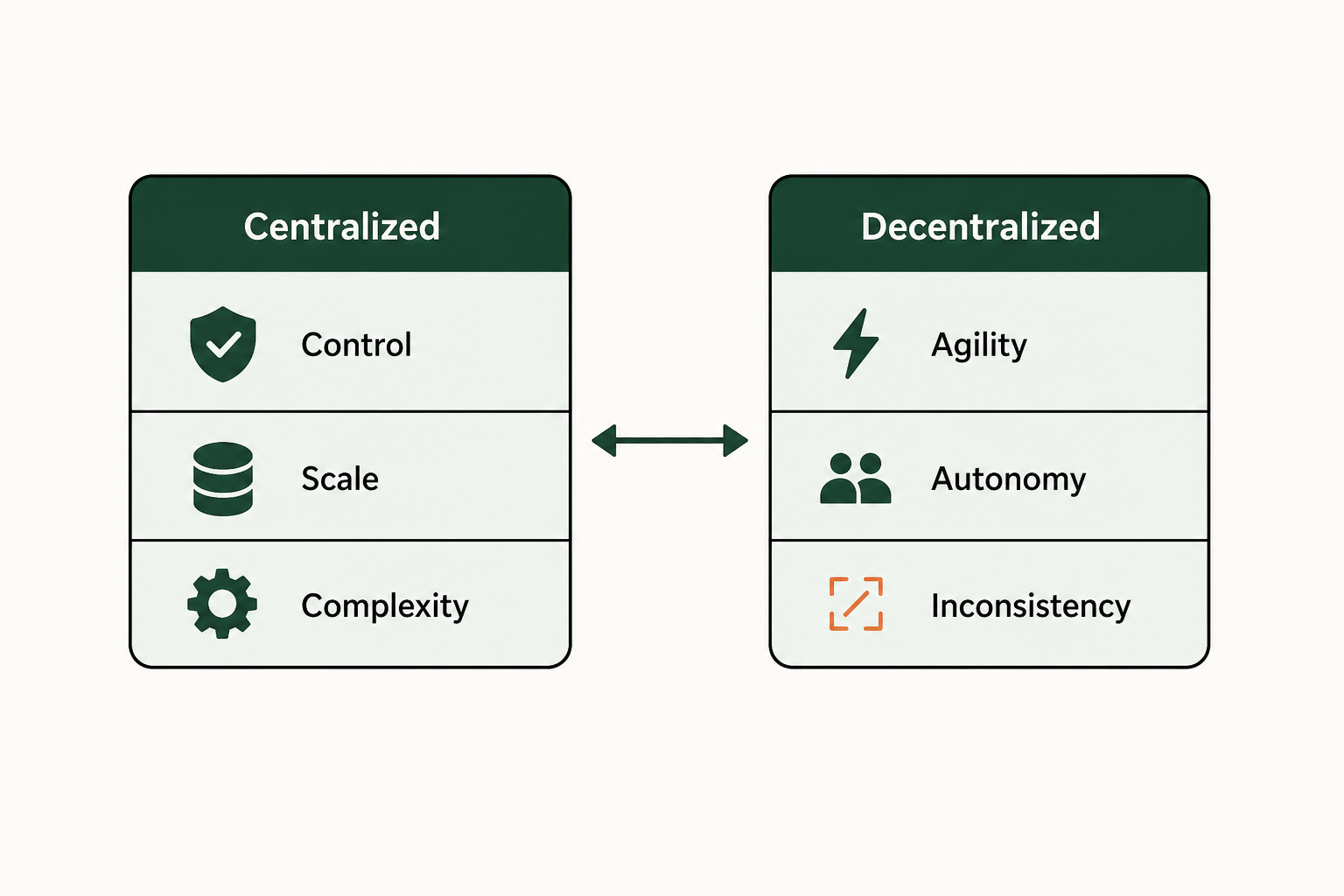
The right choice starts with the consequence of the action, then works backward to the control model. A customer-facing answer and a core-system write action should not be governed the same way.
- If you are still prototyping agent behavior, pick an agent engineering framework and treat governance as a separate design requirement. This fits teams that are not yet granting agents access to production systems.
- If you need API-heavy task automation, an integration or orchestration platform may cover simple workflow routing, but you still need a clear answer for policy enforcement and audit evidence.
- If you operate in a regulated environment, prioritize an Agentic Harness because high-risk systems require explainable control over what the agent can do, when approval is required, and how evidence is retained. The EU AI Act's provisions for high-risk AI systems take effect in August 2026, and those systems demand proper orchestration.
- If your critical work sits in legacy systems or no-API systems, choose an execution layer that can govern UI-level and process-level work, not only modern API calls.
- If your board or risk committee is asking about accountability, assign a business owner for every agent and select tooling that gives that owner a usable audit trail. CIO has reported that every AI agent needs a business owner who is accountable for its decisions and actions.
- If production scale is the goal, prefer governed execution over after-the-fact monitoring. KPMG has stated that organizations' shift from isolated AI deployments to coordinated, enterprise-wide use requires good governance to tie scale, performance, and value together.
 Recommendations: which approach fits your enterprise?
Next steps: implementing governed AI agents
Start with one consequential workflow. Define the permitted actions and map the systems involved. Then decide which steps require approval or verification, and which need recovery. Then test the execution layer against real exceptions, not only successful paths.
The honest trade-off is that governed execution adds structure. That structure is the point. An open-ended agent may look faster in a demo, but production systems need deterministic workflows and policy checks, with audit evidence and accountable ownership. The enterprise solution is the agent plus an Agentic Harness that controls how work gets done.
Compare features now. Choose your best AI monitoring solution.
Compare and choose the best AI agent monitoring for your enterprise.
See detailed features and benefits or connect with our experts for a personalized consultation.
Frequently asked questions
What is the main benefit of dedicated ai agent monitoring?
The main benefit is control over consequential agent behavior. General logs can show events, but dedicated AI agent monitoring should connect behavior and outputs to system impact, policy checks, and audit evidence. That matters because AI agents demand new approaches to governance, risk management, oversight, and scalable controls to ensure safety, compliance, and reliability, especially when they move from recommendations to live system actions.
How do I get started with implementing agent governance?
Start with one production workflow where the action matters, such as an account update, claims step, access change, service operation, or ERP transaction. Define what the agent may do, what it may never do, which steps need approval, and what evidence must be retained. Certiv deployment can be achieved in days, but the governance design still needs clear ownership and policies, plus exception paths.
How much do these ai monitoring solutions typically cost?
Pricing depends on scope, systems, usage, approval flows, and implementation model, so vendor-specific pricing should be evaluated directly. The cost question should include more than license fees. Only 26% of organizations have real-time cost visibility into running AI at scale. Certiv can achieve up to 80% lower token costs, so buyers should ask how the solution controls model calls and retries, along with governance overhead.
Who in my organization is this type of solution for?
The economic buyer is usually a CIO, CAIO, Head of AI, or senior technology executive accountable for production agent adoption. Security and compliance teams should be involved, along with enterprise architecture and operations teams, because they own risk controls and system change processes. Every agent also needs a business owner accountable for its decisions and actions, so governance cannot sit only inside engineering.
How long does it take to see results from an Agentic Harness?
Certiv deployment can be achieved in days, and its runtime model provides 100% predictability in execution. The first visible result is usually the ability to route a real agent action through policy, verification, and audit instead of leaving it as a recommendation or a manual handoff. Broader rollout depends on the number of systems and workflows, plus approvals and exception cases involved.
What common mistakes should I avoid when deploying AI agents?
The most common mistake is assuming the agent can be fully governed at design time. Agent behavior is non-deterministic and path-dependent, so policies embedded only in prompts or prototype code are weak controls for production. Another mistake is relying on humans to review every action. Human approval should focus on high-consequence steps, while routine execution follows deterministic workflows with automated checks and audit evidence, as human-in-the-loop supervision is not sustainable as agents increase in number, pace, and complexity.