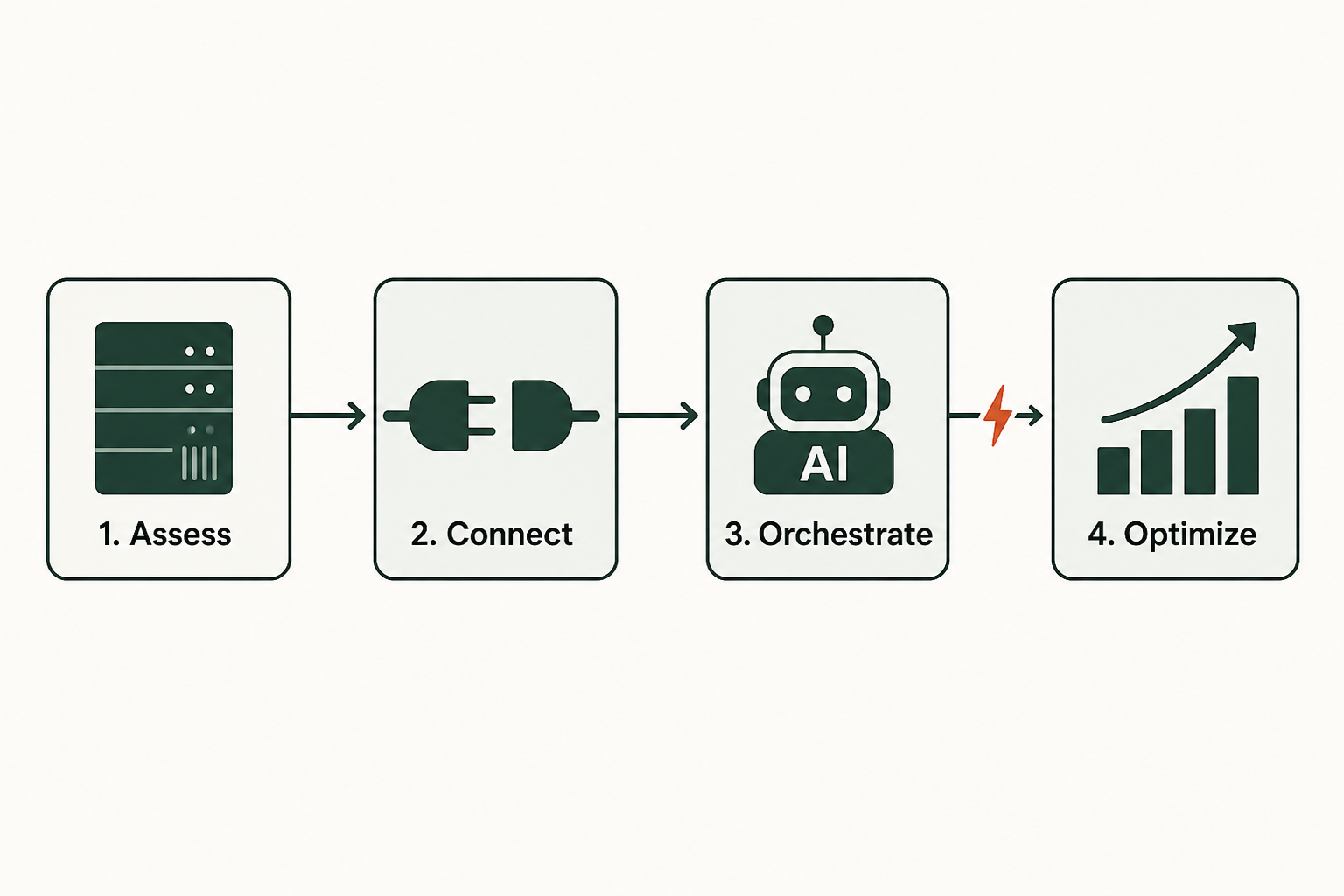
An autonomous agent that recommends a change is easy to approve. An autonomous agent that writes into an ERP, database, claims system, or admin portal creates a different operating problem: the business has to control the write, not just trust the reasoning that produced it. The practical enforcement pattern is to intercept agent tool calls with an Agentic Harness, validate permissions and state, and require verification before live systems are changed. In practice, the work starts with prerequisites and interception. From there, teams add rule evaluation, human verification, audit logging, recovery, and the operating checks needed to move from pilot behavior to governed execution.
How AI policy enforcement separates planning from execution
Enterprise teams get into trouble when they let the same probabilistic system that plans an action also decide how that action reaches production systems. The agent can reason, rank options, and propose a next step, but the action itself should pass through an execution layer that behaves predictably every time.
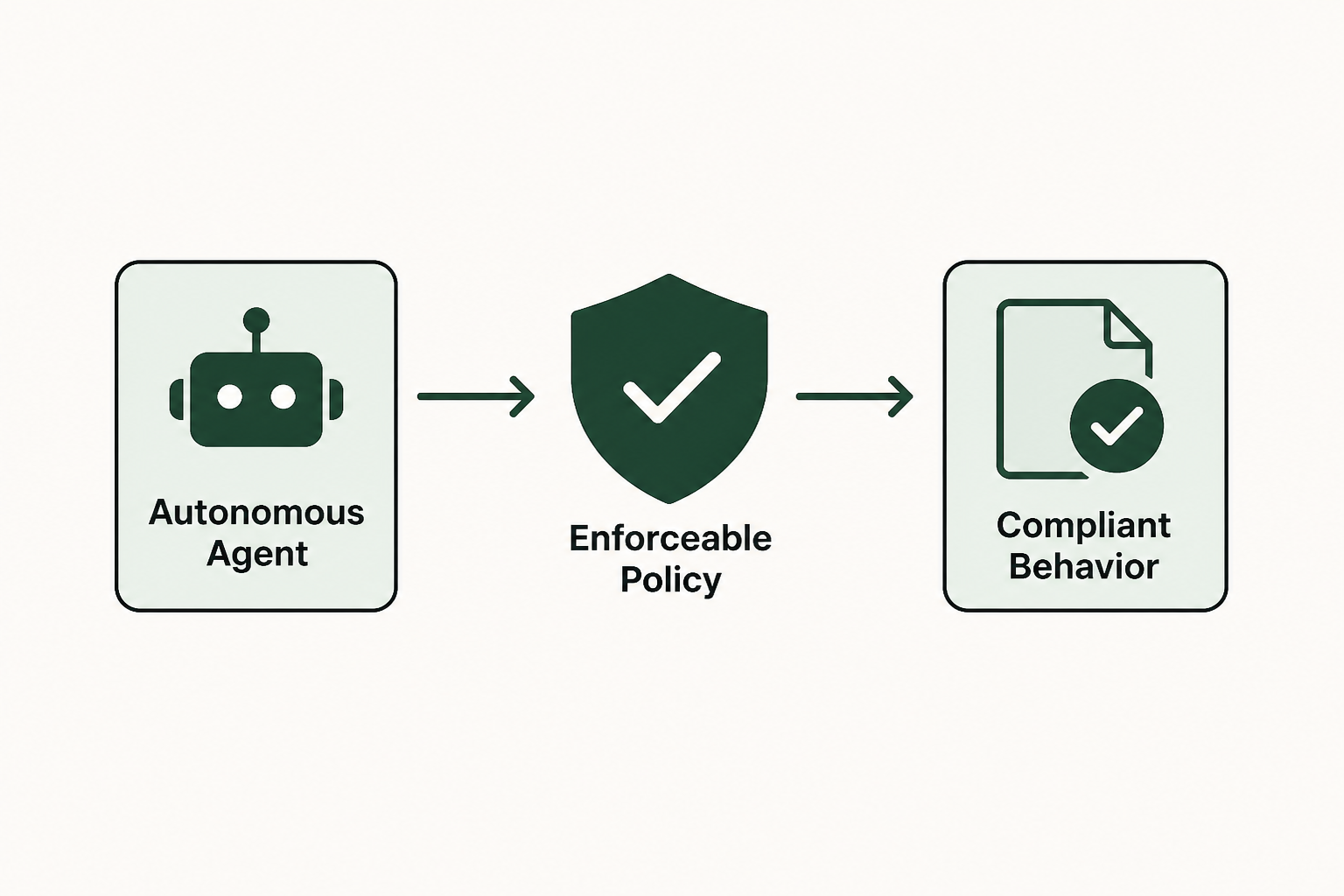
That separation matters because enterprise control is still thin. A survey cited by CIO found that only 24% of organizations have enforced enterprise AI governance, risk, and compliance policies. Better prompt wording does not close that enforcement gap. Policy has to sit between intent and execution, where it can stop, approve, escalate, or record the action before anything changes.
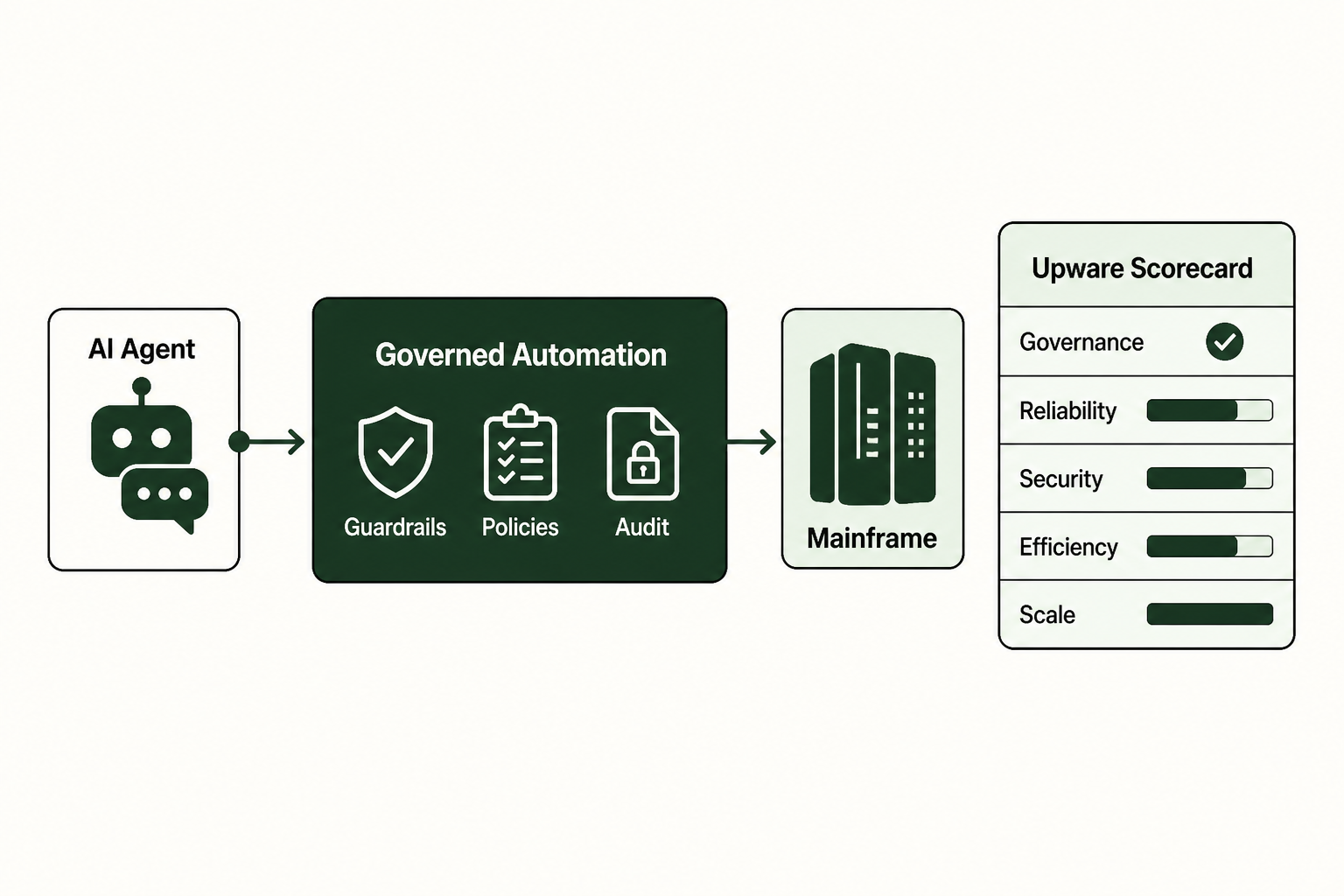
For production work, connect your agent to enterprise systems through an Agentic Harness: a controlled execution layer that receives the agent's proposed tool call, checks the action against policy, verifies required context, and only then dispatches the operation. That pattern also supports AI agent authorization, because access is evaluated at the action level rather than assumed from the agent's session.
Regulatory pressure makes this architecture more than a security preference. The EU AI Act gives the AI Office and Member State authorities supervisory and enforcement powers, including powers to require corrective measures and issue fines for non-compliance over General Purpose AI models. A governed execution design gives compliance, security, and operations a place to enforce rules before an agent changes a live system.
Prerequisites for enforcing policies on autonomous agents
Before you decide what the model can do, define where the model stops. The enforcement work becomes a controlled build once the boundary is clear between the agent, the Agentic Harness, and each target system.
You need four things before implementation:
- Tool specifications describe every permitted operation, required arguments, allowed values, and system endpoint.
- Policy rules map actions to permissions, thresholds, verification requirements, and denial conditions.
- State sources let the execution layer check live business context before dispatch.
- Audit storage records inputs, policy decisions, approvals, system responses, and recovery actions.
Enterprise security teams also need visibility into where AI is being used. Gartner describes AI usage control tools as systems that discover usage, assess risk, and enable security policy enforcement for workplace AI applications. That category is useful for monitoring employee use of third-party tools, but tool-call enforcement for agents needs a narrower operating surface: the exact action the agent wants to take.
Tie this prerequisite work into your enterprise AI governance framework so policy ownership is clear before the first write action is allowed.
 Prerequisites for enforcing policies on autonomous agents
Step 1: intercept tool invocations with an Agentic Harness
Once the Agentic Harness intercepts the payload before dispatch, the agent stops being a direct system actor. The model can still decide that a customer record should be updated or a purchase order should be opened, but the execution layer decides whether that call is valid, permitted, verified, and safe to run.
Place the Agentic Harness between the agent runtime and every write-capable tool. The agent emits intent in a strict format, then the Agentic Harness validates it before any API call, browser action, terminal command, or no-API systems interaction runs.
A minimal intercepted payload can look like this:
actor: renewal_agent
tool: update_contract_terms
target_system: crm
record_id: contract_48291
operation: write
fields:
  renewal_discount: 12
  term_months: 24
reason: customer retention offer approved by playbook
Schema enforcement should come before permission checks. If renewal_discount must be numeric, bounded, and tied to a customer segment, reject malformed or incomplete payloads before policy evaluation. That is how agentic process orchestration becomes practical: the agent plans, while deterministic workflows carry out the action path.
Step 2: enforce deterministic workflows and permission rules
After payload validation, move from format control to decision control. The execution layer should evaluate the initiator, the affected system, the fields being changed, the current state behind the request, and any business threshold the action crosses.
Use deterministic workflows for checks that must produce the same result from the same input. For example:
policy:
  action: update_contract_terms
  allow_if:
    - actor_role: renewal_agent
    - discount_percent_lte: 10
    - account_status: active
  require_approval_if:
    - discount_percent_gt: 10
    - term_months_gt: 36
  deny_if:
    - account_status: legal_hold
The rule engine should return one of three outcomes:
- Approve when the action is in policy and the state check passes.
- Escalate when the action is allowed only with verification.
- Deny when the action violates policy or lacks required context.
Conversational agent platforms and agent engineering frameworks do useful work when teams need to build agents, connect tools, and coordinate reasoning loops. They leave a harder question unresolved: what deterministic system controls the final write into enterprise systems when policy, verification, state, and audit all matter. Upware focuses on the governed execution layer between agents and enterprise systems, so the agent remains the brain and the Agentic Harness controls the system action.
That design also supports cost discipline. Enforcing execution policies can achieve up to 80% lower token costs and 100% predictability in runtime, because repeatable execution steps move out of model reasoning and into deterministic workflows.
Step 3: implement human-in-the-loop step-up verification
Policy enforcement should not turn every workflow into a manual review queue. Once the rule engine can approve, escalate, or deny consistently, the next job is to make verification selective: consequential writes get human review, low-risk changes keep moving.
Define thresholds that match business risk. A low-value field update may pass automatically. A pricing change, benefits decision, claims denial, clinical-adjacent action, payment release, or privilege change should require step-up verification when it crosses policy limits.
The verification packet should include:
- The proposed action in plain business language.
- The policy reason for escalation.
- The source context the agent used.
- The exact system change that will be made if approved.
- The rollback or recovery path if downstream state changes.
Healthcare is a useful cautionary signal because the stakes are clear. In one survey of healthcare C-suite executives, 83% believed AI could improve clinical decision-making, but only 12% considered contemporary algorithms strong enough to rely on without verification. The broader enterprise lesson is direct: confidence in AI value does not remove the need for verification before consequential action.
Pause the agent run while approval is pending. Do not let it re-plan around the escalation unless policy allows an alternative path.
Step 4: record immutable audit logs and manage state divergence
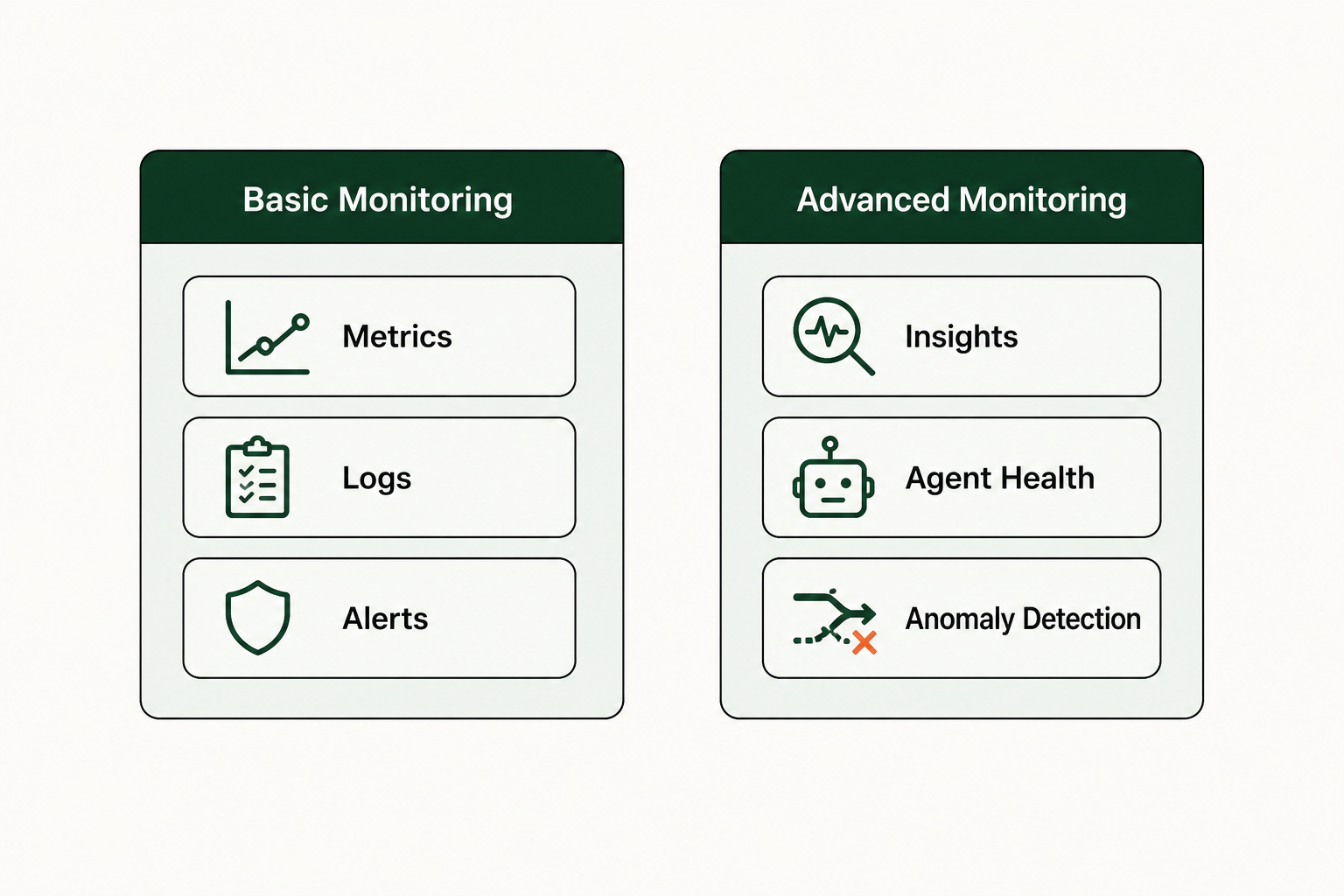
Even with enforcement steps established, live systems can change between the agent's plan and the moment of execution. A customer status changes, inventory moves, a claim is reassigned, or a duplicate request appears. Governed execution must record what happened and detect when reality no longer matches the plan.
Your audit trail should capture the full decision chain:
- Agent intent, including the proposed tool, target system, arguments, and stated reason.
- Policy evaluation, including matched rules, thresholds, and outcome.
- Verification record, including approver, timestamp, decision, and any comment.
- System response, including success, failure, partial write, or rejected operation.
- Recovery decision, including retry, re-plan, rollback, or manual handoff.
The AI agent audit trail should be written by the execution layer, not by the agent. That distinction matters during an incident review because the record must reflect what the system enforced, not what the model later summarized.
For state divergence, treat stale context as a policy condition. If the customer, order, patient, employee, or asset state differs from the state used to approve the action, stop execution and require a fresh evaluation. Predictable control beats a clever recovery that cannot be explained.
Troubleshooting AI policy enforcement and edge failures
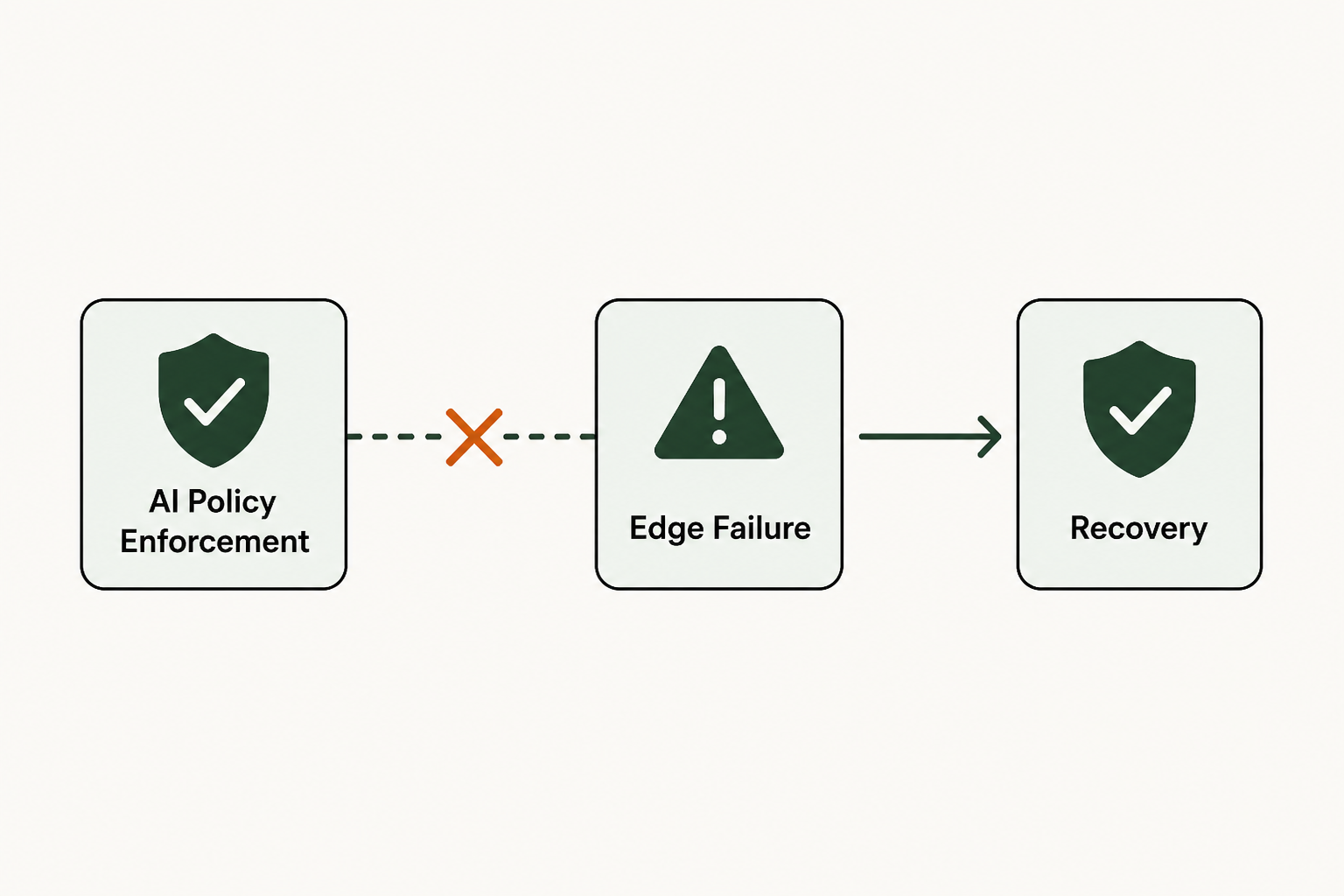
Once the enforcement path is in place, most deployment issues become diagnosable. The failures usually appear at the boundary between agent intent and governed execution, where payloads, policies, state, and retries meet.
Start with rejection loops. If the agent keeps sending an invalid payload after denial, return a structured error that explains the failed field and permitted range. Do not return a vague "policy failed" message, because that pushes the agent into guessing. If the next payload fails the same rule, cap retries and send the task to review.
Payload truncation is another common failure. If the agent's tool call can omit fields under token pressure or runtime limits, require schema completeness before policy evaluation. A missing field should never be interpreted as a safe value.
Stale state needs a different fix. When downstream state has changed, invalidate the approval and re-check the action against current data. For high-consequence work, the original approval should not carry forward automatically if the business object has materially changed.
Use these checks when diagnosing production behavior:
- Repeated denials usually mean the agent lacks a valid repair path or the policy message is too vague.
- Unexpected approvals usually mean the policy is checking the wrong field, stale state, or a default value.
- Slow execution often means every action is being escalated instead of only threshold-crossing actions.
- Weak audit evidence means logging is happening outside the execution layer.
For a broader operating model, connect these controls to agentic risk management strategies so incident handling, approval design, and recovery paths are governed together.
 Troubleshooting AI policy enforcement and edge failures
Achieving governed execution across enterprise systems
"Done" has a concrete meaning here: every consequential agent action is intercepted, validated, policy-checked, verified when needed, executed through deterministic workflows, and recorded in an audit trail that a security, compliance, or operations leader can read.
Upware describes this pattern as an Agentic Harness for governed execution across enterprise systems, including legacy systems and no-API systems where direct integration is not enough. The trade-off is plain: you add an execution layer between the model and production, but you gain predictable control over what changes, why it changed, who approved it, and how to recover when state diverges.
The first useful test is one bounded write workflow with real policy thresholds, not a broad agent rollout. If that workflow cannot be governed, the larger program is not ready.
Automate these steps now with our free AI policy enforcement checklist.
Put autonomous AI policy enforcement to work
Explore how our Agentic Harness validates actions on your own, or let our team walk you through a tailored demo.
Frequently asked questions
What is the main benefit of deterministic AI policy enforcement?
The main benefit is predictable runtime behavior for consequential actions. The agent can still reason and plan, but the execution layer enforces permissions, thresholds, verification, and audit rules through deterministic workflows. Enforcing execution policies can also achieve up to 80% lower token costs and 100% predictability in runtime because repeatable work is handled outside the model loop.
Who is this architecture designed for in the enterprise?
This architecture is designed for CIOs, CAIOs, Heads of AI, enterprise architects, security leaders, and operations owners who need autonomous agents to act inside regulated or mission-critical enterprise systems. It fits teams that cannot approve broad write access based on model instructions alone and need evidence of what the agent saw, called, decided, and changed.
How long does it take to see results when enforcing tool policies?
The useful first result is visible once a single bounded workflow is intercepted, policy-checked, and logged end to end. The brand proof supports deployment in days, but that still requires setup: tool definitions, policy rules, state checks, verification paths, and audit storage. The point is controlled execution that can be expanded safely, rather than a claim of instant deployment.
What are the most common mistakes to avoid during deployment?
The most common mistakes are giving the agent direct write access, treating vague denial messages as enough feedback, escalating every action instead of threshold-crossing actions, and logging summaries rather than the real decision chain. High-consequence workflows also need human verification, especially where leaders see AI value but do not consider algorithms reliable enough to rely on without verification.