How to choose your ai agent integration strategy
Your agent demo looked useful until it had to touch the ERP, the claims system, and the homegrown admin portal in the same workflow. When that happens, AI agent integration stops being a model-selection problem and becomes an operating-control problem. The short answer: choose an AI agent integration platform based on governed execution, not agent creation alone.
Enterprise leaders are not deciding whether agents matter. They are deciding how agents should reach production systems without bypassing security, creating one-off engineering work, or leaving process owners unable to explain what changed and why. A Zapier survey reported through Business Insider found that 72% of enterprises are using or testing AI agents, while 84% of enterprise leaders planned to increase investment in AI agent technology in the 12 months following 2025. The same survey named security and data privacy concerns as the biggest barriers to adoption.
That tension defines the platform choice. Agent-building tools can help teams create, prompt, and coordinate agents, but the wrong integration strategy turns every serious use case into a custom project. The pattern is familiar: pilots cannot reach systems of record, and security reviews stall. Agents may answer questions without executing governed work. The stronger approach gives the agent a controlled route into enterprise systems, including legacy systems and no-API systems, while preserving predictable runtime behavior along with audit trails and permission boundaries.
 How to choose your ai agent integration strategy
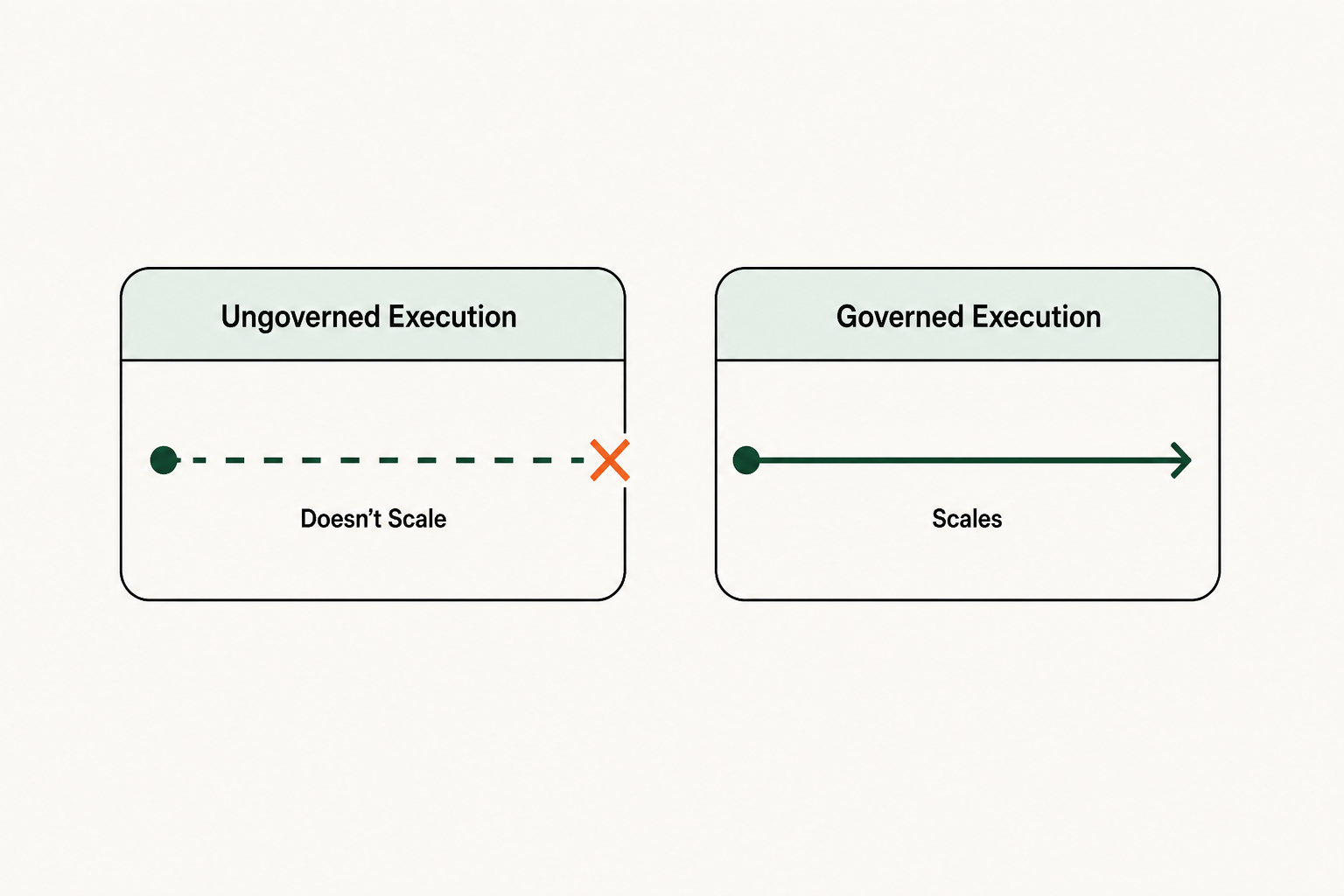
The verdict: governed execution is the only path to scale
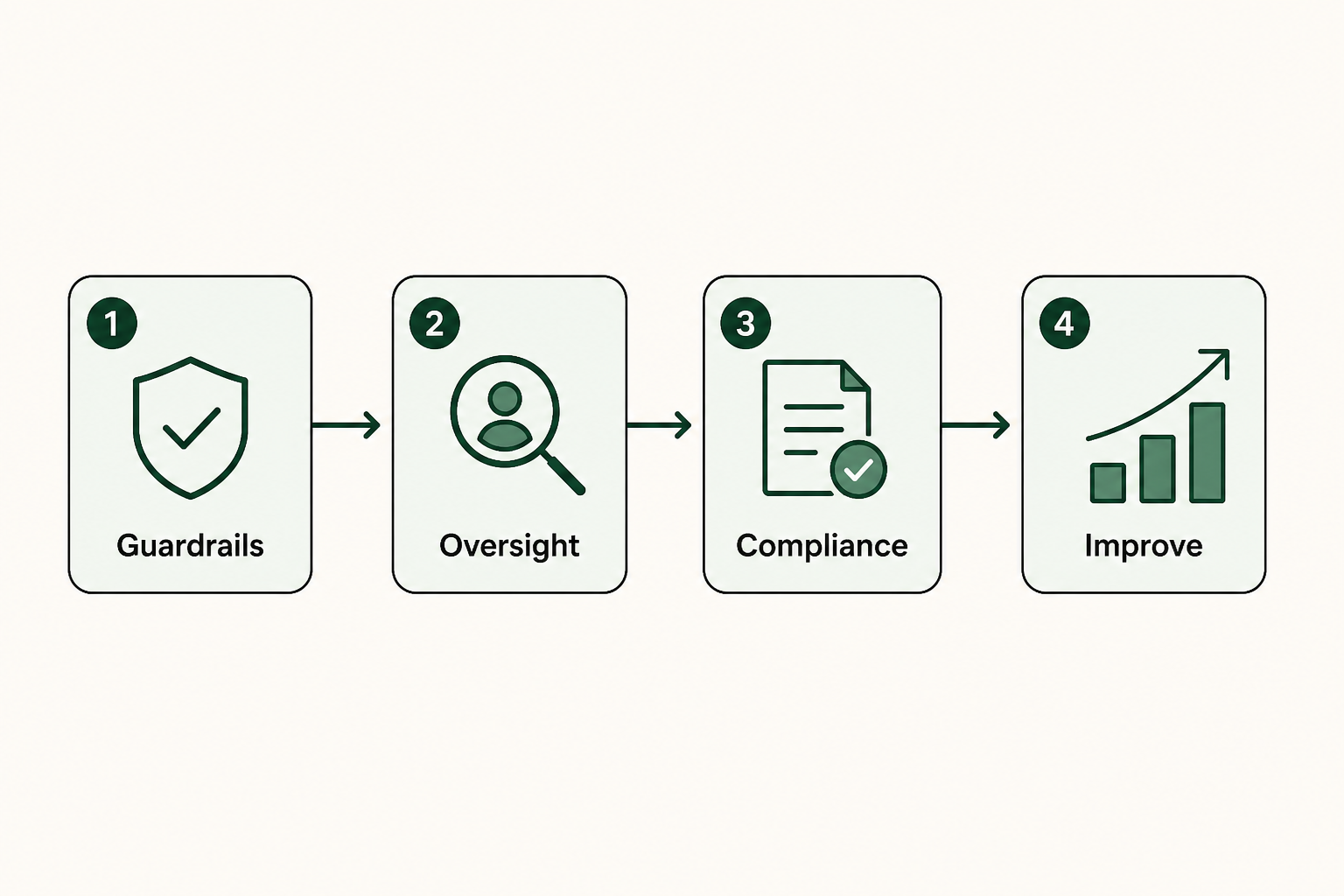
That operating problem leads to a simple decision rule, and it is the same logic behind AI agent guardrails.
Choose an AI agent integration platform based on governed execution, not agent creation alone. The enterprise gap is the execution layer between agents and production systems. That layer is where permissions, audit, deterministic workflows, runtime control, and system compatibility are enforced.
The reason is practical, not philosophical. The Cloud Security Alliance found that 53% of organizations have experienced AI agents exceeding their intended permissions, and 47% experienced a security incident involving an AI agent in the past year. In its 2026 study, the Cloud Security Alliance found only 8% of organizations say agents never exceed intended permissions, while 44% report low or no confidence in their ability to detect AI agent-specific threats.
That is the wrong operating environment for direct, open-ended access to enterprise systems. Agents are useful because they can reason across context, but production operations need more than reasoning. They need a controlled path that constrains what the agent can do and records what happened. Execution also has to be repeatable enough for process owners, security teams, and auditors to accept it.
The distinction is not academic. A platform that can only prompt an agent leaves the enterprise carrying the risk of whatever the agent decides to do next. A platform that owns the execution path can refuse the action, require an approval, and hand the auditor a record of both.
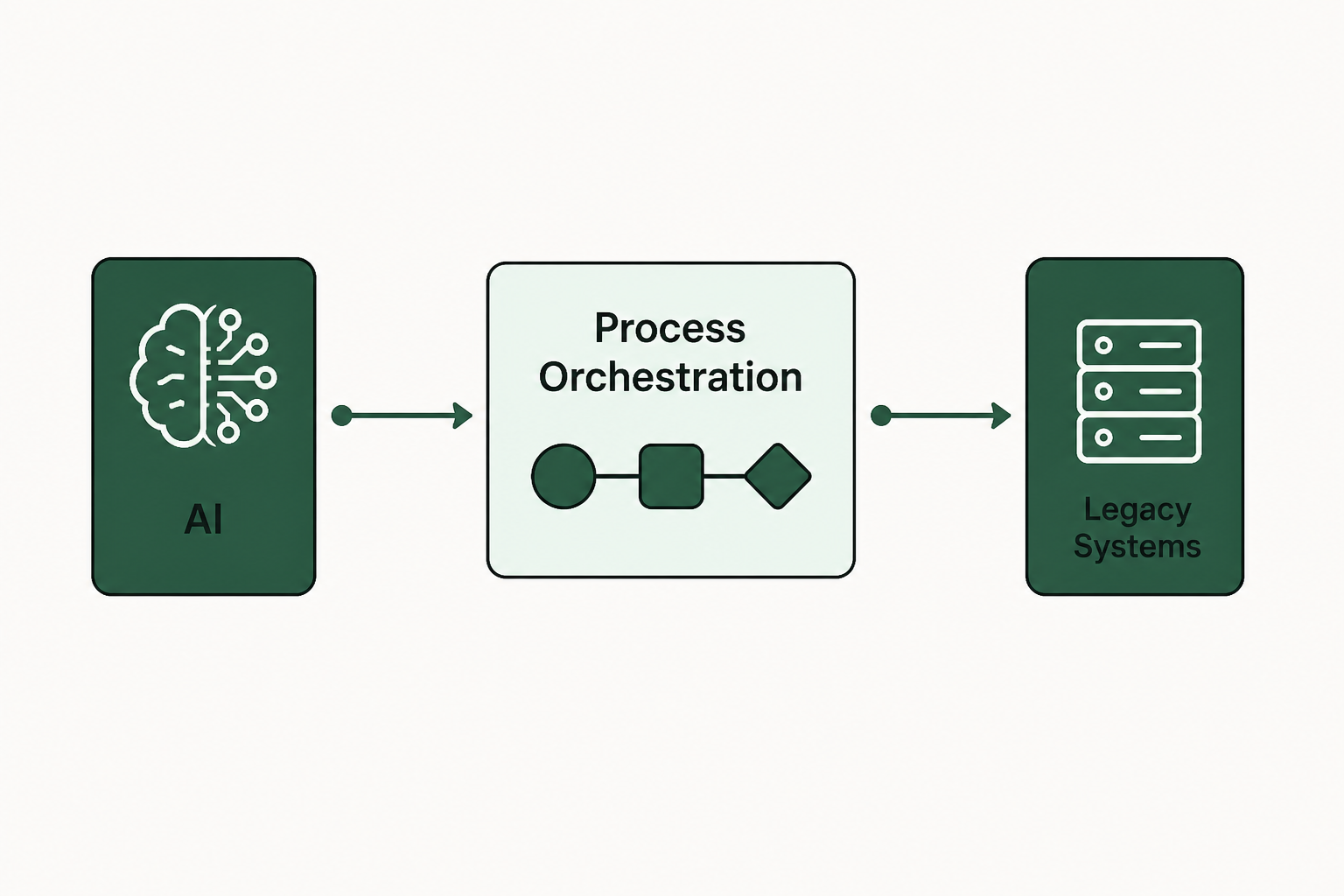
In plain English, an Agentic Harness is the controlled operating layer that lets an agent act through approved workflows rather than improvise against business systems. The agent remains the brain, but the Agentic Harness is the hands. It receives intent, routes the work through deterministic workflows, applies permissions and controls, and records the outcome.
That makes governed execution the deciding factor. If the platform cannot control how the agent touches the ERP, CRM, mainframe, admin portal, or other system of record, it remains a pilot tool. If it can, the agent can move from a useful interface to a governed operating capability.
Evaluation criteria for enterprise ai agent integration
The comparison only works if the criteria match the operational risk.
Vendor feature lists often overstate what matters because they describe what the tool can build, not what the enterprise can safely run. When you are choosing a platform rather than exploring the category, the useful questions are about control and auditability, with system reach treated as a separate requirement.
Use these dimensions to compare platforms:
- System reach
- Can the platform execute across enterprise systems, legacy systems, homegrown applications, and no-API systems without turning every connection into a custom build?
- Permission control
- Can it enforce what the agent is allowed to do at runtime, not just what the agent was prompted to do?
- Deterministic execution
- Can it convert agent intent into deterministic workflows that produce predictable, auditable outcomes?
- Audit and compliance
- Can security and risk teams, plus process owners, review actions, approvals, exceptions, and system changes, and show that each one was compliant when it ran?
- Cost discipline
- Can it reduce repeated model calls and uncontrolled token use by separating reasoning from execution?
- Time to production
- Can the integration reach useful operation in days with limited engineering dependency, rather than becoming another middleware project?
Those criteria push the comparison away from agent novelty and toward governed execution, which is where enterprise adoption either scales or gets trapped in review.
Platform comparison matrix
| Evaluation criterion | Agent engineering frameworks and orchestrators | General-purpose automation suites | Traditional integration middleware | Agentic Harness |
|---|---|---|---|---|
| System reach across legacy and no-API systems | 2/5 | 3/5 | 3/5 | 5/5 |
| Runtime permission control | 2/5 | 3/5 | 3/5 | 5/5 |
| Deterministic workflows | 2/5 | 4/5 | 4/5 | 5/5 |
| Audit and compliance fit | 2/5 | 3/5 | 4/5 | 5/5 |
| Cost-disciplined execution | 2/5 | 3/5 | 3/5 | 5/5 |
| Time to production for agent use cases | 3/5 | 2/5 | 2/5 | 5/5 |
Read the matrix by column, not by row. The first column scores well on developer velocity and poorly on everything an auditor asks about, which is the correct trade for a team still shaping a use case. The middle two columns invert that: they were built for structured, repeatable work and they handle it, but neither was designed for an agent that decides at runtime what to do next. The last column is scored against the case where an agent has to act on a system of record under a permission boundary, which is a narrower problem and a harder one, and it is the only column where cost-disciplined execution is a design goal rather than a side effect.
The scoring is intentionally weighted toward enterprise execution. If the main problem is agent experimentation, the first column may be enough. If the main problem is controlled action against production systems, the last column is the stronger fit.
Approach 1: agent engineering frameworks and orchestrators
The first approach is also the one many teams reach for first because it fits how AI pilots usually begin.
Agent engineering frameworks and orchestrators are useful when the work is centered on building agents, chaining tools, testing prompts, and coordinating reasoning steps. They give developers a productive way to assemble agent behavior, which is valuable while the use case is still being shaped and the operational boundary is limited.
The issue is that enterprise integration is rarely finished when the agent can call a tool. Stanford's 2026 AI report card, reported in Forbes, stated that the best AI models completed real-world computer tasks 66% of the time as of March 2026, close enough to be useful but not enough to remove the need for control. Accuracy rising toward human benchmarks is a reason to operationalize carefully, not a reason to let agents change systems without a governed path.
For enterprise leaders, the trade-off looks like this:
- What it is
- A developer-centric way to build and test agents while orchestrating tool calls.
- What it costs
- Integration work shifts to engineering teams, especially when the workflow crosses systems that were never designed for agentic access.
- Where it breaks
- Security and process owners still need proof that actions are permitted, logged, repeatable, and constrained at runtime.
This approach can support experimentation and internal prototypes, along with lower-risk workflows. It becomes thin when the agent must execute a process that spans a legacy ERP and a homegrown admin portal, with a regulated approval step in the path. At that point, the team is no longer choosing an agent framework. It is designing an execution architecture, and the missing piece is usually the governed execution layer.
Approach 2: the Agentic Harness and governed execution layer
Once the work moves from reasoning to action, the architecture has to start from execution control.
An Agentic Harness starts from the opposite end of the problem. It assumes the enterprise already has agents, systems, permissions, workflow rules, and audit obligations. The work is to connect those pieces through an execution layer that lets the agent request action while the platform controls how that action is carried out.
Deterministic workflows become important at this stage. The agent can interpret intent and context, but the execution layer should convert that intent into approved steps and bounded system actions with observable outcomes. That difference is what makes runtime behavior predictable enough for production owners. Upware's platform supports 100% predictability in runtime, up to 80% lower token costs, deployment in days, and 0 engineering resources.
Agent engineering frameworks do well at building and orchestrating agents. They leave unresolved the harder enterprise question of how an agent safely changes records, triggers workflows, and reaches systems that lack clean APIs. Like the incumbent platforms, but Upware centers on the governed execution layer between agents and enterprise systems. The comparison is about whether agents can execute under control.
The practical breakdown is:
- What it is
- A controlled gateway that connects agents to enterprise systems, including legacy systems, homegrown applications, and no-API systems.
- What it costs
- Teams still need to define approved workflows, permissions, and exception handling. Governed execution is faster than custom integration, but it is not permissionless automation.
- Where it breaks
- It is not the right choice for teams that only want to experiment with prompts or build small internal demos without production-system access.
For serious AI agent integration, this model is stronger because it treats execution as the product surface. It gives the agent a governed route to act, while security and operations keep control over the systems that matter.
Which integration approach is right for you?
The right choice depends on where the constraint sits.
If your team is still proving whether an agent can reason through a task, pick an agent engineering framework or orchestration tool. It is better suited to early design work, developer testing, and workflows that do not touch sensitive systems of record.
If you own enterprise applications, integration, automation, or process operations, pick an Agentic Harness. For production, the constraint is executing that plan through auditable, compliant controls with cost discipline across real systems.
If your security team is already slowing agent access, pick governed execution. In the same Cloud Security Alliance study, only 13% of organizations feel highly prepared for AI-related regulations, while 49% feel slightly or not at all prepared. That gap brings audit and permission boundaries into the buying decision, along with runtime detection.
If your sponsor is asking for measurable productivity, avoid platforms that leave integration as a separate project. The PwC AI agent survey reported that 79% of companies are adopting AI agents, and 66% of those adopting them report measurable value through increased productivity. That value depends on agents doing real work, and real work usually means controlled action across systems.
If you have a credible agent pilot blocked by ERP, CRM, mainframe, or internal portal access, Upware is built for exactly that situation. It is built for governed execution where the agent needs the hands to operate without giving it unrestricted system access.
Your next step: from pilot to production
The decision point is whether your integration strategy can control what agents do when they touch production systems, after basic testing has shown they are capable enough to evaluate.
If the agent cannot execute through deterministic workflows, audit, permission control, and a governed execution layer, the pilot remains dependent on manual workarounds. That may be acceptable for a demo, but it is not a durable operating model for enterprise systems.
The practical test is narrow. Take one blocked workflow, name the systems it has to touch, and ask whether your current platform can enforce permissions at runtime and produce an audit record for each action. If the answer needs an engineering project, the integration strategy is the constraint, not the agent.
For enterprise AI agent integration, choose the platform that makes execution governable before you scale the agent.
 The verdict: governed execution is the only path to scale
Connect agents to legacy and no-API systems under governance
See how the execution layer works on your own, or book a walkthrough against your enterprise stack.
Frequently asked questions
What is the main benefit of using an Agentic Harness for ai agent integration?
The main benefit is predictable execution against enterprise systems. An Agentic Harness gives an AI agent a controlled path to act through approved workflows, rather than letting it operate directly and broadly against systems of record. Upware's Agentic Harness supports 100% predictability in runtime, which matters when process owners need consistent outcomes and audit trails with clear boundaries.
How do I connect AI agents to my legacy or homegrown systems without APIs?
Use an execution layer designed for legacy systems, homegrown applications, and no-API systems. The point is to avoid turning every connection into custom code or middleware, or into a consulting project. The agent should send intent into a governed path, while the platform handles the controlled system interaction, records the action, and applies the right workflow constraints.
How does governed execution reduce the security risks of AI agents?
Governed execution reduces risk by separating reasoning from system action. The agent can decide what needs to happen, but the execution layer enforces what is allowed to happen, which systems can be touched, what approvals are required, and what gets logged. That matters because security data shows agent permission violations and AI-agent incidents are common enough to require runtime control, not prompt guidance alone.
How long does it take to see results from this type of integration?
Upware deploys in days with 0 engineering resources. That does not mean no setup or no governance design. It means the integration path is intended to avoid a custom engineering program for each system connection, so teams can move from a blocked pilot to controlled execution faster than a traditional build.
Who is this type of ai agent integration solution for?
It is for enterprise application, integration, automation, and AI leaders who need agents to execute work across mission-critical systems. The strongest fit is a midsize-to-large enterprise with legacy systems, homegrown portals, ERP-heavy processes, regulated workflows, or no-API systems where direct agent access would create security and reliability concerns.