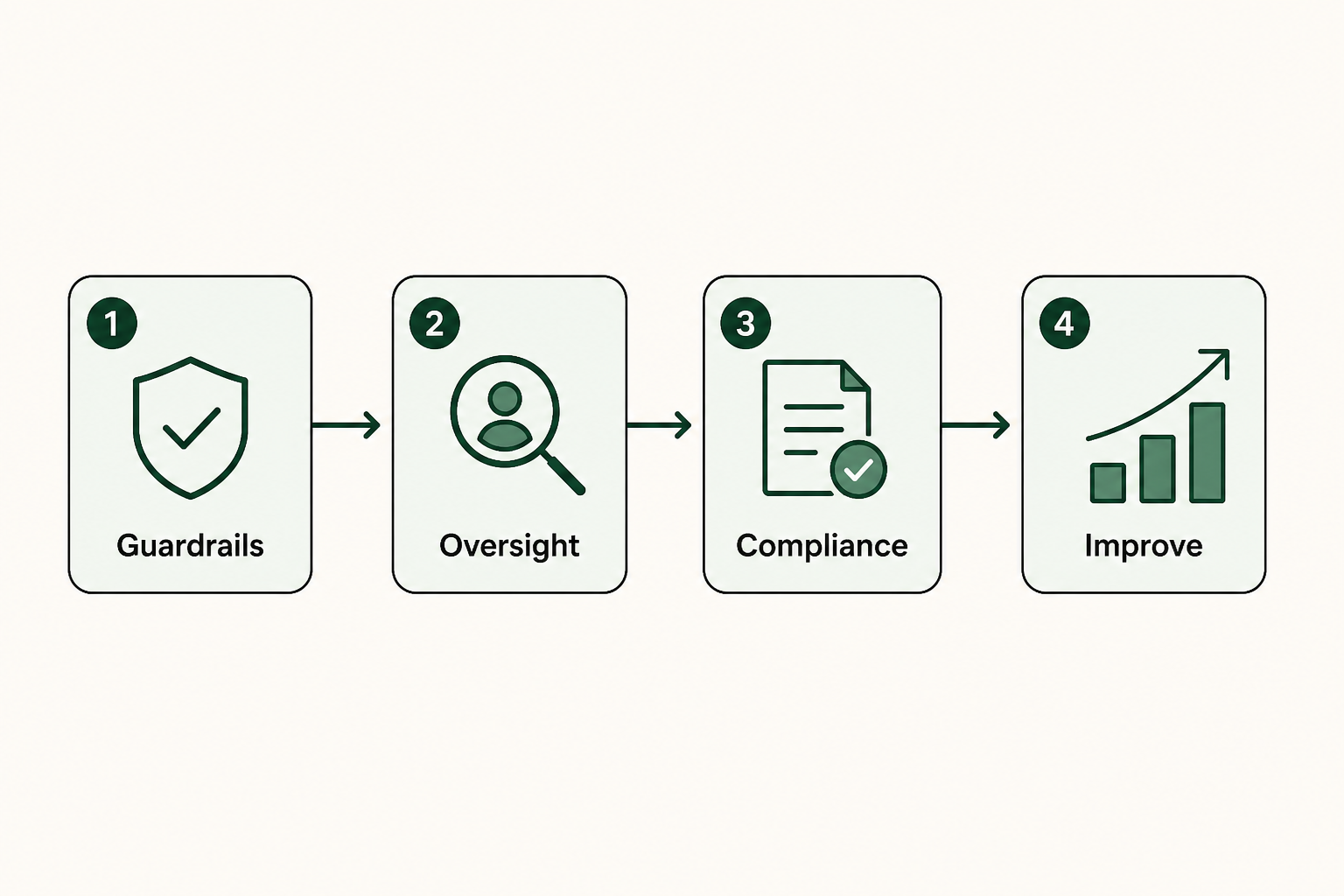
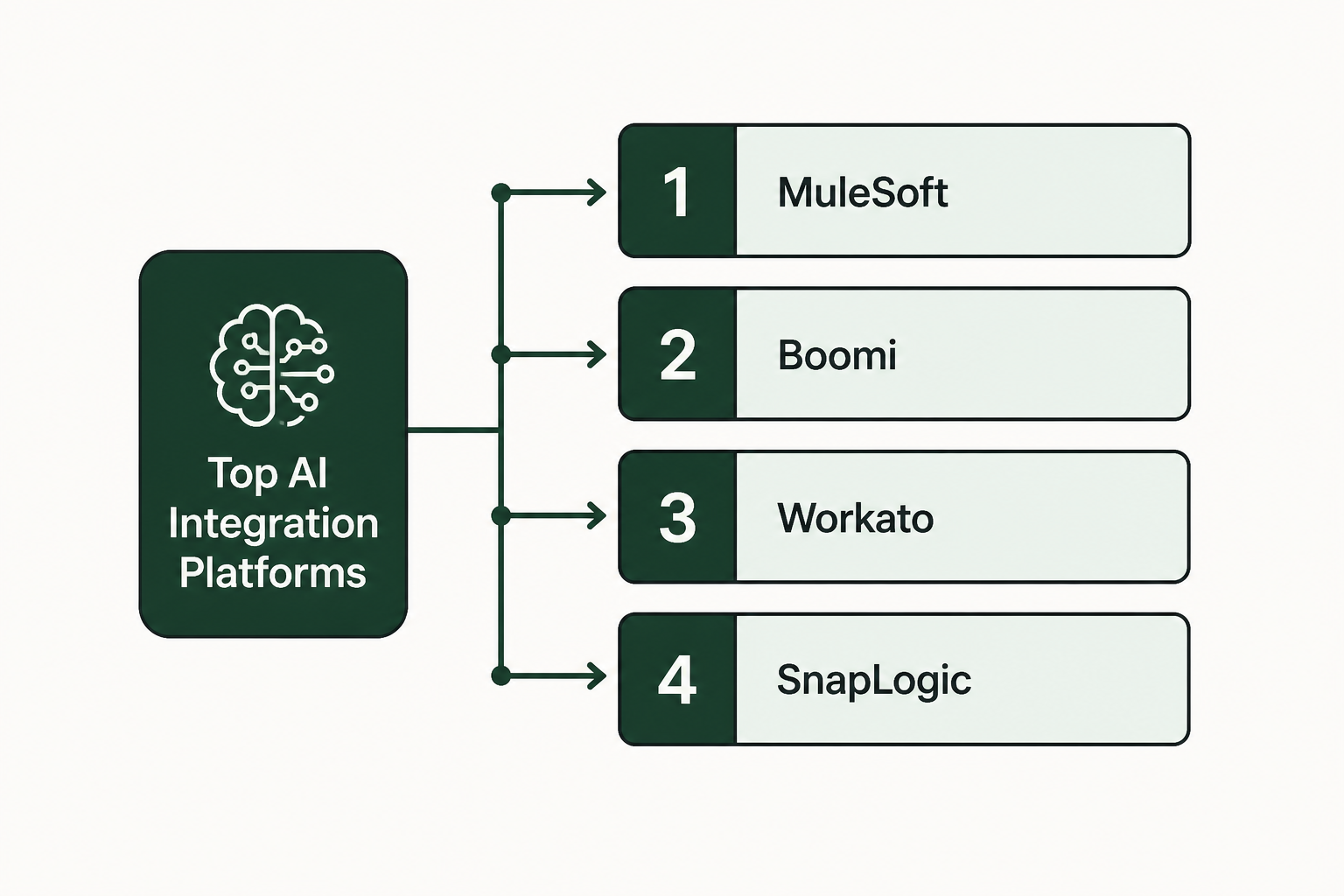
An agent can look useful in a demo and still fail approval the moment it needs production access, such as changing a live record or calling a production system while retaining credentials. AI agent guardrails are the mechanisms and policies that control agent behavior so consequential actions stay compliant, safe, and operationally sound. This ranked guide is for CIOs, CAIOs, Heads of AI, enterprise architects, and security leaders choosing among four guardrail categories, ranked by policy enforcement, auditability, operational control, failure handling, and fit for production enterprise systems.
What are AI agent guardrails?
A Deloitte survey on AI governance found that only 21% of surveyed enterprises have mature governance in place to manage agentic AI risk. That gap matters because agents do more than answer questions. They plan and call tools; they also pass data between systems and sometimes take actions that change business state.
Defining guardrails: control, not just containment
AI agent guardrails define what information an agent may see and record, which decisions it may make, which tools it may call, what it may change, and when it must escalate. They can include context-aware controls and permission limits, with human approval, decommissioning rules, execution checks, and audit records attached to the workflow. In Cloud Security Alliance research, 79% of organizations viewed context-aware controls as important or very important, and 66% reported clear guardrails defining agent boundaries.
The cost of unchecked agents
The risk has moved from abstract governance concern to operational exposure. A Cloud Security Alliance survey found that 65% of enterprises experienced AI agent-related incidents in the prior 12 months, with reported outcomes including data exposure or operational disruption, plus financial losses. The same research exposed a visibility gap: 68% of organizations believed they had strong visibility into agents, while 82% discovered shadow AI agents in the past year.
Software supply chains add another pressure point. In May 2026, the Mini Shai-Hulud worm attack compromised 169 npm packages and 2 PyPI packages, affecting packages with more than 518 million cumulative downloads. A systemic architectural flaw disclosed in April 2026 by OX Security in the Model Context Protocol (MCP) exposed an estimated 200,000 vulnerable instances across a supply chain encompassing more than 150 million package downloads.
Our evaluation criteria for guardrail solutions
Those risks change how guardrail solutions should be judged. The ranking below treats guardrails as production controls rather than demo capabilities. A useful enterprise agent needs enough freedom to complete work, but that freedom has to be bounded by policy, verified at execution time, and visible after the fact.
The evaluation favors categories that meet five operational tests:
- Policy enforcement, because agents must follow organizational rules, regulatory constraints, and approval paths even when prompts are vague or user intent changes.
- Auditability, because security, legal, risk, and operations teams need a record of what the agent saw, what it called, what it changed, and why escalation occurred.
- Operational control, because live enterprise systems require permission management, state handling, retries, fallback paths, and predictable failure behavior.
- Human review at decision points, because autonomy is already being applied selectively. Cloud Security Alliance research found that 53% of organizations operate agents autonomously for low-risk tasks while using human review for higher-risk actions.
- Fit with production integration, because the hard part is rarely the conversation. The hard part is allowing an agent to act across enterprise systems, including legacy and no-API systems, without turning every action into an unmanaged model decision.
 Our evaluation criteria for guardrail solutions
That is why the guide moves from narrow controls toward governed execution. Policy guardrails establish the base. Operational and behavioral controls add runtime discipline and judgment. The strongest category is the one that turns those controls into an execution layer, where deterministic workflows, verification checkpoints, state management, and recovery paths decide how work is carried out.
At a glance: key categories of AI agent guardrails
The table ranks the options by production strength. The detailed sections then build from the baseline layer toward the highest-ranked category, because enterprises usually need the foundation before they can govern consequential execution.
| Production rank | Guardrail category | Headline strength | Best fit | Main trade-off |
|---|---|---|---|---|
| 4 | Policy and compliance guardrails | Defines what agents are allowed to do | Regulated workflows and approval-heavy operations | Can become brittle if policy is separate from execution |
| 3 | Operational and safety guardrails | Controls runtime behavior and failure handling | Agents calling tools, APIs, or production systems | Monitoring alone may find problems after they occur |
| 2 | Ethical and behavioral guardrails | Shapes agent conduct and escalation behavior | Customer-facing or employee-facing agents | Hard to verify if behavior rules are only prompt-based |
| 1 | Agentic Harness | Places control in the execution layer | Enterprise agents taking bounded action across systems | Requires clear process ownership and policy design |
1. Policy and compliance guardrails
The first layer of control is policy. Policy and compliance guardrails specify the rules an agent must obey before it reads sensitive data, performs a write action, changes a record, triggers a workflow, or escalates a case.
This category fits organizations that already know which actions are allowed, restricted, or forbidden. It is especially useful where governance teams need clear boundaries around agent behavior, because 66% of organizations report having guardrails that define agent boundaries, while context-aware controls are viewed as important or very important by 79%.
- The category maps actions to permissions and user roles, while also accounting for risk levels and approval requirements.
- It fits regulated teams with defined policy obligations and known high-risk workflows.
- Its main strength is clear control over what an agent may attempt.
- The main trade-off is that policy rules can drift away from real execution if they sit in documentation, prompts, or review queues rather than in the process path itself.
The missing piece is usually lifecycle discipline. Only 21% of organizations have formal decommissioning processes for AI agents, which means stale permissions and credentials can remain after a pilot, workflow, or owner has moved on.
2. Operational and safety guardrails
Once policy defines what should happen, operational guardrails handle what actually happens while the agent is working. This category covers tool calls and permission checks, then controls state changes, retries, timeouts, escalation, and recovery when reality does not match the plan.
Operational guardrails matter most for teams moving from recommendation agents to action-taking agents. The Cloud Security Alliance found that AI agent-related incidents led to data exposure for 61% of respondents, operational disruption for 43%, and financial losses for 35%. Those outcomes point to execution risk, not just model risk.
- Runtime controls monitor and restrict actions while the agent works.
- It fits teams connecting agents to live systems, including transactional workflows and internal tools.
- Its main strength is better control over failure modes during execution.
- The main trade-off is that monitoring without enforced checkpoints can create evidence after damage has already occurred.
Organizations are prioritizing monitoring, risk management, and permission control because incidents have tangible business impact. But periodic monitoring, reported by 59% of organizations, should be treated as a checkpoint model rather than a complete safety answer.
3. Ethical and behavioral guardrails
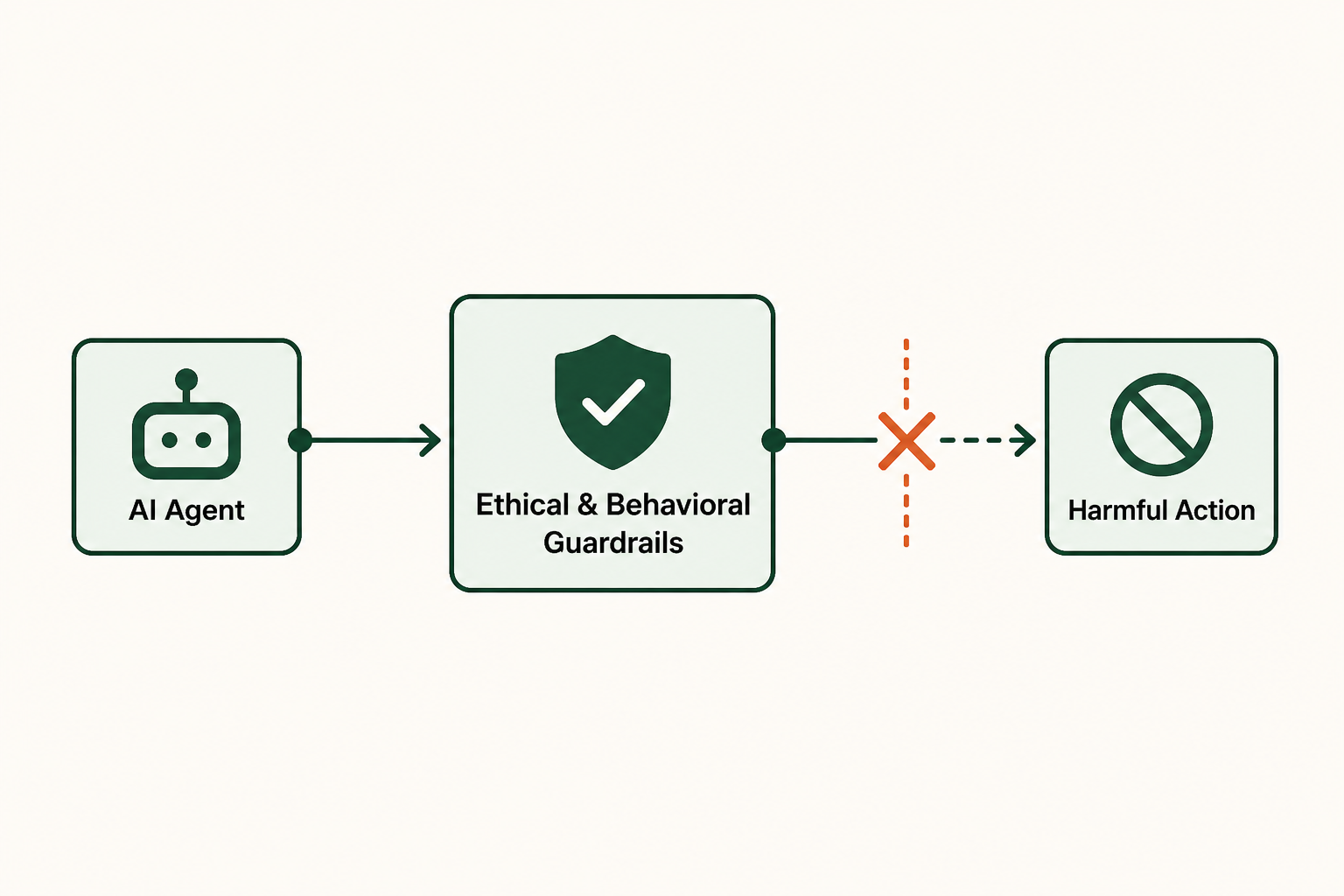
Operational control still leaves a separate question: how should the agent behave when it interacts with people? Ethical and behavioral guardrails govern tone and escalation, along with refusal behavior, fairness constraints, and acceptable interaction patterns. For enterprise work, this category matters most when agents interact with employees, customers, vendors, or regulators.
The practical test is whether the agent knows when to stop. Since 53% of organizations allow autonomy for low-risk tasks and use human review for higher-risk actions, behavior rules should map to action risk rather than broad statements of acceptable conduct.
- These controls shape how an agent communicates with people, when it refuses or escalates, and how it handles sensitive situations.
- They fit customer operations and employee service teams, along with claims, support, and other human-facing workflows.
- Their main strength is that they help align agent behavior with policy, brand standards, and risk tolerance.
- The main trade-off is that behavioral rules are hard to prove if they are only embedded in prompts or post-response filters.
 3. Ethical and behavioral guardrails
This category is useful, but it should not be confused with operational control. A polite agent can still call the wrong system, expose the wrong field, or approve the wrong change. Behavioral guardrails need to connect to governed execution, or they remain advisory.
4. The Agentic Harness: governed execution as a guardrail
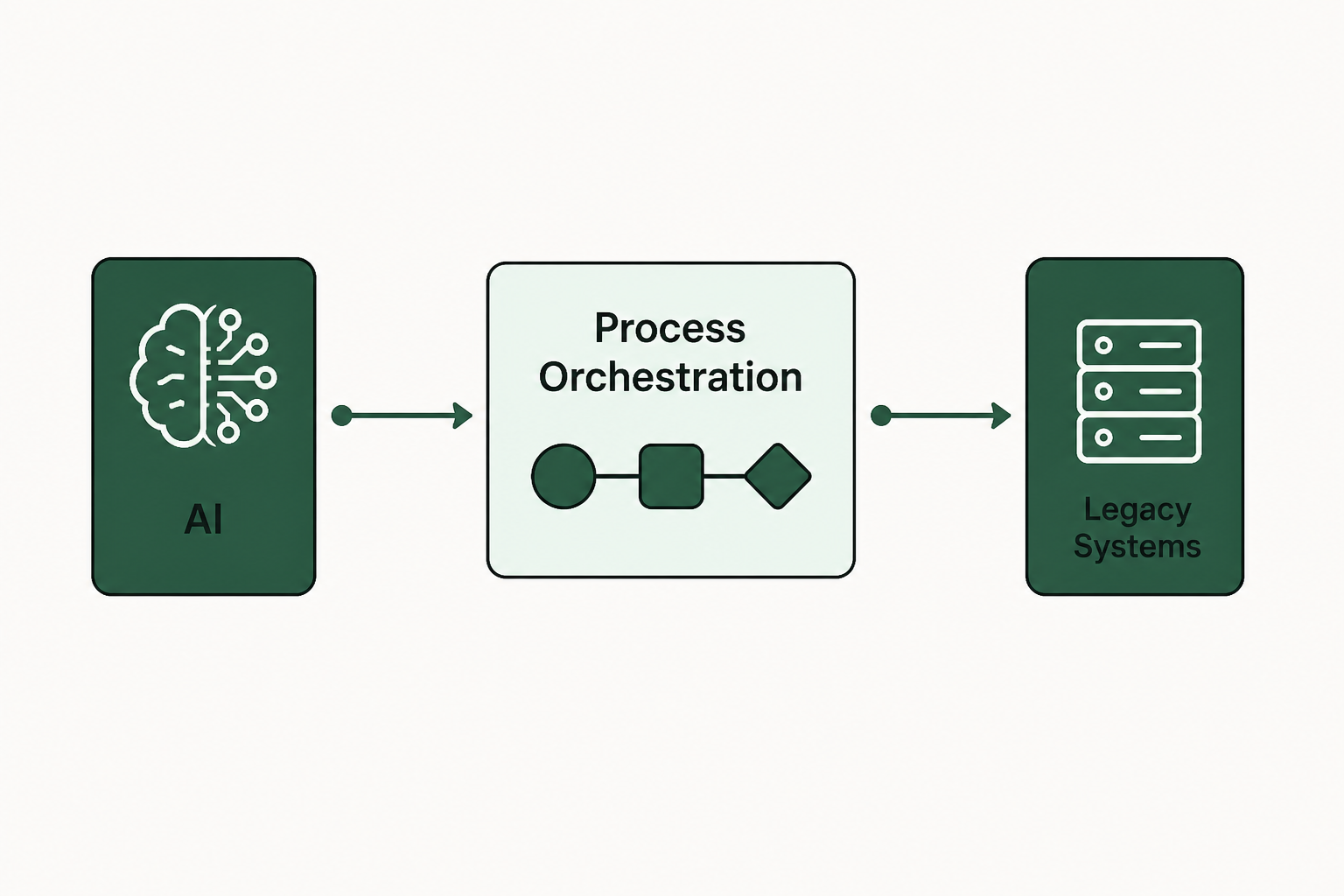
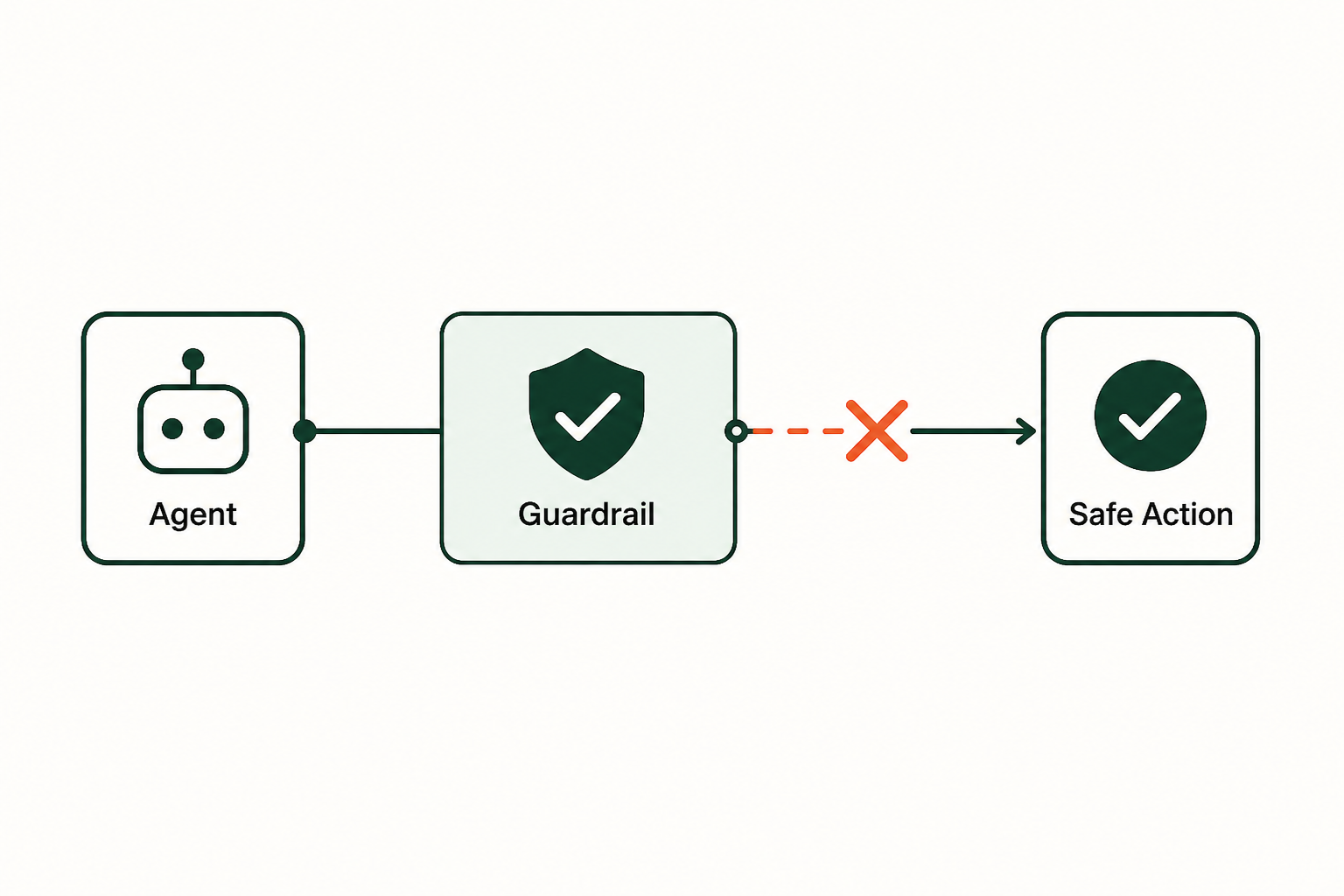
The strongest guardrail category brings policy, runtime safety, and behavioral rules into the execution layer itself. The Agentic Harness is the controlled operating path between the agent and enterprise systems. In plain terms, the agent decides what should happen, and the Agentic Harness controls how that work is performed.
That distinction matters. Conversational agent platforms and agent engineering frameworks can be useful for building and coordinating agents. They often help teams create interfaces, plan tasks, and connect tools. What they can leave unresolved is the governed execution layer between agents and enterprise systems, where policy checks, verification, deterministic workflows, state management, and failure recovery determine whether a consequential action is allowed and how it is completed. Upware centers on that governed execution layer instead.
- It is an execution layer that mediates agent-to-system actions through policy-bound workflows with verification checkpoints and auditable control.
- It fits enterprises moving agents into regulated or mission-critical work that spans systems.
- Its main strength is that it turns guardrails into governed execution rather than disconnected controls.
- The main trade-off is process clarity. Teams must know which actions need approval, which can run autonomously, and what evidence must be retained.
The Agentic Harness is strongest where agents need to touch legacy systems, no-API systems, and core enterprise systems that were never designed for autonomous software actors. The platform can be deployed in days, and its deterministic workflows provide 100% predictability in runtime. That does not remove every form of AI risk, but it does make execution predictable, reviewable, and bounded.
The important shift is architectural. Instead of asking the model to behave safely and hoping logs explain the outcome, governed execution makes the allowed path explicit. Deterministic workflows enforce the route, collect evidence, and recover when the system state differs from the plan. The Agentic Harness makes the agent useful without giving it unmanaged control.
Who should skip standalone guardrail tools?
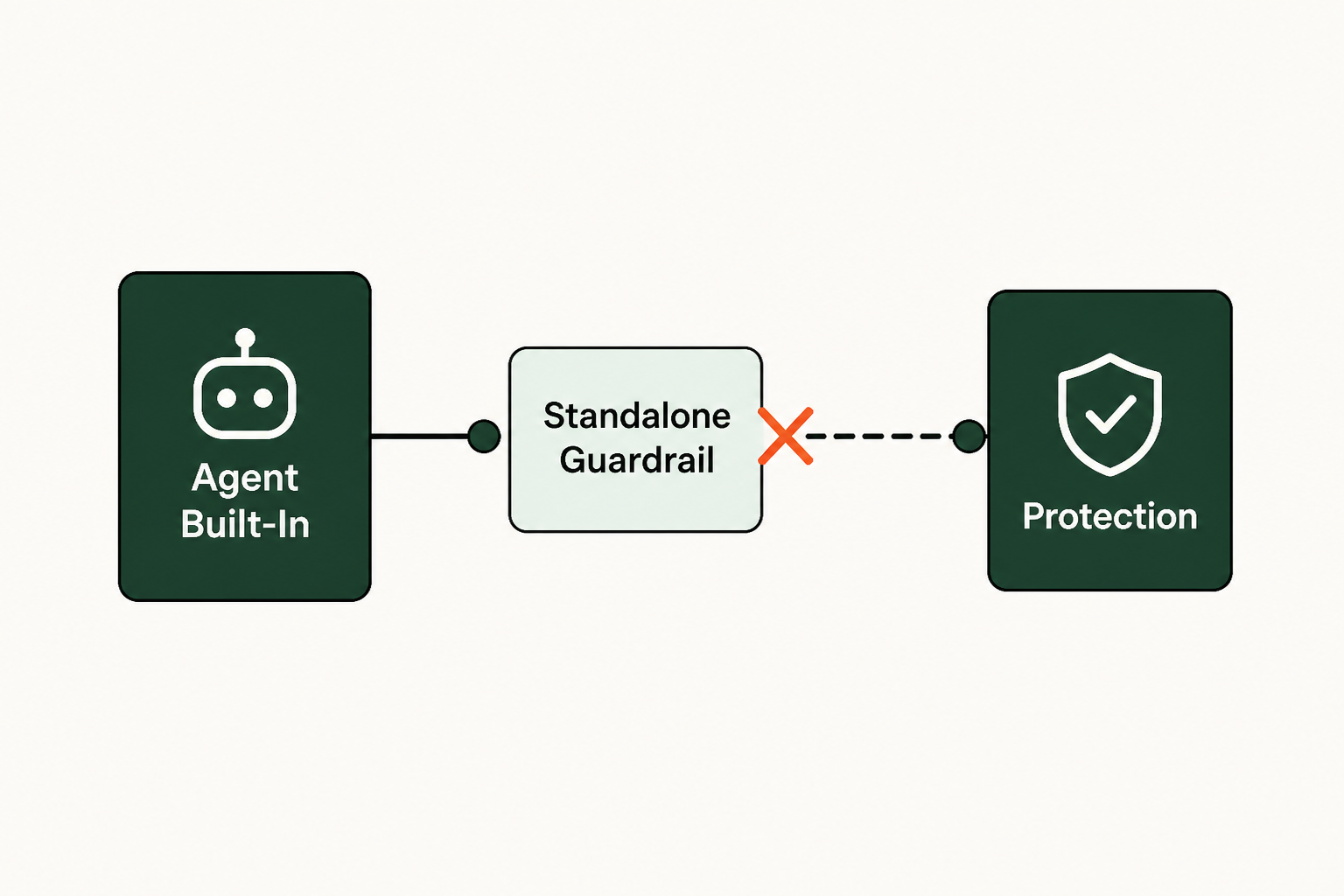
Standalone guardrail tools are the wrong first purchase when an organization has no approved agent use case, no owner for agent actions, or no agreement on which systems an agent may touch. In that situation, buying a control layer before defining the controlled process creates another governance artifact that nobody owns.
It also makes sense to wait if the work is still limited to offline research, internal drafting, or low-risk experiments where agents do not call production systems, retain credentials, or change records. Guardrails still matter, but a dedicated production setup may be premature until the workflow has a real operating owner.
The category is also a poor fit if leadership wants agents to replace all human decision-making. The pattern in enterprise adoption is more bounded: low-risk autonomy, human review for higher-risk actions, and clear escalation. If the business cannot name the decision points where review is required, it is not ready for broad agent execution.
 Who should skip standalone guardrail tools?
Secure your agents with a governed execution layer
For production enterprise agents, the strongest guardrail is governed execution, placed where agent intent becomes system action, rather than a single filter, policy file, or monitoring dashboard.
Policy controls define the rules. Operational and behavioral controls cover runtime risk and interaction patterns. The Agentic Harness ranks highest because it brings those controls into the execution layer, where consequential work is actually performed and evidenced.
That choice has an honest trade-off: it asks the enterprise to define process ownership and acceptable action paths. For leaders comparing enterprise integration methods, that discipline is the point. Agents are the brain, but governed execution is what keeps the hands inside policy.
Protect your AI: Explore guardrail solutions now.
Advance your AI agent guardrails.
Discover solutions for secure AI agent operation tailored to your enterprise needs.
Frequently asked questions
What is the main benefit of using AI agent guardrails?
The main benefit is controlled action. Guardrails define what an agent may do, when it needs approval, and how its behavior is checked against policy and context. That matters because AI agent incidents have produced data exposure, operational disruption, and financial losses, while most organizations also view context-aware controls as important for defining agent boundaries.
How do I get started with implementing guardrails for my AI agents?
Start with the actions, not the model. List the systems an agent can touch, separate low-risk actions from higher-risk actions, define approval points, and decide what evidence must be kept for audit. From there, add monitoring, risk management, and permission control around the workflows with the clearest business impact.
How is a governed execution layer different from other types of AI safety tools?
A governed execution layer controls how an agent's intent becomes a system action. Other tools may focus on prompts, responses, model behavior, or orchestration. Governed execution sits between the agent and enterprise systems, using policy checks, deterministic workflows, verification, and recovery paths to keep actions bounded and auditable.
What are the most common mistakes to avoid when setting up AI guardrails?
The common mistakes are trusting visibility without inventory, leaving shadow agents in place, skipping decommissioning, and treating prompt instructions as enough control for write actions. Another mistake is logging latency and token use while failing to capture the full decision trail needed for security, compliance, and incident review.