How to integrate your AS/400 with modern AI agents
The hard part is rarely the agent demo. The hard part is letting that agent operate inside a stable AS/400 estate with both read and write access, without giving it a dangerous level of freedom. Effective AS/400 integration requires API enablement plus middleware or data synchronization strategies to connect with contemporary systems and AI, ensuring data flow and secure agent execution. This ranked list is for leaders responsible for enterprise applications, integration, and automation who are connecting IBM i systems, the replacement for AS/400, to modern applications and AI agents. The four methods are ranked first by real-time access and security and governance, then by implementation complexity and fit for agent interaction, because decades-old AS/400 programs can still carry core operational logic that must be controlled rather than casually bypassed.
Our ranking criteria for AS/400 integration strategies
Before ranking the methods, the useful question is how each one behaves under operational pressure. as400 integration is not only a connectivity problem. A connection that works in a test environment can still fail the business if it cannot support authorization, recovery, and audit controls while keeping execution predictable when an AI agent tries to complete real work.
The ranking uses four practical criteria:
- Real-time access, because interactive agents need current state before they can recommend or execute an action.
- Security and governance, because legacy systems often hold payroll, inventory, settlement, finance, or customer data that cannot be exposed through open-ended access.
- Implementation complexity, because every custom bridge competes for limited integration capacity and may need specialist skills.
- Suitability for AI agent interaction, because an agent is probabilistic by design, while enterprise systems need deterministic workflows for record-changing work.
The governance criterion carries the most weight. A [World Bank assessment of AS400 controls](https://documents1.worldbank.org/curated/en/876781468257953200/pdf/697700ESW0P1110ake00March015th02010.A World Bank assessment of AS400 controls in 2010 reported significant delays in recording stock transactions in the AS400, which is a useful warning: weak process control around a legacy system creates business risk before AI enters the picture. An agent can make that risk faster-moving if execution is not governed.
Implementation complexity matters for the same reason. Integration work often lands on AS400 developers who already support data integration with other systems and applications. If each AI use case requires another custom project, the integration backlog becomes the limiting factor, not the model.
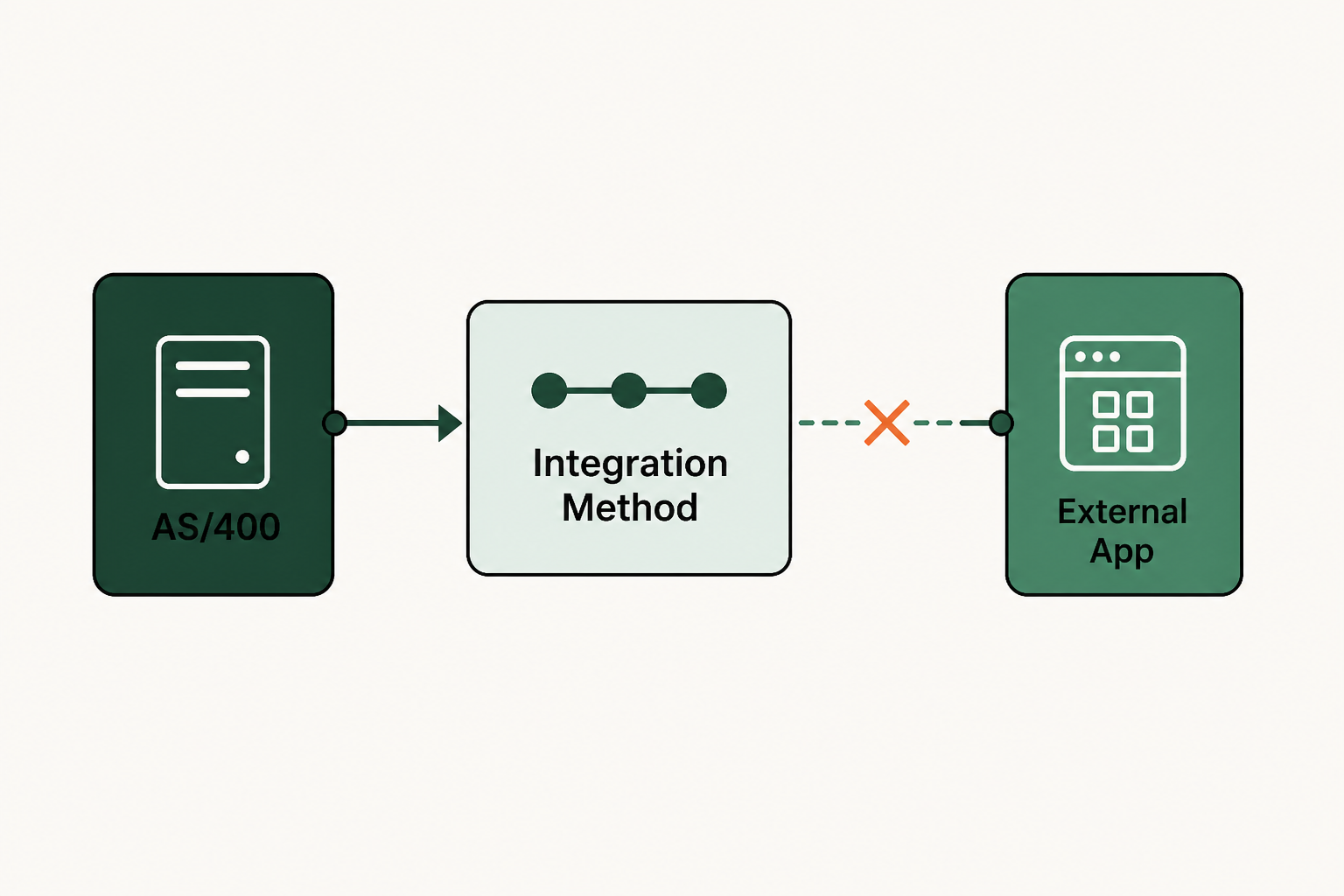
Ranked: 4 AS/400 integration methods
With the criteria set, the ranking favors controlled real-time execution over passive access. AI agents become useful only when they can complete governed work across enterprise systems without turning the core platform into an unmanaged endpoint.
| Rank | Method | Headline strength | Main limitation |
|---|---|---|---|
| 1 | Governed execution via an Agentic Harness | Control and audit for real-time agent action | Newer category of tooling |
| 2 | Custom API enablement | Direct, reusable interfaces for core functions | Heavy dependency on specialist development |
| 3 | Middleware and connectors | Useful bridge across mixed application estates | Adds another layer to operate and pay for |
| 4 | Data replication and synchronization | Practical for analytics and reporting | Latency and limited process control |
 Ranked: 4 AS/400 integration methods
Method 4: data replication and synchronization
Start with the most familiar way to make AS/400 information usable elsewhere. Data replication and synchronization move information from IBM i into another database, warehouse, reporting layer, or application environment. That can work well when the use case is read-heavy, analytical, and tolerant of delay.
Db2 for i is an integrated relational database management system optimized for IBM i systems, so replication often starts with the data model rather than the user workflow. The strength is clarity: teams can make operational data available to modern reporting or analytics tools without exposing the production system to every downstream user.
Best for: batch analytics and reporting
This method fits reporting, reconciliations, dashboards, and offline analysis where a short lag does not materially change the decision.
Trade-off: data latency and lack of real-time control
The weakness shows up when the agent needs to act. A replicated copy may tell an AI agent what happened, but it usually does not give the agent a governed way to change the source system. For agentic work, read access without controlled write execution is incomplete.
Method 3: middleware and connectors
If replication is too passive or too slow, middleware gives the estate a more active bridge. Middleware and connector frameworks sit between the AS/400 environment and the surrounding application estate, translating protocols and handling messages, events, or program calls so systems can exchange information without every application speaking IBM i directly.
This is a familiar enterprise pattern. A Gartner profile of an integration suite describes software that can connect applications, data, processes, and devices across cloud and on-premise environments (as of 2025), which is the role middleware often plays.com/reviews/market/data-integration-tools/vendor/sap/product/sap-integration-suite/likes-dislikes), which is the role middleware often plays. In IBM i environments, connector components can exchange messages through data queues, message queues, or program calls.
Best for: service-oriented architecture environments
Middleware is strongest when the organization already has integration standards, operating processes, and staff who know how to maintain shared services.
Trade-off: can introduce significant overhead and licensing costs
The extra layer still has to be paid for, governed, monitored, and upgraded. For AI agents, middleware can expose useful services, but it does not automatically solve authorization, audit, or deterministic workflows at the moment an agent takes action.
Method 2: custom API enablement
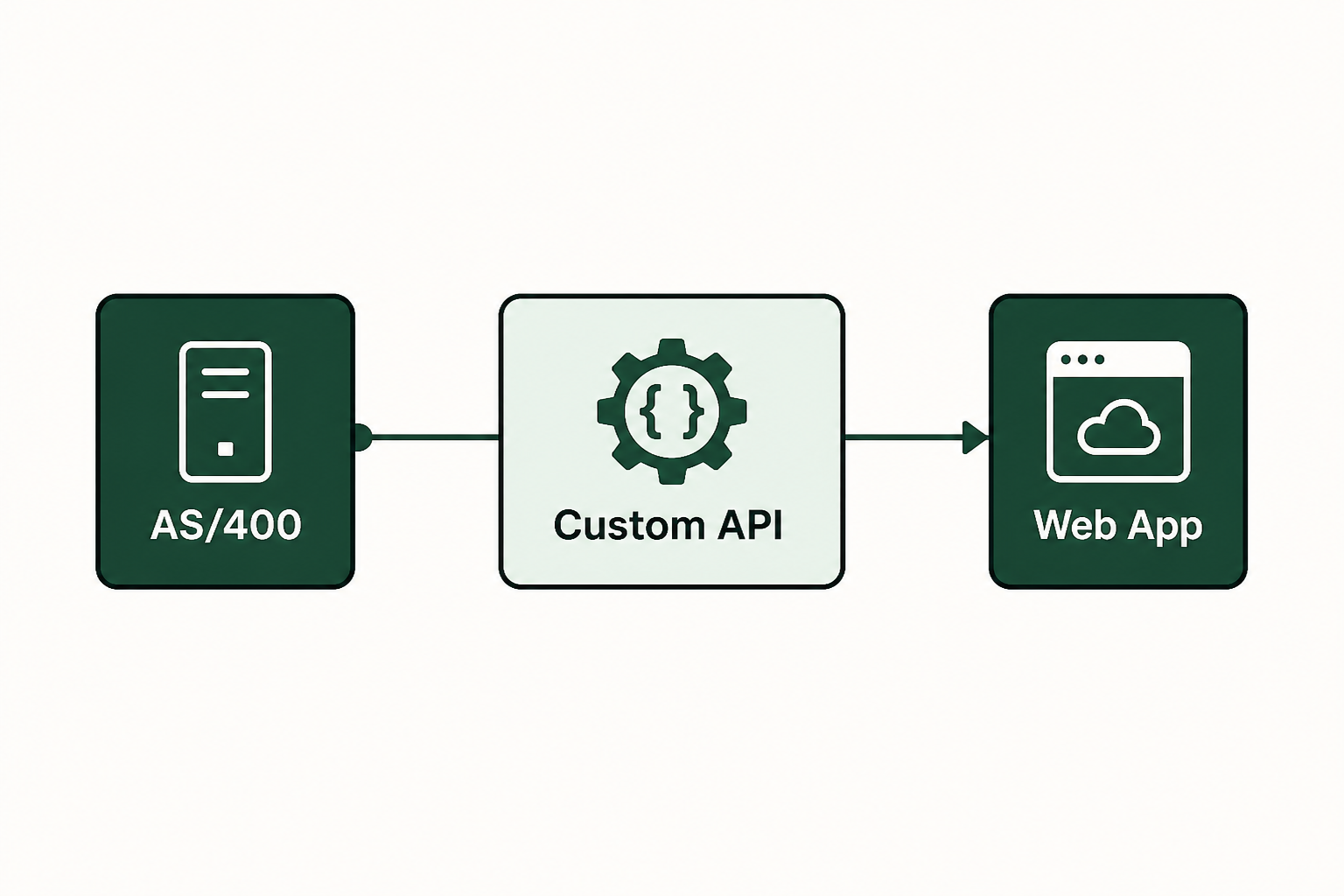
For more direct control than middleware provides, many teams wrap AS/400 functions in custom APIs. API enablement turns existing AS/400 programs, transactions, or data access patterns into interfaces that modern applications and AI services can call. When done well, it gives the organization reusable endpoints for core business functions rather than a collection of one-off extracts.
This method ranks highly because it can support real-time interaction. A pricing agent, claims assistant, service desk copilot, or internal workflow agent can call a defined API and receive a controlled response. The model does not need to understand green-screen navigation or legacy data structures; it calls an approved interface.
Best for: creating modern, reusable interfaces for core functions
Custom APIs are useful when a small number of AS/400 functions matter to many applications. They also help when the enterprise already has API management standards and the funding to maintain them.
Trade-off: high dependency on scarce developer talent
The constraint is labor. Enterprise hiring profiles still ask for hands-on AS400 experience, including developers with three to five years of IBM iSeries work (for example, Accenture seeks Junior Developers with 3-5 years of hands-on experience in AS400 (IBM iSeries) systems), and those roles may support integration of AS400 data with other systems and applications. If every agent workflow requires new RPG, COBOL, or IBM i integration work, the API layer can become another bottleneck.
 Method 2: custom API enablement
Method 1: governed execution via an Agentic Harness
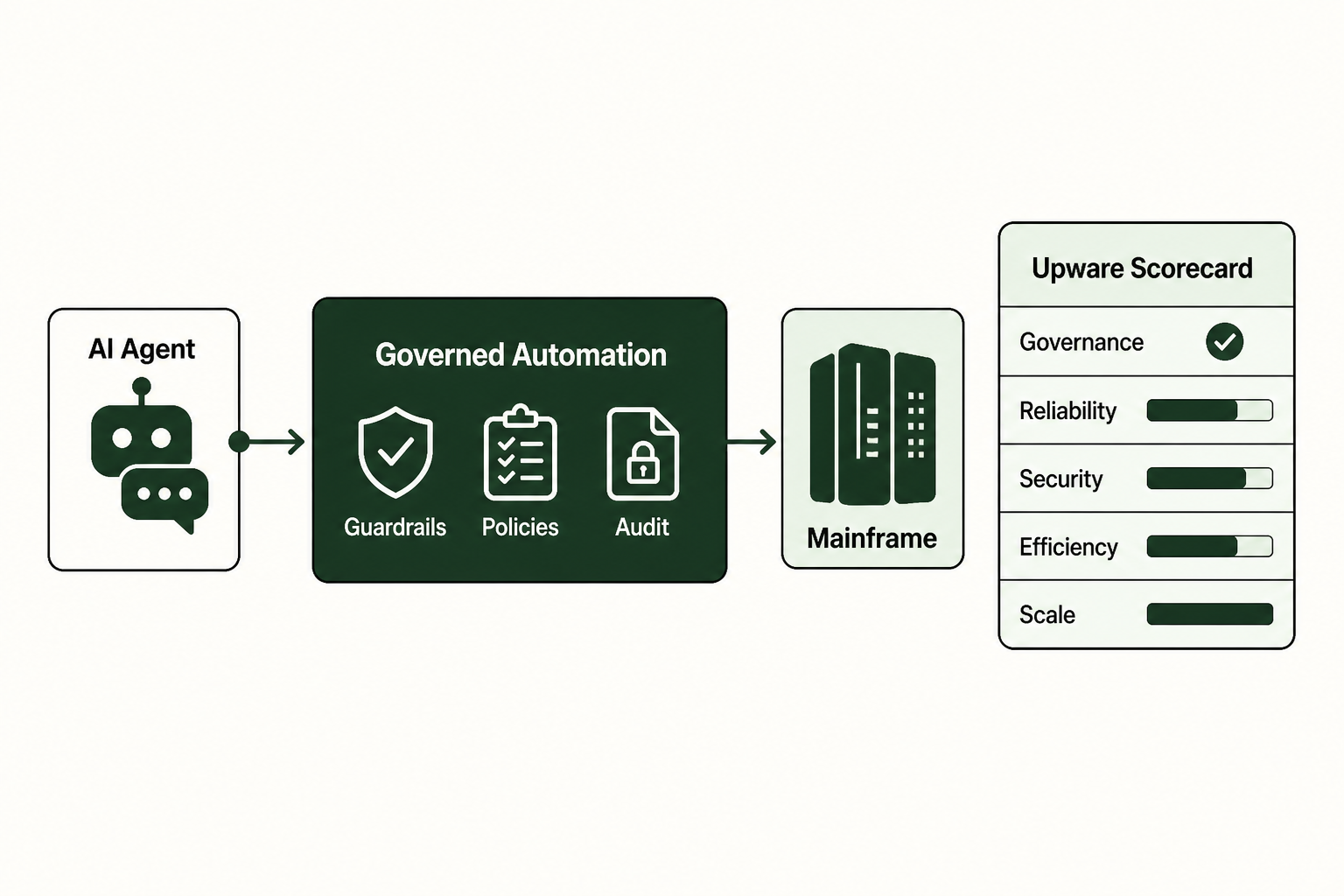
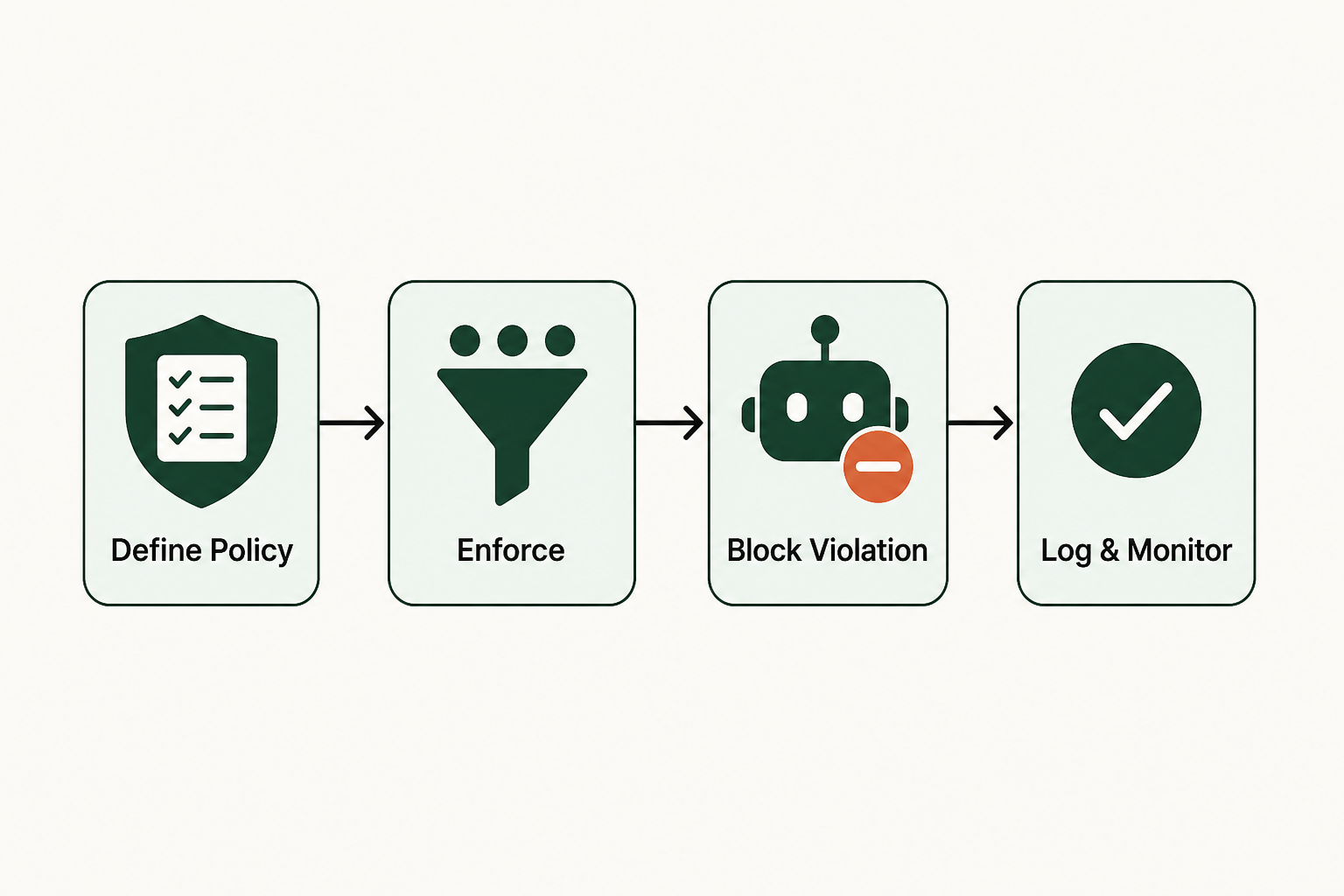
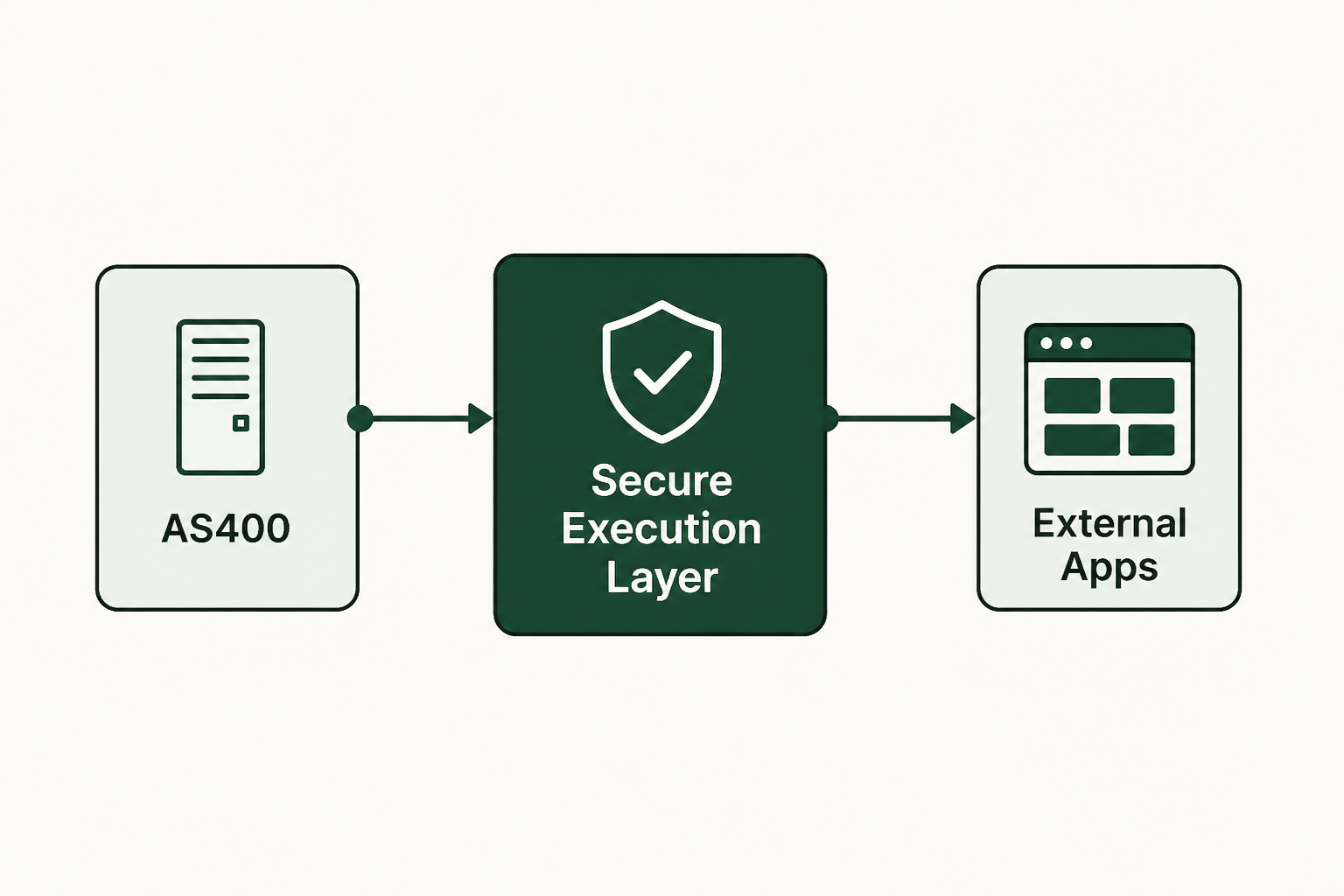
The strongest pattern is the one that gives agents real-time access without treating the AS/400 as an open endpoint. An Agentic Harness is a controlled operating layer that lets an AI agent request work while governed execution decides the allowed action, the runtime path, the system touched, and the audit trail produced. The agent is the brain; the Agentic Harness is the hands. The agent reasons, but the execution layer performs approved actions through deterministic workflows.
Best for: secure, real-time AI agent interaction with legacy systems
This method ranks first because it separates intent from execution. The agent can identify the task, gather context, and ask for an action, but the execution layer controls the system interaction. That matters for AI agent governance, especially when the target system is a legacy platform that was not designed for open-ended autonomous access.
For AS/400 and similar environments, the Agentic Harness model is strongest where the enterprise wants governed execution across AS/400 and mainframe systems without turning every use case into a custom integration program. Upware's platform is built around this idea: connect AI interactions across enterprise systems, then monitor, govern, and audit them, including legacy systems and no-API systems.
Conversational agent platforms and agent engineering frameworks do useful work in building and orchestrating agents. They can help teams define prompts and routing, along with skills and tool use. What they often leave unresolved is the controlled execution layer between those agents and enterprise systems, where deterministic workflows have to enforce authorization, audit, and cost discipline. Upware centers on that governed execution layer instead.
Trade-off: newer category of tooling focused specifically on agent-system interaction
The trade-off is category maturity. Teams need to evaluate the operating model, approval patterns, and fit with existing controls. Deployment in days, and 0 engineering resources are required. Runtime has 100% predictability, and deterministic workflow design can reduce unnecessary model calls for up to 80% lower token costs. That does not remove all AI risk, but it gives the enterprise a controlled path for agent action.
Who should avoid these integration methods?
These methods are useful, but they are not the right fit for every organization. If the AS/400 estate is already being retired through a funded, active program, deep agent connectivity may not be the investment to make. One large modernization program, for example, included decommissioning a 35-year-old legacy AS400 platform in later waves, which shows that replacement can be a valid path when the business case and execution capacity exist.
This category is also wrong for teams that only need static reporting, have no plan for AI agent execution, or cannot support enterprise-grade governance. The methods above assume the organization needs controlled access to mission-critical systems. If the work is a small departmental automation, or if human review must remain fully manual for policy reasons, a lighter reporting or workflow tool may be enough.
The sharper warning is simple: do not connect an agent because the interface exists. Connect it only when the workflow and authorization model are clear, along with the audit need and rollback path.
 Conclusion: start with a secure execution layer
Connect your AS/400 with AI agents using these integration methods.
Discover practical applications for these integration strategies, or talk to an expert about implementing them for your business.
Frequently asked questions
How do I start integrating my AS/400 system with AI?
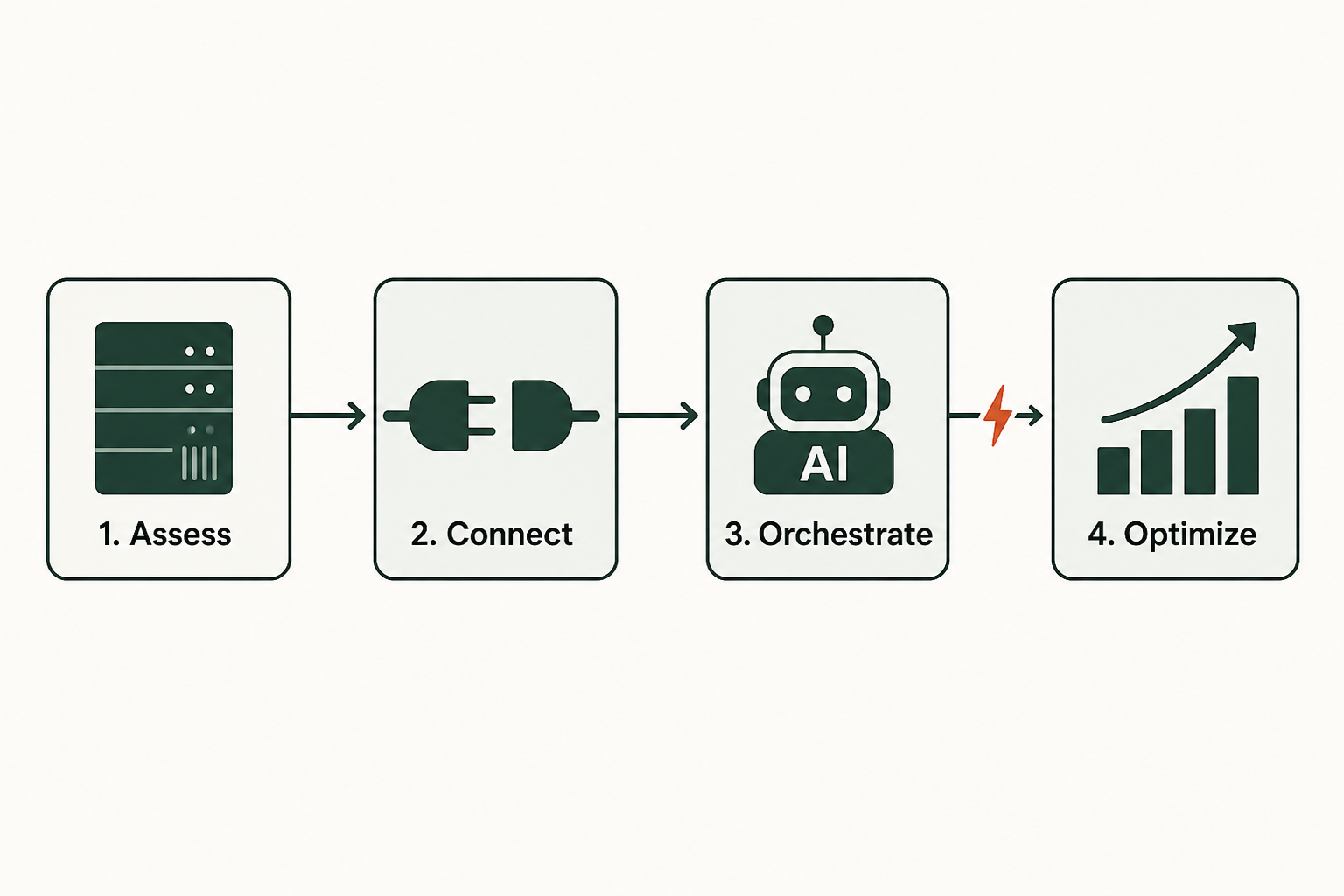
Start by choosing one controlled workflow, not the whole system. Identify what the agent needs to read, what change it may request, who approves that change, and what audit record the business requires. From there, decide whether the use case needs batch data, middleware, custom APIs, or governed execution through an Agentic Harness.
What are the most common mistakes to avoid with AS/400 integration?
The most common mistake is treating access as the same thing as control. A connection can move data while still leaving delays, weak process visibility, or unclear ownership. The World Bank control finding around delayed AS400 stock transaction recording is a reminder that integration quality depends on operating discipline, not only technical connectivity.
Why does governed execution matter so much for legacy systems?
Governed execution matters because legacy systems often contain the real system of record, while AI agents reason in a less predictable way. The execution layer turns an agent request into an approved, auditable action. That lets the enterprise use deterministic workflows for system changes instead of giving an agent broad direct access.