What is AS400 integration?
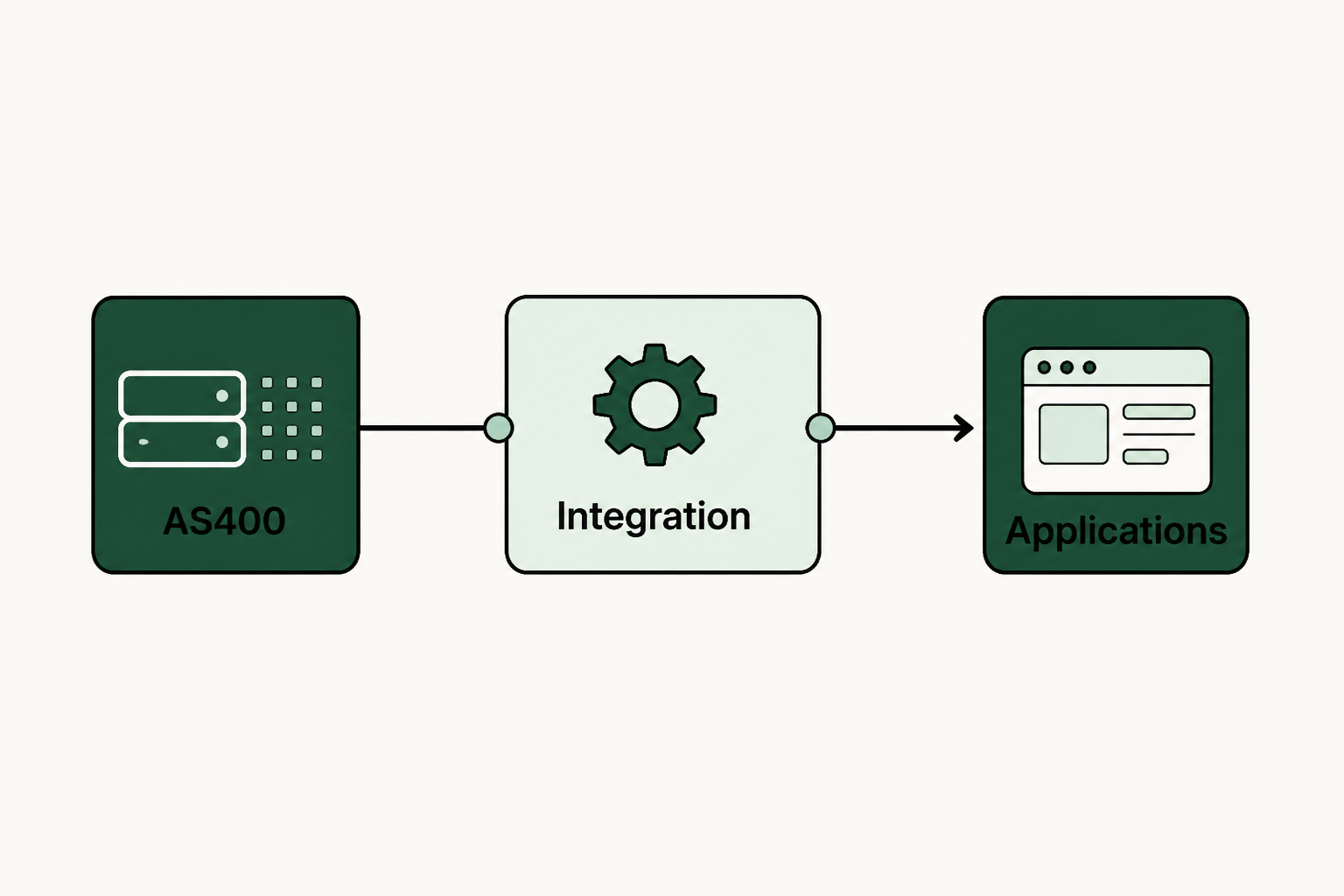
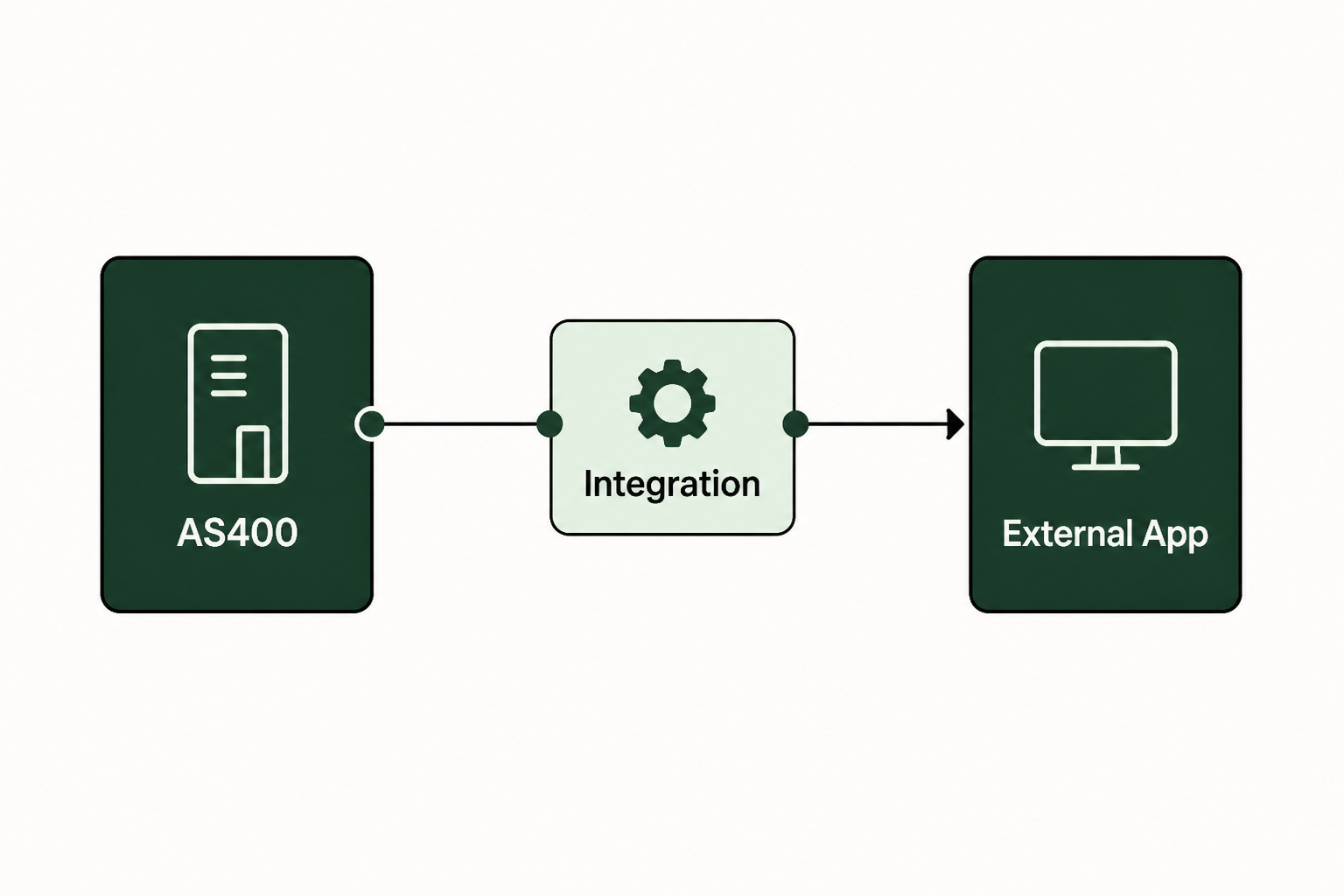
AS400 integration is the process of connecting legacy AS/400 and IBM i systems with modern applications so data can move between them and business processes can keep working across old and new infrastructure. In practical terms, it means joining a proprietary operational platform to tools that expect APIs; cloud data stores; event streams; identity controls; and audit-ready process records.
The work is usually frustrating for practical reasons, not theoretical ones. A business team needs the AS/400 to talk to a web app or a data platform, and the same need may include an ERP workflow or an AI agent, but the system was built for a different era of computing. IBM introduced its [AS/400 midrange computers](https://cio.com/article/201657/google-offers-ibm-as400-apps-new-home-in-its-cloud.[IBM introduced its AS/400 midrange computers in 1988, shipping over half a million units over the subsequent decade.](https://cio.com/article/201657/google-offers-ibm-as400-apps-new-home-in-its-cloud.html) That installed base still matters because many of those systems became the operational spine for finance and manufacturing, along with repair, logistics, claims, and other process-heavy work.
 What is AS400 integration?
The name also causes confusion. Many teams still say AS400, but the platform has moved through OS/400 and i5/OS into IBM i. The older label often refers less to one machine and more to applications and data models, plus screens, workflows, and operating assumptions that still run inside the business. Current systems can still run much of the original software, which is a strength for continuity and a challenge for integration.
That is why AS400 integration is rarely a simple connector exercise. You are connecting a durable, proprietary operational system to modern environments that assume open interfaces and predictable audit trails. The goal is not to replace the AS/400 in every case. The practical goal is controlled access and reliable data exchange, with enough governance that modern systems can act without breaking the logic that already runs the business.
Foundations: why is integrating with AS400 so complex?
The complexity starts with the platform itself. The operating system and database are tightly related to application logic, security, and objects, which helped the system last but also means integration work can touch more layers than a modern application team expects.
Proprietary architecture and IBM i
The AS/400 was not built like a typical open server with loosely coupled components. The AS/400 operating system, OS/400, has been replaced by IBM i, although much of the software written for earlier generations can still run. The AS/400 operating system, OS/400, has been replaced by IBM i. That continuity is valuable because it protects working business logic, but it also means newer tools may not see a clean API boundary. A modern application may expect a service endpoint. The AS/400 estate may expose batch files and database tables, or it may expose message queues, green-screen workflows, or program calls instead.
There is also a governance problem inside the architecture. If a modern app writes directly into a table without respecting the business rules embedded in legacy programs, the integration may appear to work while corrupting process integrity. For operators, that is worse than a failed integration because errors may surface later in billing, repair status, inventory, or reporting.
The integrated DB2 database
A core part of the platform's durability is its integrated database. As of 2010, AS/400 systems used a version of DB2 that is part of the operating environment rather than a detached database sitting beside the application. That structure can make data access efficient inside the system, but external integration has to respect how objects and files relate to libraries and application logic.
A team moving data out of AS/400 can read tables, but table access alone may not explain field meaning, validity timing, or the legacy program that owns the rule that changes it. This is where many projects slow down. The technical connection is available before the business meaning is clear.
A reminder of the platform's institutional reach helps explain why these systems are treated carefully: a World Bank procurement paper listed an AS/400 system in 1996. A World Bank procurement paper listed an AS/400 system in 1996. Systems like this entered serious operating environments because they were stable enough to hold important work.
EBCDIC vs. ASCII data encoding
Older AS/400 data can also bring encoding work into the project. Modern systems commonly expect ASCII or Unicode. AS/400 environments may involve EBCDIC, so moving data into SQL Server or another modern database may require export and translation before processing and import. Encoding sounds small until a customer name, part number, status code, or special character changes meaning during the move.
That is why AS400 integration should start with a map of systems and data meaning, not with tool selection. The architecture is durable, but durability does not remove the need for controlled translation between old assumptions and modern execution.
Key terminology for AS400 integration
Once the architectural issues are clear, the next step is using the right vocabulary. These terms give technical and business teams a shared way to evaluate integration options without getting trapped in vendor language or low-level programming detail.
-
AS/400: IBM's midrange computer platform introduced in the late 1980s. Many people still use the term AS400 to describe the systems, applications, and operating patterns that grew around it.
-
IBM i: The current operating environment that followed OS/400 and i5/OS. In many enterprises, IBM i runs applications that people still call AS/400 applications.
-
OS/400: The earlier operating system name associated with the AS/400. It matters because legacy documentation, internal knowledge, and application references may still use it.
-
DB2: The database technology integrated into the AS/400 environment. For integration teams, the important point is that data may be tightly connected to application logic and object structures.
-
EBCDIC: A character encoding used in many older IBM environments. Integration projects may need EBCDIC to ASCII translation when moving data into modern databases or applications.
-
ASCII: A character encoding expected by many non-IBM systems. Translation from EBCDIC to ASCII must be handled carefully because data quality depends on it.
-
Batch processing: A pattern where data is exchanged on a schedule, such as nightly exports or periodic file transfers. It is often easier to govern but may not support time-sensitive work.
-
Real-time integration: A pattern where data or actions move as business events occur. It can improve responsiveness, but it usually requires tighter control, monitoring, and error handling.
-
Middleware: Software that sits between systems and manages data movement, message routing, protocol translation, or process coordination.
-
API-based integration: A method that exposes functions or data through defined interfaces, allowing modern applications to request information or trigger actions in a controlled way.
-
Governed execution: A controlled model in which an integration or agent can perform approved actions through defined rules, logs, permissions, and deterministic workflows.
Common AS400 integration methods
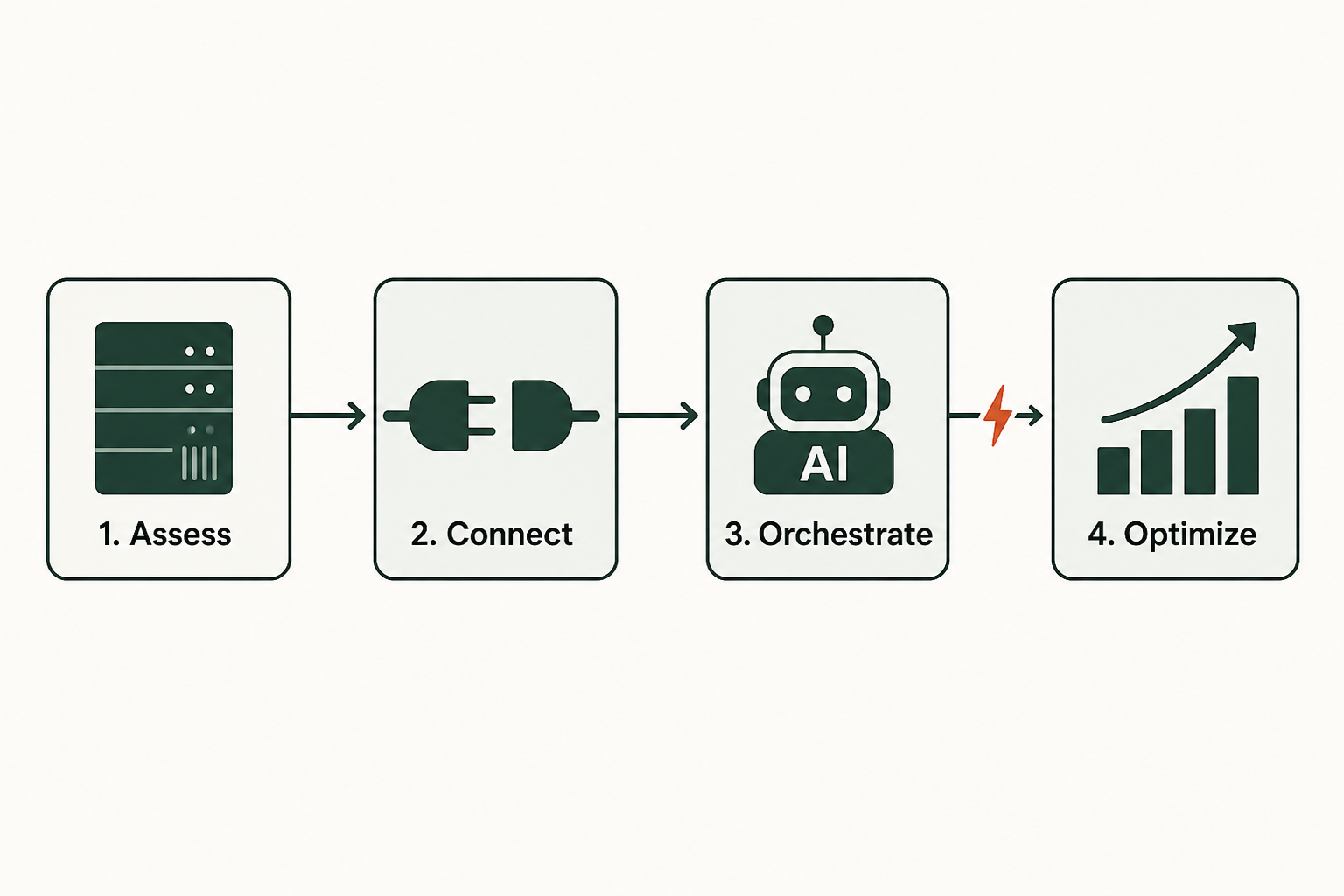
With the terminology in place, the integration methods become easier to compare. The right method depends on what the business needs to do: read data or move historical records, synchronize operational updates, trigger a legacy process, or allow an agent to complete an approved task. Most real programs use more than one method because AS/400 estates usually contain more than one kind of integration problem.
Data replication and migration
Data replication and migration are often the first options considered because they make legacy information available to modern reporting tools, cloud applications, or SQL-based environments. In a migration pattern, data is extracted from AS/400 and translated where needed; the same flow also cleans or reshapes the data before loading it into the target system. In a replication pattern, the source system remains active while selected data is copied on a schedule or near a business event.
A common path from AS/400 to SQL Server involves exporting data from the database, performing [EBCDIC to ASCII translation](https://arstechnica.com/civis/threads/how-to-migrate-data-from-an-as-400-to-sql-server.A common path from AS/400 to SQL Server involves exporting data from the database, performing EBCDIC to ASCII translation, and processing the export so the target can read it before import. A common path from AS/400 to SQL Server, as of 2010, involved exporting data from the database, performing EBCDIC to ASCII translation, and processing the export so the target can read it before import.
This approach works best when the goal is analytics or reporting, or when the program needs data warehousing or a staged modernization path. It is less suitable when a modern application needs to trigger a business action inside the AS/400 and receive a controlled response.
Key trade-offs:
- Good for read-heavy access when teams need reporting and dashboards, plus downstream data availability without changing the source application.
- Risky for write-back scenarios if modern systems bypass legacy business logic and update records directly.
- Sensitive to encoding and mapping because a technically successful extract can still produce poor data if translation rules are weak.
 Common AS400 integration methods
Middleware and connectors
Middleware and specialized connectors sit between the AS/400 and modern systems. They can manage protocol translation and file movement, along with message handling and access patterns that would otherwise need custom code. For many enterprises, this is the pragmatic middle ground: leave the AS/400 application intact, but expose controlled paths for the systems around it.
This model is useful when the enterprise already has integration operations, monitoring standards, and security review processes. It gives architects a place to enforce routing and retries, with logging and access control handled in the same operating pattern. It also helps separate the business application from every consuming system, so one new downstream app does not become a direct dependency on the AS/400 team.
The limits show up when the connector can move data but cannot govern the work that happens around it. A workflow that spans AS/400 and a CRM, then reaches a service desk and a homegrown portal, needs more than transport. It needs decision boundaries and process state, with audit visibility and clear rules about which system may be changed.
API-based integration
API-based integration is attractive because it matches how modern applications are usually built. Instead of asking every application to understand AS/400 formats and access paths, the organization exposes defined services for the data or actions it wants to make available. APIs can be placed in front of existing programs, wrapped around integration logic, or created as part of a modernization layer.
The benefit is control. An API can define what is allowed and who can call it, then specify accepted inputs, response meaning, and log location. This matters when the AS/400 holds operational records that cannot be casually changed. A controlled interface is safer than direct table access for many transactional scenarios.
The difficulty is that APIs do not appear by themselves. Someone still has to define the process boundary, map legacy data, handle errors, and decide how exceptions move back to people. If the AS/400 estate includes no-API systems or green-screen workflows, the API strategy may need additional execution controls around it.
In practice, each method has a job:
- Replication and migration make AS/400 data available outside the platform.
- Middleware and connectors reduce point-to-point custom work and manage translation.
- APIs expose defined functions and can protect business logic better than raw access.
- Governed execution controls how modern agents or applications act across multiple systems, especially when the work changes records rather than only reading them.
Choosing your approach: key considerations
Choosing the right approach starts with the work that must be performed, not the tool category. A reporting use case has different failure modes from a repair workflow, and an AI-assisted service process has another set of risks, so they should not be forced into the same architecture. The best pattern is the one that controls the work with the least operational risk.
Real-time vs. batch processing needs
Batch processing is appropriate when the business can tolerate a delay. Nightly extracts and scheduled reporting feeds are easier to reason about, as are periodic synchronization jobs, because they create clear windows for validation and recovery. If a record fails translation, the team can isolate the batch, fix the mapping, and rerun it under controlled conditions.
Real-time integration is needed when the work depends on current state. A service agent checking repair status is one example; an operator updating a work order or a finance workflow confirming a transaction can also require current state. Real-time access increases the need for authorization and monitoring, with deterministic workflows in place because mistakes move through the operation faster.
Security, governance, and data integrity
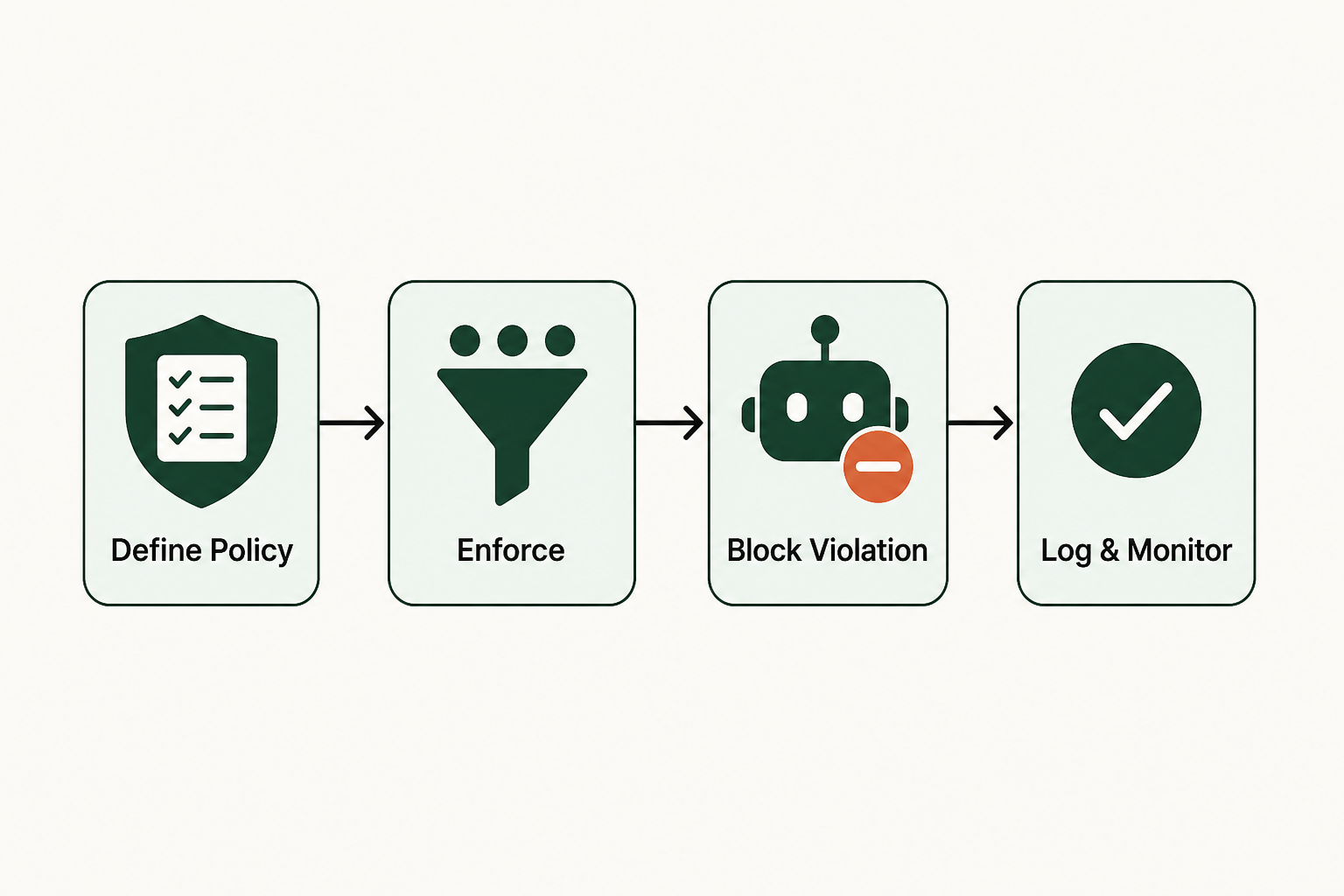
Security is not a separate workstream in AS400 integration. It is part of the design. If a modern application can reach the AS/400, the organization has to define what it may read, what it may change, which identity it uses, and how the action is audited. The same principle applies to AI agents. An agent may generate the right instruction, but the execution layer must decide whether that instruction is allowed.
Data integrity is the operational test. If an integration bypasses business rules, writes malformed values, or loses context during encoding translation, the connection creates hidden debt. The safer pattern is to preserve existing system logic wherever possible and place controlled access around it.
Cost, scalability, and long-term maintenance
Cost should include more than licenses and connectors. It includes specialist time and exception handling, as well as monitoring, change control, and the burden of maintaining mappings as applications evolve. A custom point-to-point integration may look efficient for one use case, but a dozen similar requests can create a brittle estate.
The business case is stronger when integration work is tied to a measurable operating outcome. One AS/400 modernization example involving a legacy mechanical rework and repair application used AWS technologies including Vue.js, DynamoDB, API Gateway, Lambda, and Node.js, with stated targets of a 70% increase in operator efficiency; a 20% reduction in Mean Time To Repair; and an 80% decrease in OPEX, as of 2023. Those figures are specific to that example, but they show the kind of operational metric an integration program should define before the architecture hardens.
A useful decision frame is simple:
- Choose batch replication when the primary need is reporting or downstream analysis.
- Choose middleware or connectors when multiple systems need consistent transport, routing, and translation.
- Choose APIs when modern applications need controlled access to defined AS/400 functions.
- Add governed execution when agents or applications need to perform actions across enterprise systems, not only retrieve data.
From agents to action: the role of an Agentic Harness for governed execution
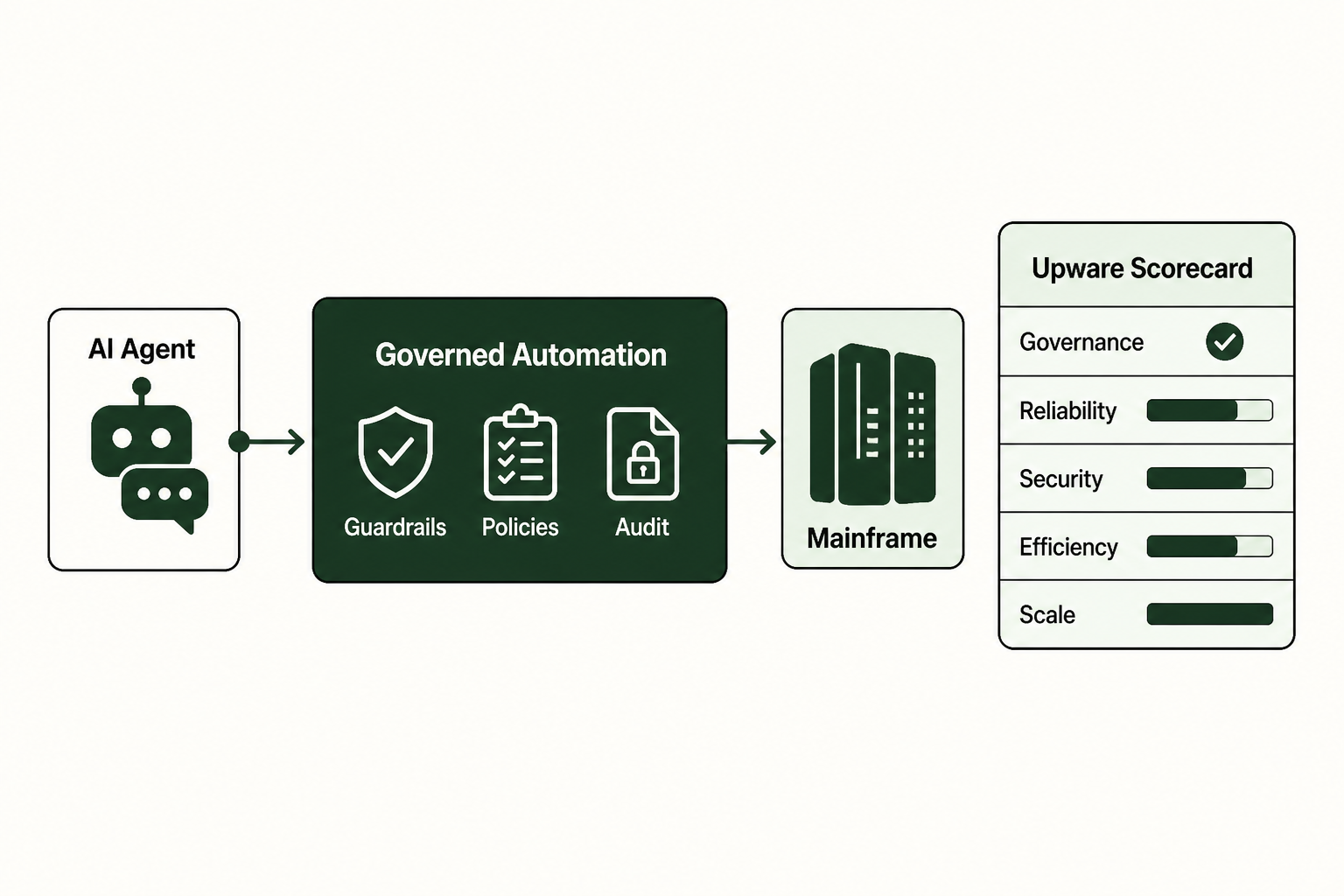
Once agents enter the design, control becomes the center of the architecture. In plain language, an Agentic Harness is the controlled execution layer between an AI agent and the enterprise systems it needs to use. Agents are the brain, deciding what should happen. The Agentic Harness is the hands, carrying out approved work through governed execution, permissions, logs, and deterministic workflows.
This distinction matters for AS400 integration because the hard part is often not answering a user. The hard part is acting safely inside legacy systems and homegrown applications, especially no-API systems where a bad write can affect real operations. The platform should connect and monitor, then govern and audit AI interactions without turning every AS/400 workflow into a custom engineering project. For AS/400 and mainframe environments, that means the connection model needs to respect existing system logic while giving modern agents a controlled path to execute.
Conversational agent platforms do a useful job of creating agent experiences and handling prompts, while they also orchestrate agent behavior. What they often leave unresolved is the governed execution layer between those agents and enterprise systems where work actually changes records. Upware centers on that layer instead: the governed execution layer between agents and enterprise systems, with deterministic workflows, audit, cost control, and runtime predictability as the operating model.
That is also where proof should stay precise. The Agentic Harness model is associated with deployment in days, 0 engineering resources, up to 80% lower token costs, and 100% predictability in runtime. Those claims do not mean setup disappears, or that risk and human governance disappear. They mean the execution layer is designed so enterprise AI work can run through controlled paths rather than open-ended access.
For teams evaluating AI use cases on top of AS/400, the practical question is less about whether an agent can draft an answer and more about whether it can complete a permitted task under supervision. The companion topic is safe AI agent operation, because integration without execution controls quickly becomes an authorization problem.
What are the benefits of a successful integration?
A governed approach makes the business case easier to evaluate because it ties AS400 integration to controlled operating outcomes rather than abstract modernization. When the integration pattern is well chosen, teams can keep the AS/400 logic that still works while giving modern applications and reporting environments, as well as AI agents, safer access to the data and actions they need.
The main benefit is operational reach. A legacy system no longer has to be an island, and a modern tool no longer has to stop at the edge of the AS/400 estate. The honest trade-off is that every path into the system needs ownership of data definitions and permissions, with error handling, audit, and maintenance included. Skipping that work may make the first connection faster, but it usually makes the process harder to trust.
 What are the benefits of a successful integration?
A successful program gives technical and business leaders a clearer operating model:
- Use replication when the business needs access to historical or operational data outside AS/400.
- Use connectors and middleware when integration volume makes point-to-point work expensive to maintain.
- Use APIs and governed execution when modern applications or agents need to take action under control.
- Measure the work against operating outcomes such as efficiency, repair time, OPEX, or specialist dependency.
For a broader view of adjacent patterns, continue by comparing enterprise integration methods. The important judgment is not whether AS/400 should be treated as old or modern. It should be treated as operationally significant, which means every integration path needs control and audit, plus a clear reason to exist.
Take the next step in your AS400 modernization journey.
Discover our integrated solutions in action, or connect with our team to discuss tailored approaches for your environment.
Frequently asked questions
What is the main benefit of integrating with our AS400 systems?
The main benefit is that the AS/400 can keep running important business logic while modern systems gain controlled access to its data and actions. That can support better operator workflows and reporting, along with modernization or AI-assisted work, without forcing an immediate system replacement. In one AS/400 modernization example, as of 2023, the stated targets included a 70% increase in operator efficiency; a 20% reduction in Mean Time To Repair; and an 80% decrease in OPEX.
How do I start an AS400 integration project?
Start by defining the business action or data movement you need, then map the AS/400 objects and files, as well as the programs and rules involved. A reporting feed may need batch replication, while an operational workflow may need APIs, middleware, or governed execution. The first design decision should be about control: who can read, who can write, what system owns the rule, and how exceptions are audited.
What are the most common mistakes I should avoid in AS400 integration?
The common mistakes are treating AS/400 like a normal modern database, writing directly to tables without respecting legacy business logic, ignoring EBCDIC to ASCII translation, and choosing a connector before defining the process boundary. Another serious mistake is giving an AI agent broad access to a legacy system without an execution layer that enforces permissions, deterministic workflows, and audit.
How long does it take to see results from a typical integration project?
Timelines depend on scope, data quality, governance requirements, and how much legacy knowledge is available. A narrow read-only data feed is very different from a cross-system workflow that changes records. For agent-driven execution, the Agentic Harness model is associated with deployment in days and 0 engineering resources, but that does not remove the need to define permissions, process rules, and operational ownership.
Can I connect modern AI agents directly to my AS400?
A direct connection is usually the wrong control model for serious enterprise work. An agent may understand the request, but the system still needs a governed execution path that decides whether an action is allowed, carries it out predictably, and records what happened. For AS/400, that means using an execution layer that protects legacy business logic rather than letting the agent operate as an unrestricted user. Unlock AS400 potential: Learn integration basics now.