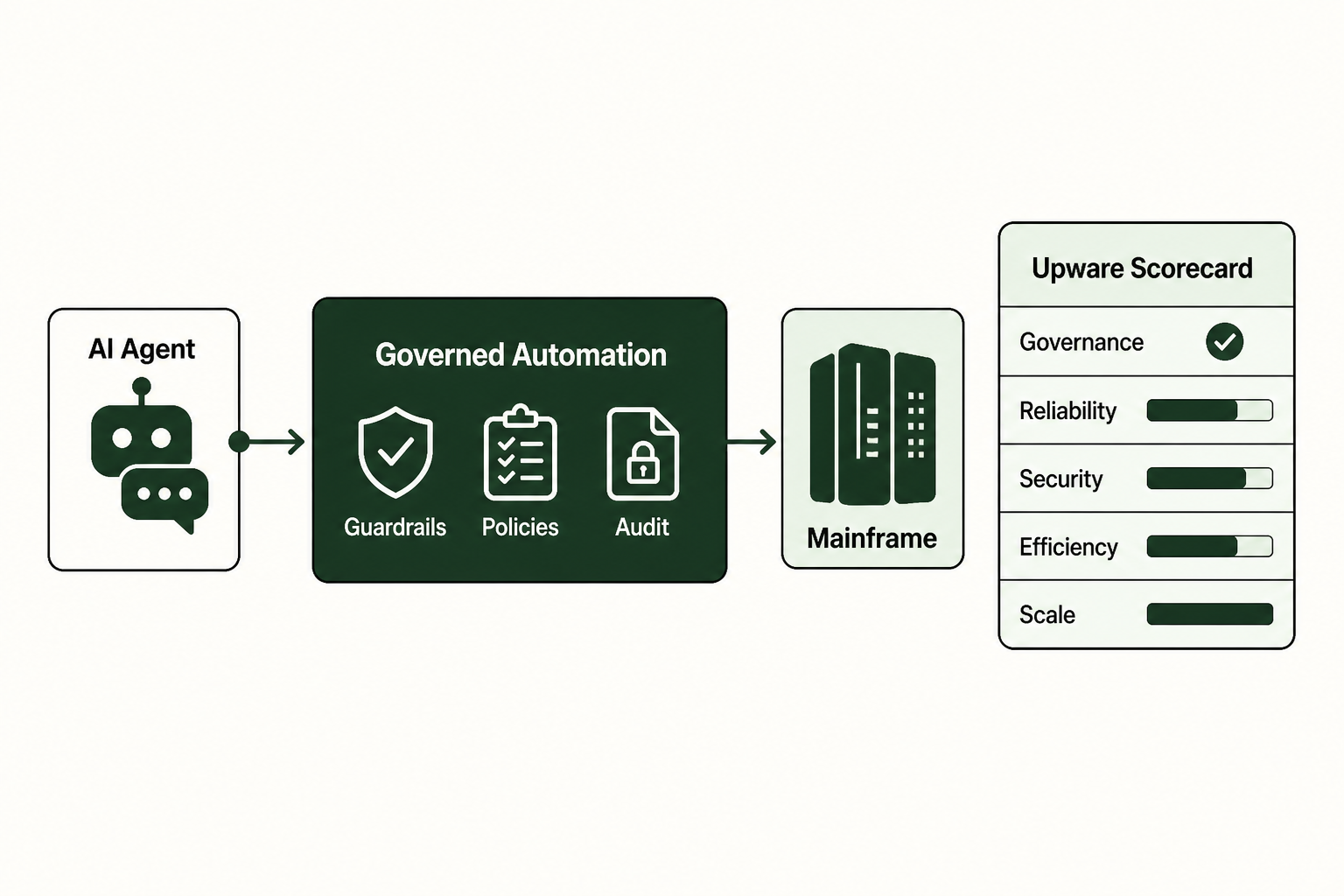
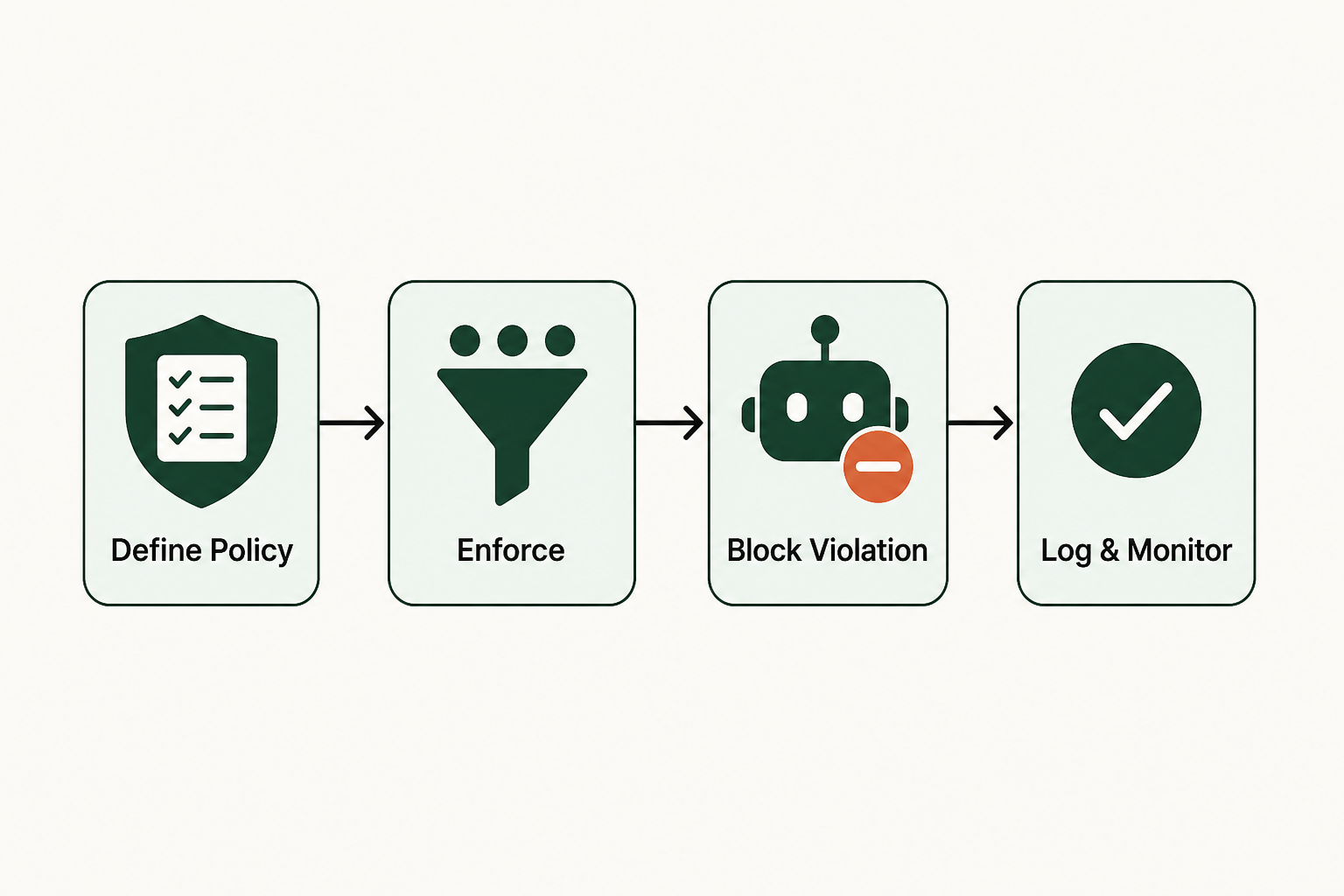
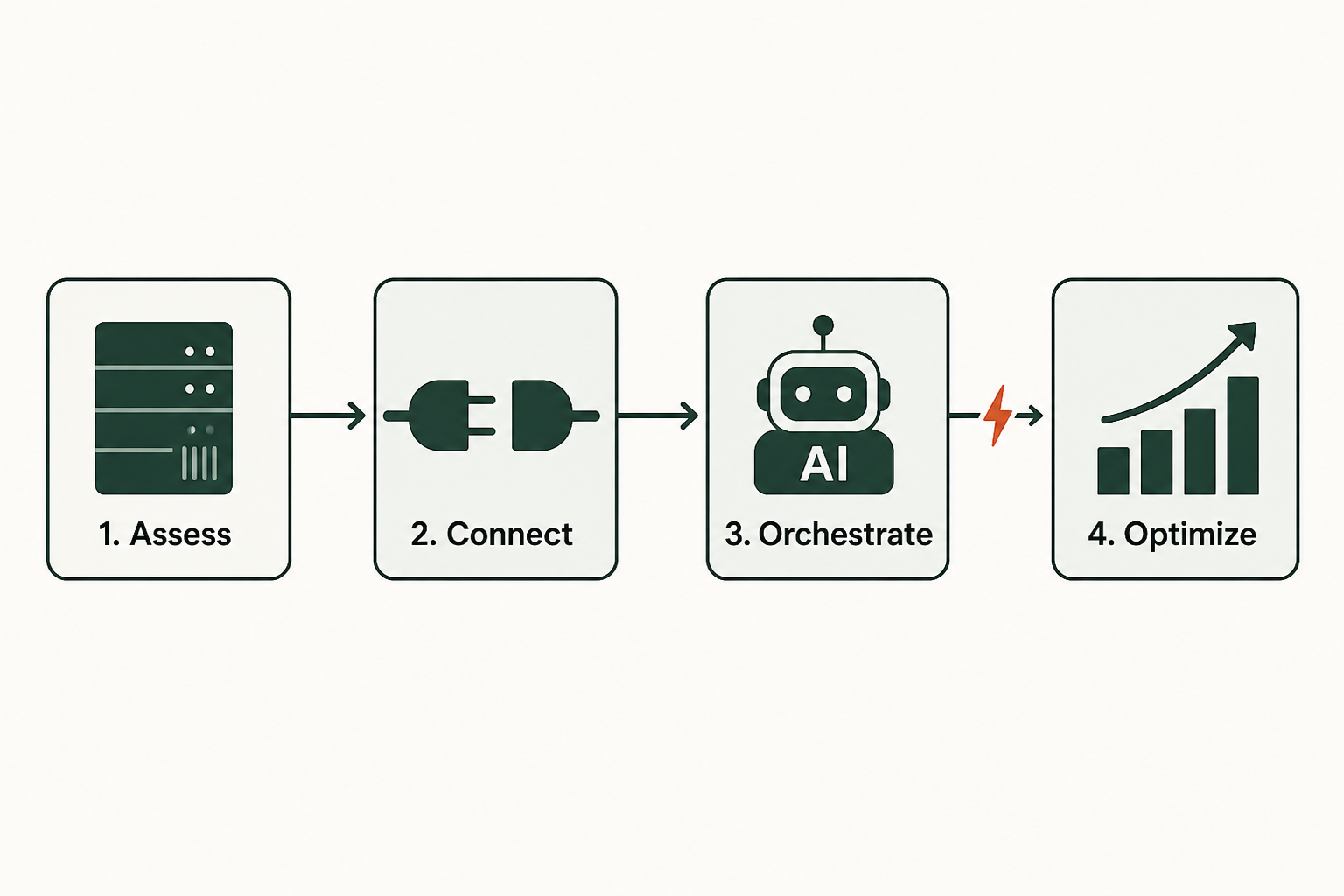
Your agent demo usually fails at the same point: the moment it has to touch the systems that actually run the business. The useful work sits inside old ERP screens, bespoke portals, admin tools, and applications with missing or awkward interfaces. Integrating legacy applications with AI agents takes more than another connector. It requires a secure gateway that can reach disparate systems without custom engineering, while governed execution controls what changes inside enterprise systems.
The verdict: how to choose your integration strategy
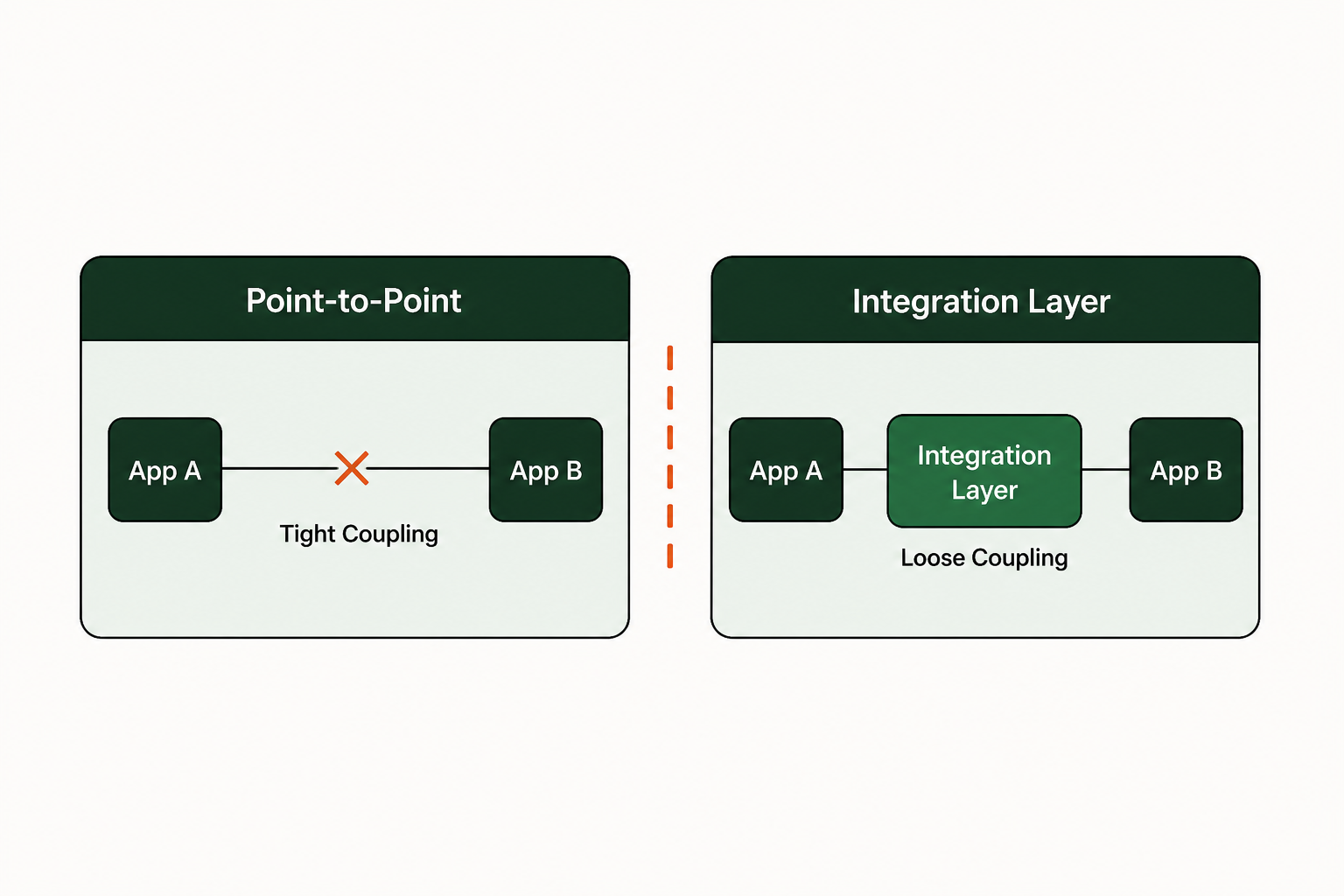
If the agent only needs to read from one modern application, a direct API or a narrow in-house connector may be enough. If the agent must complete work across several legacy systems, no-API systems, and governed business processes, choose an Agentic Harness with a controlled execution layer.
The wrong choice turns legacy application integration into the AI project itself. A business team asks for an agent to resolve a ticket, update a record, check an entitlement, or reconcile information across systems. The model can reason through the task, but it cannot safely press the right buttons, follow the approved workflow, or leave an audit trail unless there is a governed route between the agent and the enterprise applications.
That route matters because the execution problem is measurable, not theoretical. Deloitte cites Gartner's prediction that [over 40% of agentic AI projects will fail by 2027](https://deloitte.com/us/en/insights/topics/technology-management/tech-trends/2026/agentic-ai-strategy.Deloitte cites Gartner's prediction that over 40% of agentic AI projects will fail by 2027 because legacy systems can't support modern AI execution demands. The same Deloitte survey found that in 2025, nearly half of organizations cited data searchability (48%) and reusability of data (47%) as challenges to their AI automation strategy. Those figures point to the same operating reality: the agent is only as useful as the systems it can reach under control.
That does not mean discarding the systems. Legacy applications often hold the process logic and domain knowledge behind historical decisions that make the business run. Research on legacy system integration notes that, as of 2004, legacy systems cannot simply be discarded because they encapsulate a great deal of knowledge and expertise regarding the application domain.pace.edu/~marchese/CS775/Proj1/aversano_legacy.Research on legacy system integration notes that, as of 2004, legacy systems cannot simply be discarded because they are important to the business and carry application-domain expertise. The real decision is how to connect agents to those systems without creating brittle custom paths, forcing older integration tools into work they were not designed for, or leaving agents to act without a governed execution layer.
 The verdict: how to choose your integration strategy
Core criteria for legacy application integration
Once the execution problem is clear, the evaluation should move away from feature checklists and toward control, repeatability, and operability. A serious strategy asks whether an agent can complete work inside enterprise systems without gaining open-ended authority or creating a permanent engineering backlog.
Use these criteria before approving any approach:
- System reach: Can the method connect to legacy, homegrown, and no-API systems, or only to applications with clean modern interfaces?
- Governed execution: Does it constrain the agent to approved actions and permissions inside defined process paths, rather than letting the model improvise system changes?
- Deterministic workflows: Can repeatable business actions run the same way every time at runtime, with predictable steps and known outcomes?
- Audit and control: Can operators monitor and review what the agent did across systems, then prove it later?
- Engineering dependency: Does every new application or workflow require custom code, scarce specialists, or a consulting cycle?
- Cost discipline: Does the method reduce unnecessary model calls and context sprawl, or does every task push more tokens through the agent?
These criteria matter because the agent is the brain, but the execution layer is the hands. If the hands are uncontrolled, the project becomes a risk discussion. If they are too hard to build, the project becomes a queue.
Comparison: integration methods for AI agents
The main approaches look similar in a slide deck, but they behave differently once an agent has to perform work across a mixed estate. The table scores each path on the operating realities that decide whether an AI agent can move from a controlled pilot into production work.
| Integration method | System reach | Governed execution | Deterministic workflows | Audit and control | Engineering dependency | Cost discipline |
|---|---|---|---|---|---|---|
| Custom in-house integration | Medium | Medium | Medium | Medium | Low | Medium |
| Traditional iPaaS and automation platforms | Medium | Medium | Medium | Medium | Medium | Medium |
| Agentic Harness | High | High | High | High | High | High |
A "High" score means the approach is naturally built for that criterion. A "Medium" score means it can work, but only with careful design and operating discipline. A "Low" score means the criterion is the main source of friction. For bottom-of-funnel evaluation, the practical question is simple: which approach gives agents controlled execution across hard-to-reach systems without turning every connection into a one-off build?
Option 1: custom in-house integration
The default path for many enterprises is to build the integration themselves. That can be sensible when the first workflow is narrow, the target system is well understood, and the enterprise already has engineers who know both the application and the security model. Custom integration gives maximum local control, but it also turns each system boundary into a separate project.
That trade-off is sharper for legacy systems because the older application usually holds real business logic. Academic work on eBusiness integration observed that, as of 2004, the enactment of digital business processes requires the effective usage of existing legacy applications. In practice, the team cannot treat the system as a passive database. The agent needs to follow the application's process rules, authorization paths, and operational conventions.
Custom integration usually looks like this:
- Engineers create direct connectors, scripts, APIs, wrappers, or screen-level automations for the specific systems an agent must read from or act inside.
- The first connector may be manageable, but every additional system, exception path, permission rule, and workflow variation adds engineering work.
- It strains when the process spans several enterprise systems, when an application has no modern API, or when audit requirements demand more than logs scattered across custom components.
The advantage is specificity. The limitation is scale. If the enterprise has one agent, one system, and one stable process, a custom path may be reasonable. If the roadmap includes multiple agents across ERP, CRM, admin portals, and older transaction systems, custom code makes integration the dependency that slows the whole program.
Option 2: traditional iPaaS and automation platforms
Another path is to adapt existing integration and automation tools. These platforms can be useful when the target applications expose standard interfaces, the process is already mapped, and the organization has teams familiar with the tooling. They can move data, trigger workflows, and automate known sequences, which makes them a familiar starting point for enterprise integration teams.
The limitation appears when an AI agent is expected to reason over context and then act in a governed way across systems that were not designed for agentic use. Traditional tools often assume that the workflow is predefined by humans and that the integration surface is available. Agentic work adds a different constraint: the model may decide what needs to happen, but the enterprise still needs controlled execution for how it happens.
Conversational agent platforms, RPA-era automation suites, and integration and orchestration platforms do useful work in their own categories: they help build agents, automate screens, or connect systems with known interfaces. What they leave unresolved is the governed execution layer between agents and enterprise systems, especially where authorization, runtime predictability, audit, and no-API access meet. Upware centers on that layer instead: those tools focus on building and orchestrating agents, while the platform centers on the governed execution layer between agents and enterprise systems.
The trade-off is operational fit:
- Existing integration or automation tooling is adapted so agents can trigger workflows or pass information into known process paths.
- Teams must still design controls, map exceptions, maintain connectors, and prove that the agent's actions remain inside approved boundaries.
- It struggles when the agent must execute across legacy systems with inconsistent interfaces, or when governance cannot be bolted on after the workflow is already moving.
For enterprises with mature integration teams, this path can cover contained use cases. It becomes weaker when the AI program depends on agent execution across a mixed estate.
Option 3: the Agentic Harness and governed execution layer
The third path starts with a different premise: the enterprise needs a governed execution layer before agents can safely change business systems. An Agentic Harness is the controlled operating path between an AI agent and the systems it must use. In plain terms, the agent decides what work needs to be done, and the Agentic Harness turns that intent into approved, monitored system actions.
That distinction matters because governed execution is different from simply connecting an agent to a tool. The execution layer must know which systems are involved, which actions are permitted, what context is needed, and how the workflow should run. It should also support deterministic workflows, so the runtime path is predictable rather than improvised by the model each time.
The Upware platform describes this as an Agentic Harness for enterprise AI: context, connectivity, compliance, cost, and control in one operating layer. For teams comparing architectures, that point of view aligns closely with AI agent governance, because governance is only useful if it applies where agents act. A policy document does not update an ERP record. Governed execution does.
The operational case is strongest where legacy systems, homegrown portals, and no-API systems block production use. The platform supports deployment in days and requires 0 engineering resources, which changes the shape of the decision for teams that cannot turn every integration into a custom build. It also reports 100% predictability in runtime and up to 80% lower token costs, useful qualifiers for leaders who care about repeatable, cost-disciplined execution rather than open-ended agent calls.
The fit is clearest in these conditions:
- A dedicated execution layer connects agents to enterprise systems through controlled, auditable workflows.
- The organization still has to define approved processes, permissions, and operating boundaries, but it avoids treating each connection as a custom engineering program.
- It is the wrong choice if the goal is only a simple read-only connection to one modern application with a clean API.
An Agentic Harness keeps enterprise systems and human accountability in place. Its job is to provide the governed path that lets agents act inside those systems without being handed unrestricted access.
Recommendation: which integration strategy is right for you?
The right choice depends on the systems the agent must touch, the sensitivity of the actions, and the engineering capacity the enterprise can commit without slowing the AI program.
- If you have one narrow use case with a stable modern API, pick custom integration. It gives your team direct control and may be enough when the agent only reads or writes in one well-understood application.
- If you already run mature integration tooling and the workflows are mostly predefined, adapt the traditional platform. This can work for contained automation, provided governance, audit, and authorization are designed before production use.
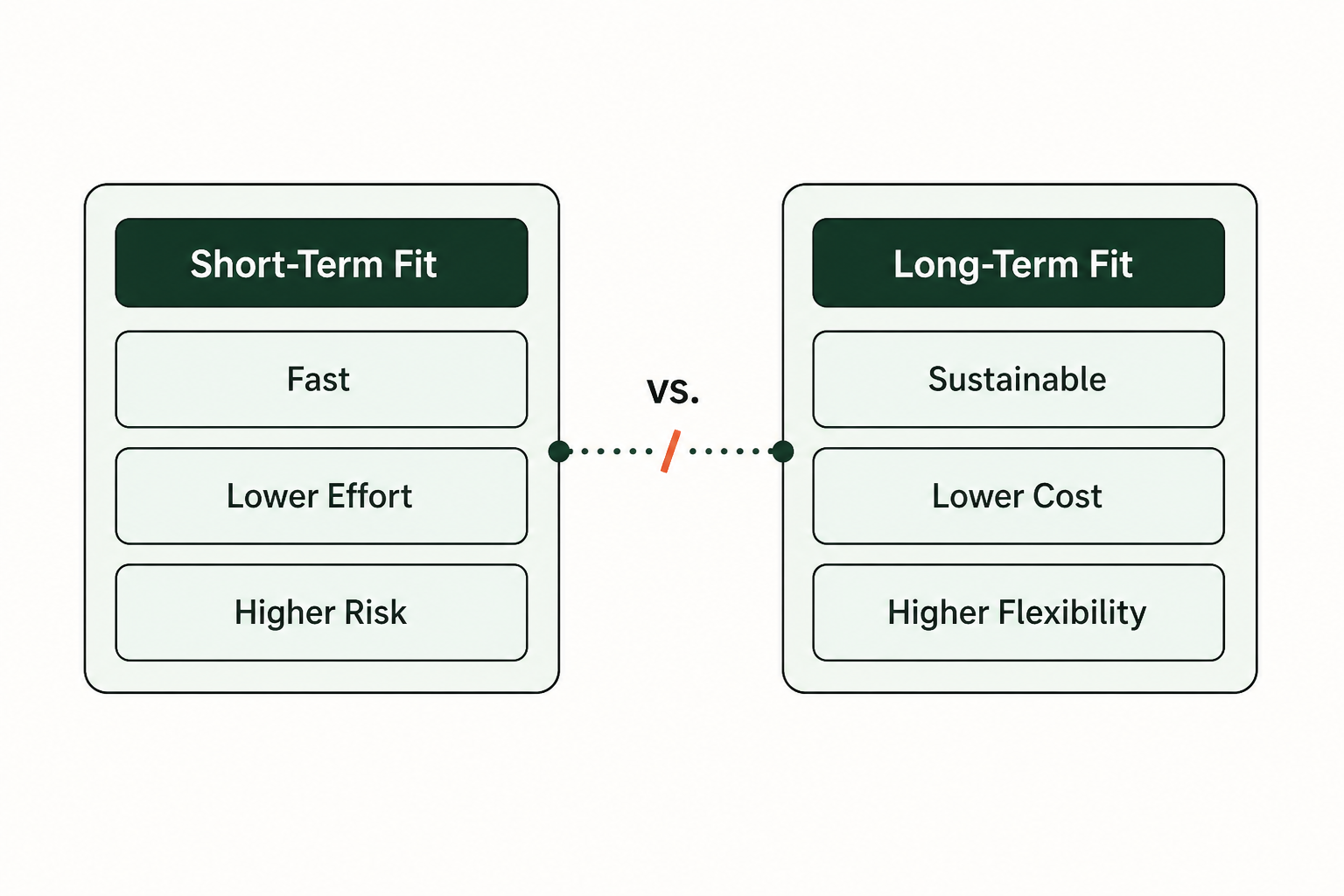
- If your agent must act across legacy, homegrown, or no-API systems, pick an Agentic Harness. The fit is strongest when governed execution and deterministic workflows matter as much as audit.
- If your pilot is stalled because integration requires scarce specialists, choose the path with 0 engineering resources. A deployment measured in days changes the evaluation from "can we build every connector?" to "which workflows should we approve first?"
- If your sponsor is worried about runtime cost and predictability, favor the governed execution layer. Up to 80% lower token costs and 100% predictability in runtime speak directly to operating discipline.
The practical recommendation is to avoid overbuilding the first connector while underbuilding the control model. Legacy application integration for AI agents is not decided by the path that connects once. It is decided by the path that can be repeated safely.
 Recommendation: which integration strategy is right for you?
Next steps: from integration to governed automation
A good implementation starts with one workflow that touches a real system of record. Define the approved actions, decide what the agent may never do, and test the execution path before expanding the pattern. The honest trade-off is control versus improvisation. Enterprises that want agents to change business systems need governed execution first, because the value is created only when the action is allowed, repeatable, and auditable.
Ready to integrate? Compare solutions and choose your best fit.
Connect your existing applications to AI agents securely and efficiently.
Discover proven methods for seamless integration and enhanced operational control.
Frequently asked questions
What is the main benefit of using a dedicated integration layer for AI agents?
A dedicated integration layer gives agents a controlled path to use legacy systems without discarding the systems that still run the business. Many legacy applications hold years of domain logic and process knowledge, so replacing them is rarely the practical first move. The value comes from letting agents act through governed execution while keeping existing workflows, controls, and audit expectations intact.
How do I get started with integrating AI into my legacy systems?
Start with one workflow where the agent needs to act inside a real enterprise application, not a demo environment. Map the systems involved, the exact actions allowed, the authorization rules, and the evidence needed for audit. If the workflow crosses legacy, homegrown, or no-API systems, a platform that supports deployment in days can shorten the path from pilot to controlled operation.
What are the most common mistakes to avoid when connecting agents to enterprise applications?
The biggest mistake is giving the agent direct access before defining the execution boundary. Another is assuming that a working demo proves production readiness. Agentic AI projects fail when legacy systems cannot support modern execution demands, so the connection layer must handle control, monitoring, runtime predictability, and audit before the workflow is trusted in production.
Who is this type of integration solution for?
This is for enterprise application, integration, automation, CIO, CAIO, and transformation leaders who already know the business case for AI agents but are blocked by system connectivity. It fits organizations with several mission-critical systems, especially legacy, homegrown, bespoke, or no-API applications where every new connection would otherwise become a custom engineering project.