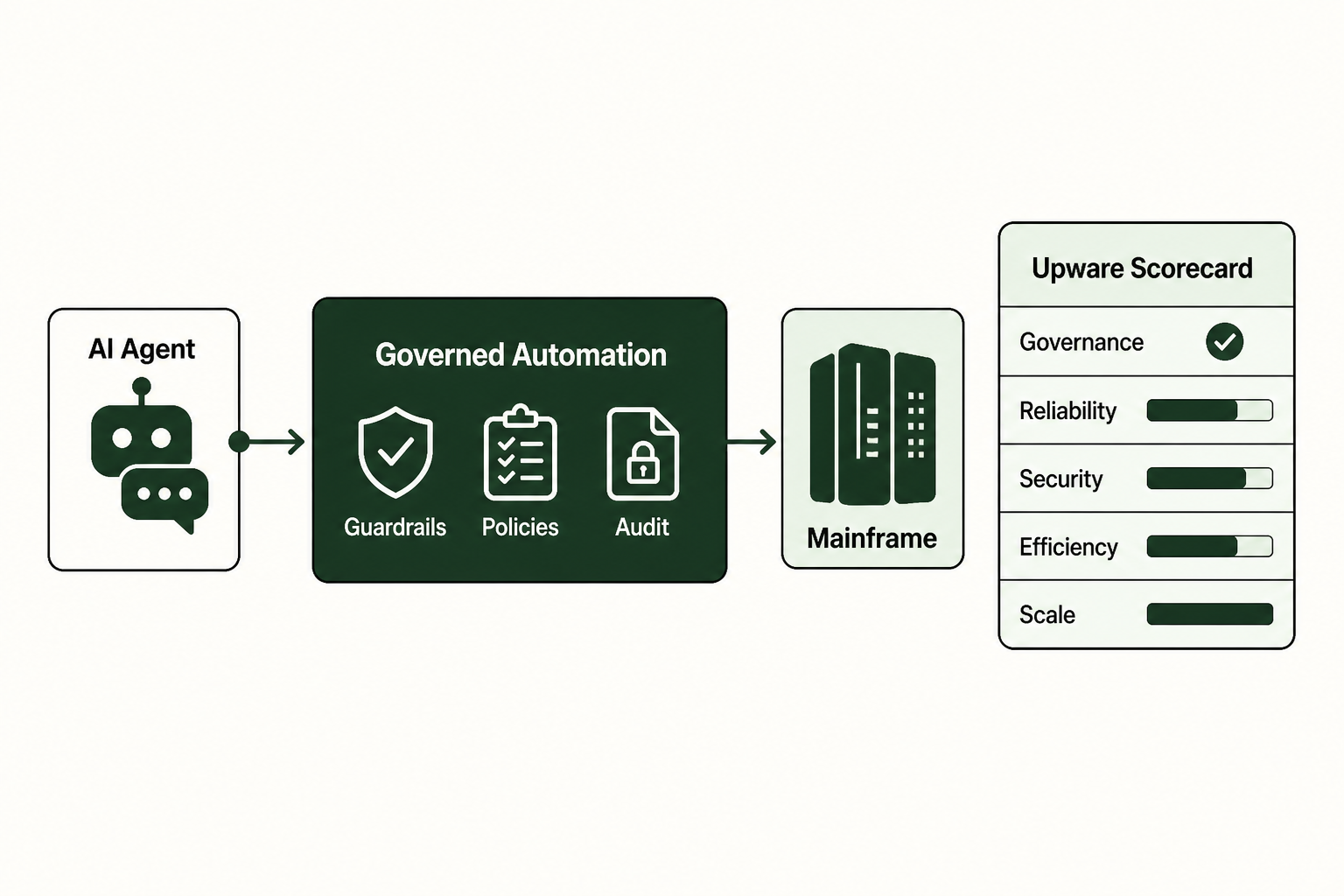
Verdict: 4.5 / 5. For enterprises trying to move agents from pilot demos into controlled production work, Upware is strongest where the risk is highest: governed execution against real systems.
A useful agent becomes an operational risk the moment it can update a record, approve a transaction, or touch a legacy application. Effective AI agent governance needs a controlled execution layer that mediates agent actions, with policy enforcement, verification checkpoints, and auditable records built into the work. That is the practical problem this review evaluates. It is not a review of broad model policy, generic security tooling, or agent experimentation platforms.
Why AI agent governance needs a governed execution layer
Enterprise leaders are not short on agent ideas. They are short on a safe way to let those agents act. The gap appears when a prototype can reason through a task but still cannot be approved to change enterprise systems, because nobody can prove what it saw, what it called, which policy applied, or when a human should have stepped in.
That concern is operational, not theoretical. A Cloud Security Alliance research note reported that 80% of surveyed organizations documented risky agent behaviors, including unauthorized system access and data exposure, in 2025, according to an EY/AIUC-1 Consortium survey. The article incorrectly includes a URL in the middle of a sentence and repeats part of the claim. For a CIO or Head of AI, that is the line between experimentation and production. Agents are the brain; the Agentic Harness is the hands, giving the enterprise a controlled way to decide which actions happen, which actions pause, and which actions create evidence for audit.
A useful distinction is model behavior versus action behavior. Model governance asks whether the model is appropriate, tested, and monitored. AI agent governance asks whether the agent's actions have boundaries, verification, logs, recovery paths, and approval at the right points. For a broader primer, the related AI agent governance guide is the better foundation; this review stays focused on execution.
Scorecard: Upware Agentic Harness
| Dimension | Rating | Assessment |
|---|---|---|
| Governed execution | 4.8 / 5 | Strong fit for enterprises that need policy-bound agent actions rather than open-ended automation. |
| Auditability | 4.6 / 5 | The design centers on records of what agents did and why, which matters for compliance and incident review. |
| Deployment burden | 4.5 / 5 | Deployment can be achieved in days, and the commercial proof point cites 0 engineering resources. |
| Cost discipline | 4.2 / 5 | Token costs can be up to 80% lower, but buyers should validate that against their own workflows. |
| Breadth of use | 3.8 / 5 | The focus is intentionally narrow: governed execution for consequential actions, not a general model governance suite. |
 Why AI agent governance needs a governed execution layer
Upware pricing
With the execution question established, the next issue is cost. Upware pricing should be treated as enterprise, quote-based pricing rather than a public self-serve SaaS menu. The material available for this review does not provide a fixed seat price, per-agent fee, usage meter, or packaged tier list with public dollar amounts, so a buyer should not expect to benchmark it like a commodity workflow tool.
There are still concrete commercial inputs to evaluate. The pricing review has to focus on what changes the total cost of adoption:
| Pricing factor | What is known | How to evaluate it |
|---|---|---|
| Platform fee | Not publicly stated | Ask for pricing by agent volume, workflow count, environments, and support model. |
| Deployment effort | Deployment in days | Compare against internal engineering timelines for connecting agents to enterprise systems. |
| Engineering requirement | The engineering requirement states 0 engineering resources. | Validate which systems, credentials, and process maps the customer still must provide. |
| Runtime cost can be up to 80% lower token costs. | ||
| Operating model | Enterprise evaluation | Include security review, audit requirements, and human approval design in the buying process. |
The honest pricing conclusion is that Upware is not priced for casual experimentation or small-team automation. The economic case improves when the workflow is consequential enough that audit delay, manual review, failed integrations, or uncontrolled agent access already create cost. For a production buyer, the pricing question has two parts: what the subscription costs, and what the organization pays when agents keep acting through fragile prompts, screenshots, and manual exceptions.
Upware: pros and cons
That cost profile makes the tradeoffs clearer. The platform makes the most sense when the enterprise already believes agents should act in real systems, but refuses to let an open-ended agent become the control plane.
Pros
- Strong execution focus: The Agentic Harness is built around governed execution, the missing layer in many agent pilots that can recommend actions but cannot safely complete them.
- Runtime predictability: The cited proof point of 100% predictability in runtime is unusually direct, and it fits the product's emphasis on deterministic workflows rather than unbounded agent improvisation.
- Lower operating cost potential: Token costs can be up to 80% lower when repetitive reasoning is replaced with controlled execution paths, although buyers should prove this on their own tasks.
- Fast deployment profile: Deployment in days is a meaningful claim for enterprises that cannot wait through a long integration build before testing agent governance in production-like conditions.
Cons
- Narrow by design: This is not a broad model governance platform, a general IAM replacement, or a security event platform.
- Enterprise bias: Small teams looking for a cheap experimentation tool will likely find the operating assumptions too heavy.
- Quote-based pricing: Without public tier numbers, procurement teams must run a direct commercial evaluation before they can compare budget fit.
- Process discipline required: Governed execution only works when the enterprise is willing to define policies, approval points, recovery paths, and audit needs clearly.
Core features: the Agentic Harness in detail
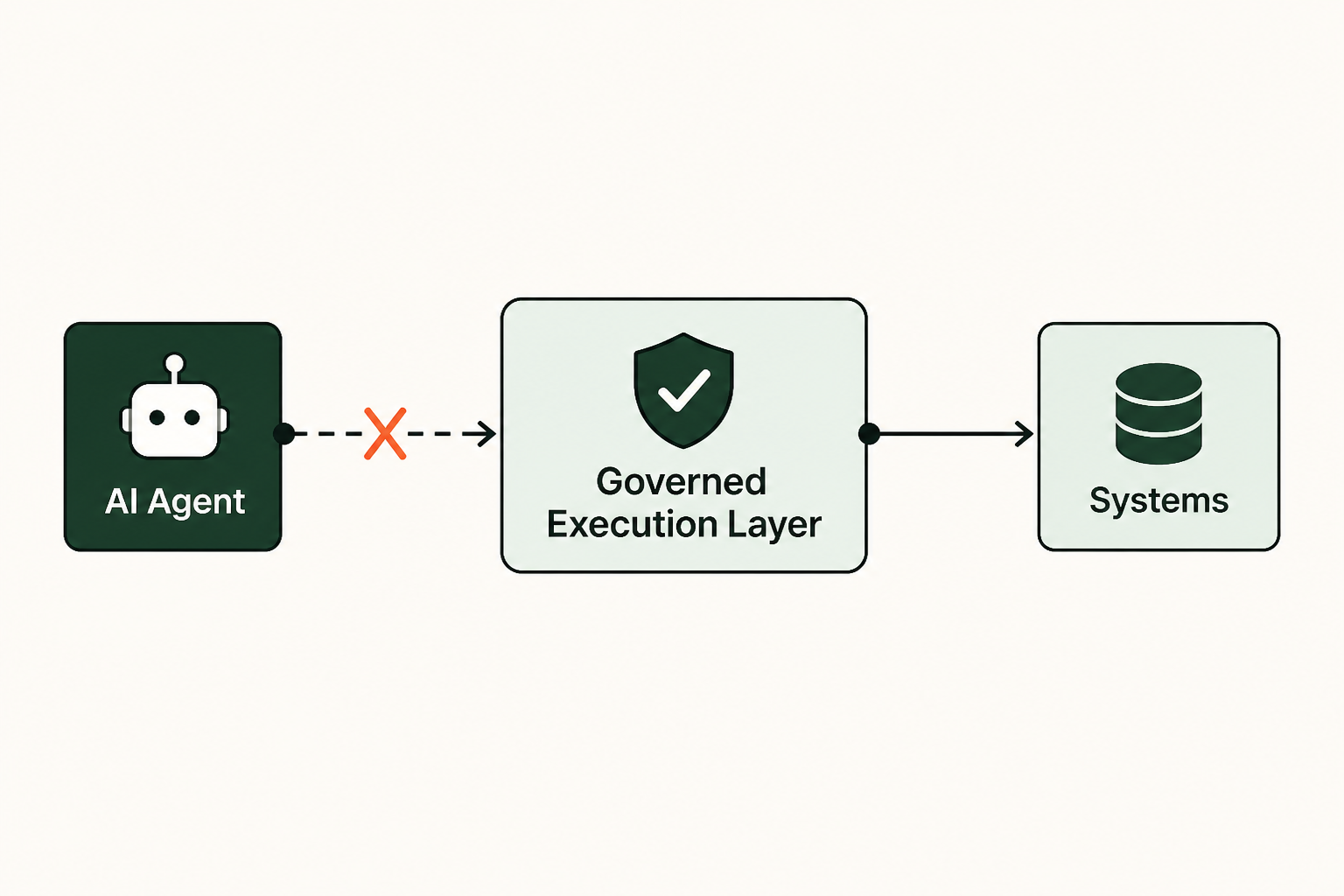
The product's value depends on a simple architectural claim: agents should reason, but they should not directly control enterprise change. The Agentic Harness is easiest to understand as the execution layer between an agent's intent and the systems that actually change business state. The agent can reason and plan before it requests an action, while the governed execution layer decides how that action is carried out, checked, logged, escalated, or stopped.
That separation matters because enterprise systems are uneven. Some have modern APIs. Others are legacy systems or no-API systems built around admin portals, terminal screens, or internal workflows. A governed tool has to mediate actions across that mix without turning every integration into a custom engineering project.
Policy enforcement and verification
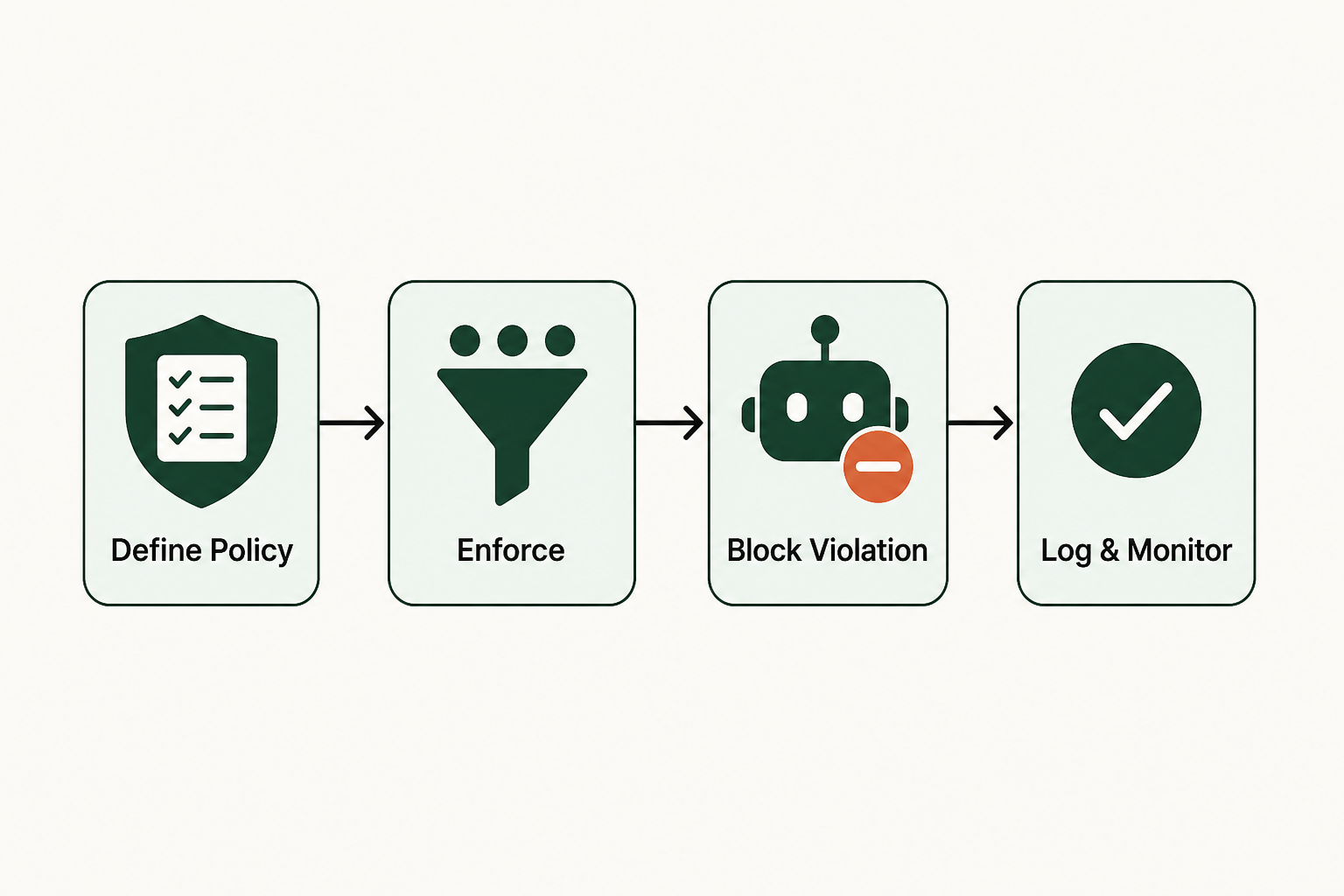
Policy enforcement is the first control point. External governance guidance from PwC says AI agents need a verified identity, defined role, task-specific permissions, and auditable records. That maps closely to the operating model enterprises need: the agent should not be treated as a vague extension of a human user, and it should not be allowed to act just because a prompt says the action is acceptable.
Verification is the second control point. Human oversight should increase as agent autonomy and consequence increase, which means low-risk actions can move through deterministic workflows while high-consequence actions pause for review. That is the right tradeoff. A governance layer that requires a human for everything slows production; one that approves everything quietly creates audit and safety exposure.
Deterministic workflows for predictability
Deterministic workflows are the core reason the platform's architecture is compelling. The cited claim of 100% predictability in runtime is not a promise that all AI risk disappears. It means the runtime path can be made predictable once the agent's requested action enters the controlled execution path.
That matters because many agent failures are failures of uncontrolled execution rather than reasoning alone. The wrong field is updated, a required check is skipped, a retry repeats the wrong action, or an exception is handled differently by different teams. Deterministic workflows give operators a known path for known work, while still letting agents supply context, intent, and judgment before execution.
Audit, logging, and recovery
Audit is where the platform moves from automation tool to governance system. A complete record should show what the agent saw and requested, which policy applied, what verification occurred, and what changed in the target system. For teams designing that evidence model, a complete agent audit trail is the difference between "the agent did it" and a reviewable chain of events.
Recovery is just as important. Enterprise work rarely fails neatly. A record may be locked, a portal may return a different status than expected, or a downstream system may accept part of a change and reject another part. The Agentic Harness approach is strongest when it treats failures as governed process events, rather than loose exceptions that disappear into a chat transcript or an operations ticket.
Performance and compliance impact
These controls matter because agentic systems do more than generate text. Berkeley Law's analysis states that agentic AI's ability to "independently plan, execute, and adapt a series of actions" with minimal human intervention creates heightened data-access obligations and human-oversight obligations under the EU AI Act and state privacy frameworks.
The regulatory burden is also broader than one law. The European Commission says that from August 2, 2026, the AI Office and Member States' authorities are responsible for implementing, supervising, and enforcing the AI Act. Berkeley Law also notes that about 1,500 AI bills have been proposed and more than 150 enacted at the U.S. state level as of June 2026. For enterprise buyers, that means governance evidence cannot be an afterthought assembled manually at review time.
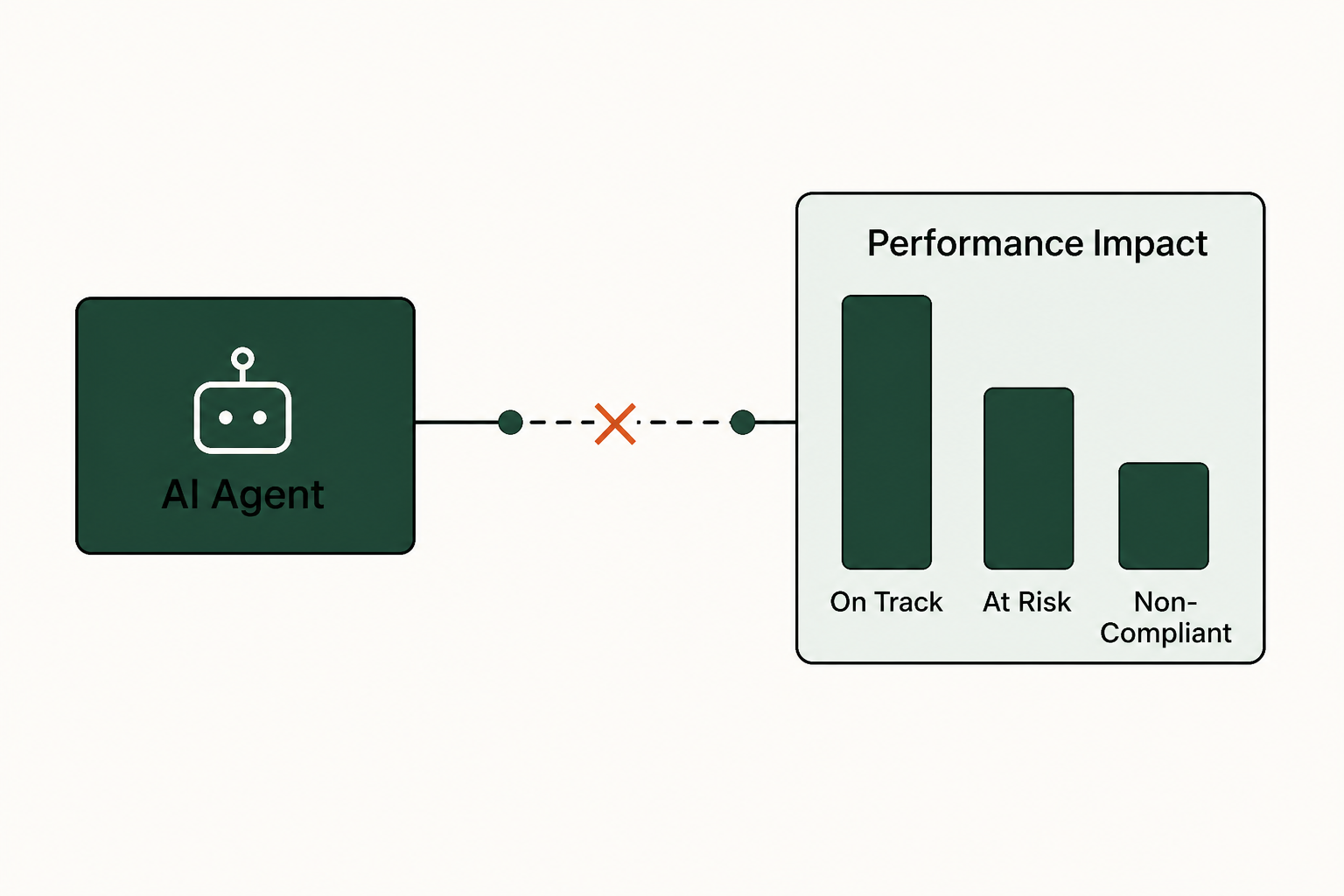
Performance should be judged with the same discipline. The platform claims token costs can be up to 80% lower, which is plausible when deterministic workflows reduce repeated model calls, but that figure should be tested on the buyer's own processes. The stronger claim is operational rather than purely financial: governed execution can reduce ambiguity about who approved an action, why it ran, and what happened when the system returned an unexpected state.
 Performance and compliance impact
How Upware differs from agent engineering frameworks
The comparison is useful because many teams already have tools for building agents. Agent engineering frameworks and agentic process automation tools are useful for building agent logic, connecting prompts, routing tasks, and coordinating agent behavior across steps. They help teams create agents faster and test what an agent can reason through.
What they often leave unresolved is the production boundary between agent intent and enterprise system change. A framework can help define what the agent wants to do, but the enterprise still needs policy enforcement, verification checkpoints, deterministic workflows, recovery handling, and audit records before that action should touch a regulated or mission-critical process.
Upware centers on the governed execution layer between agents and enterprise systems. That is the pivot: those tools focus on building and orchestrating agents, while Upware centers on the execution layer that controls what agents are allowed to do, how the work is performed, and what evidence remains afterward. It is a narrower claim, and that is why it is useful.
Verdict: who should use Upware (and who should skip it)
That narrow focus defines the buyer. Upware is best suited to CIOs, CAIOs, Heads of AI, enterprise architects, and security leaders at midsize-to-large enterprises where agents are moving from recommendations into live system actions. The strongest fit is a regulated or complex operating environment: banking, insurance, healthcare, manufacturing, travel, or any enterprise with legacy systems and no-API systems that still run important work.
It is not the right starting point for a small business that wants a lightweight assistant, a research team testing agent behavior in isolation, or a group that mainly needs broad AI policy documentation. It also does not remove the need for human judgment. As autonomy and consequence rise, human oversight should rise with them.
The buying decision should come down to one operational question: if an agent changes a business system, can your team prove what it saw, what it decided, what policy applied, who approved the action, and how the system recovered if reality differed from the plan? If the answer is no, an Agentic Harness deserves a serious evaluation.
Ready to enhance your enterprise AI agent governance?
Discover Upware's governed execution and audit controls firsthand or connect with an expert about your compliance requirements.
Frequently asked questions
What is the main benefit of using an Agentic Harness like Upware?
The main benefit is controlled, predictable action. An Agentic Harness lets an AI agent request work while a governed execution layer handles policy checks, verification, deterministic workflows, logging, and recovery. That matters most when the agent is allowed to change records, trigger transactions, or work inside enterprise systems where auditability is required.
How is this different from general AI model governance tools?
General model governance focuses on model selection, testing, risk classification, monitoring, and policy at the model level. AI agent governance focuses on what happens when an agent acts. The practical concern is whether each action has defined permissions, approval thresholds, an execution path, and an audit record. The two disciplines can work together, but they solve different problems.
How long does it take to deploy Upware and see results?
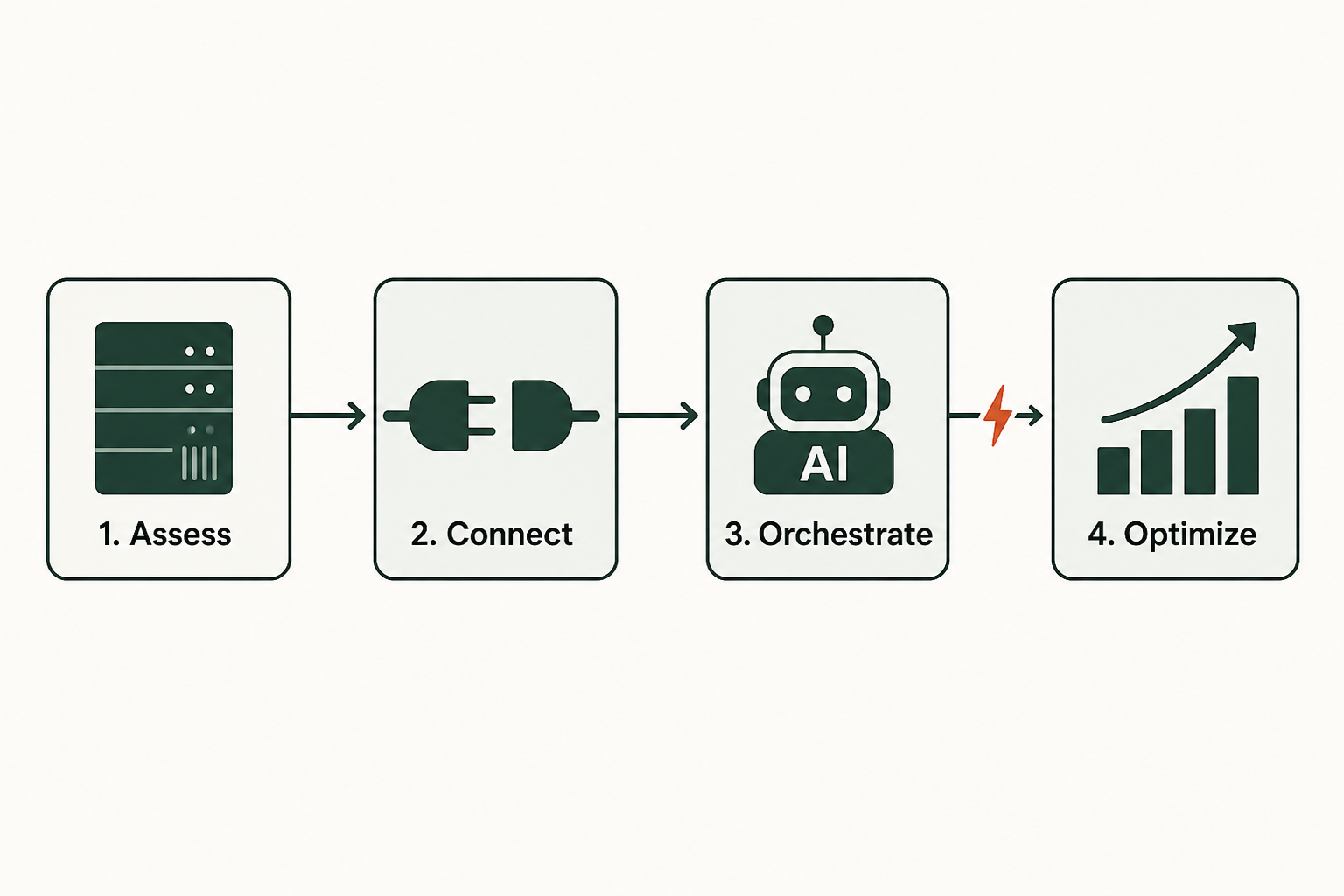
The stated deployment proof point is deployment in days. That should be read as an enterprise deployment profile, not as a promise that no setup or review is needed. Security, workflow selection, policy design, system access, and approval rules still need to be defined, especially for regulated or high-consequence processes.
What kind of human oversight is needed for agents managed by Upware?
Human oversight should match the autonomy and consequence of the agent's action. Low-risk, repeatable tasks can move through deterministic workflows with logging and policy checks. Higher-consequence actions should require review, approval, or escalation before execution. The goal is not to block all automation; it is to put human judgment where the risk justifies it. Secure your AI agent governance today. Request a demo.