What is an AI execution layer?
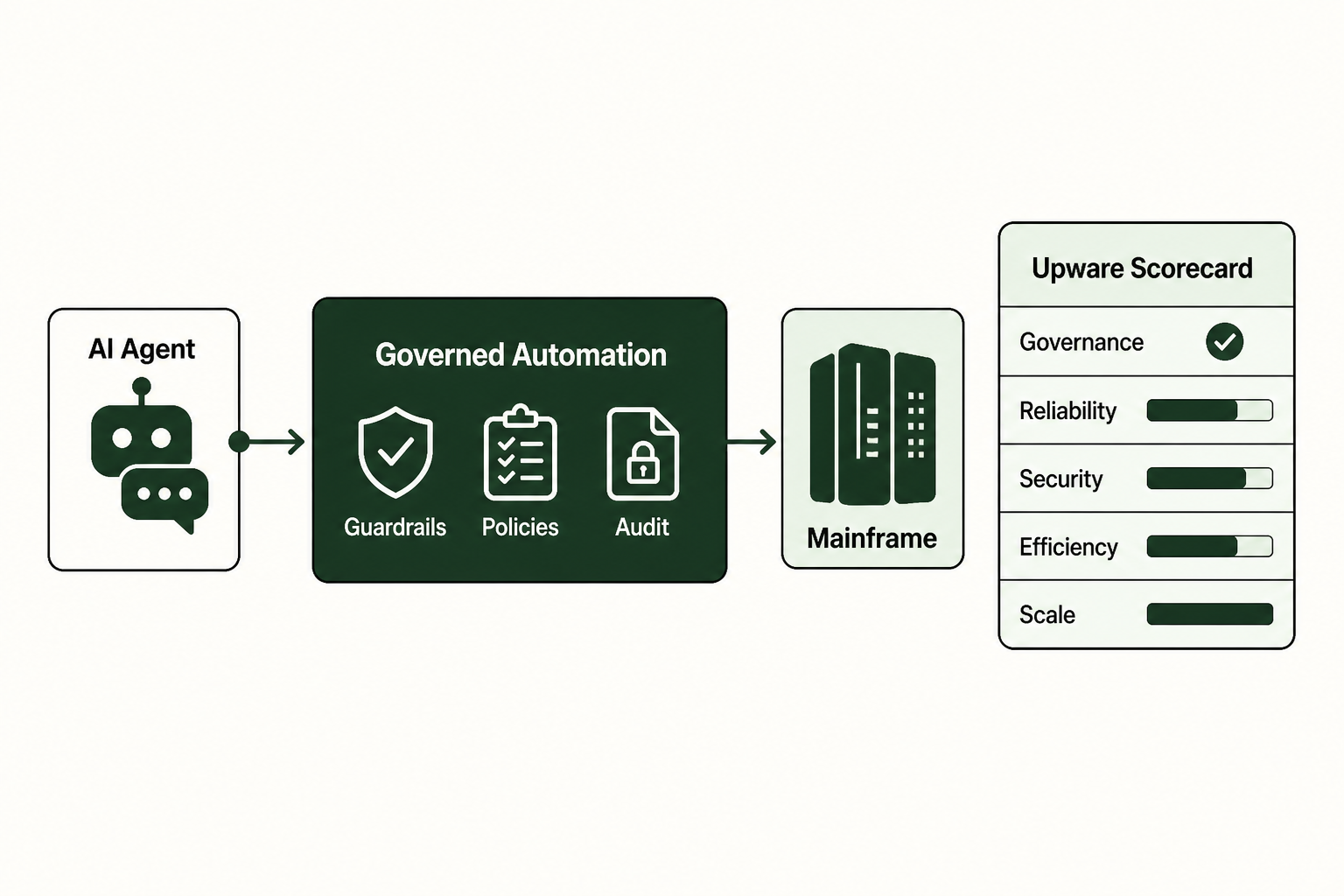
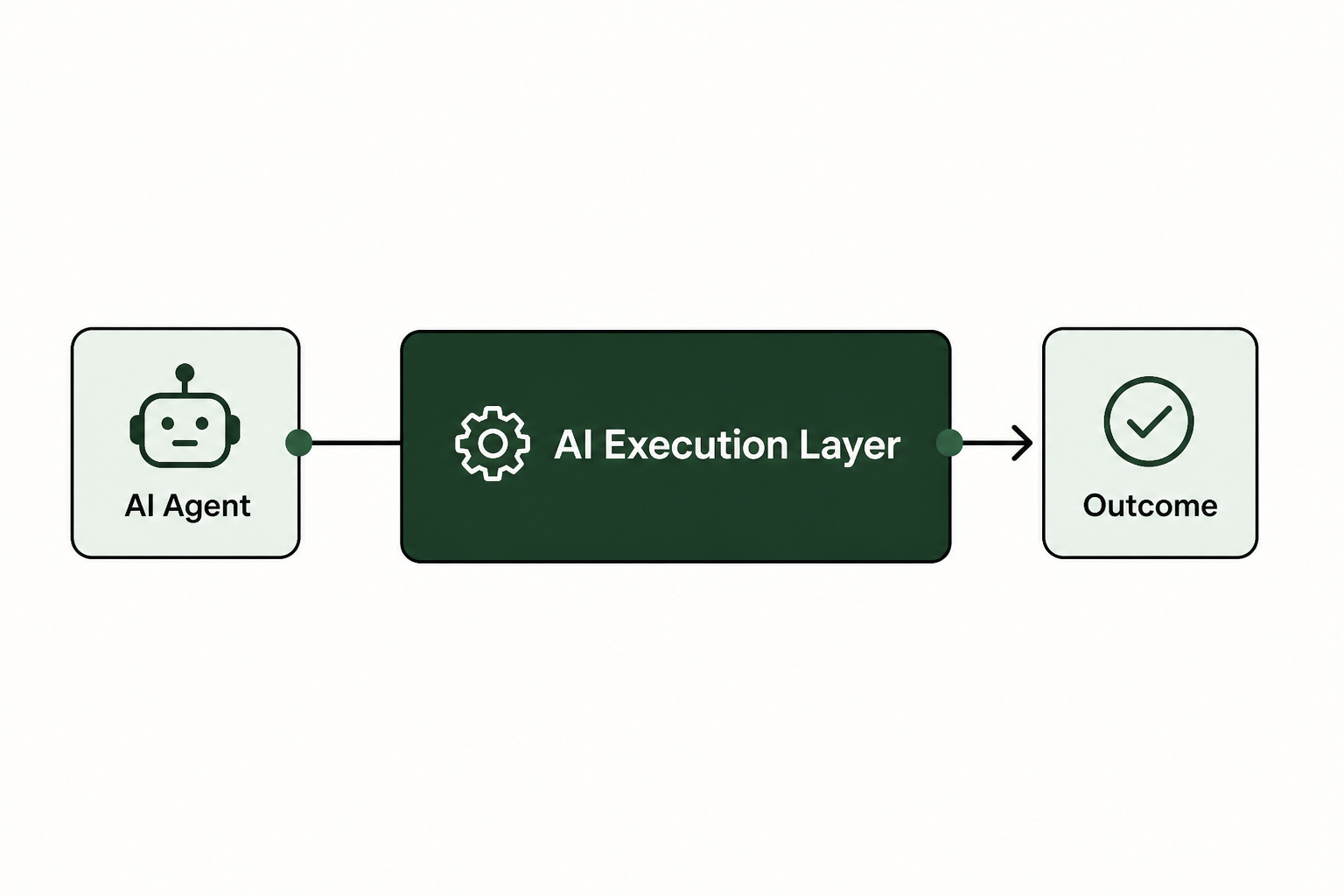
An AI execution layer is a secure, controlled intermediary between AI agents and enterprise systems. It lets agents perform actions reliably without handing them open-ended authority. If the agent is the brain deciding what should happen next, the execution layer is the governed set of hands that carries out the work inside real systems.
That distinction matters because enterprise work is not a chat session. A refund, account update, claim review, invoice correction, or ERP change has state, permissions, dependencies, approvals, and audit requirements. The agent can reason about the task, but the enterprise still needs a controlled path for changing records or calling systems, with proof of what happened afterward.
The gap is operational. Research on the Execution Layer of AI describes a missing part of the modern AI stack: organizations have tools that can respond, but enterprises still lack a system that can execute work reliably across tools, time, and organizational state, as of 2025. In that framing, [the missing execution layer](https://papers.ssrn.com/sol3/papers.cfm?In that framing, the missing execution layer is a persistent, memory-driven cognitive system that operates across time, tools, and organizational states - selecting, performing, and verifying actions with consistency, accountability, and self-improving logic, as described in 2025.
For enterprise teams, the practical version is narrower and more concrete: an ai execution layer sits between agents and enterprise systems so agent intent becomes governed execution. It does not replace governance, identity, workflow ownership, or human review. It gives those controls a place to run before an agent touches production systems.
 What is an AI execution layer?
Why AI agents need an Agentic Harness for governed execution
Once the execution layer is defined, the next issue is control. Direct connection looks efficient in a demo, but it breaks down quickly in production because agents are probabilistic reasoning systems while enterprise systems are stateful systems of record. An Agentic Harness gives the agent a controlled operating path, so governed execution, rather than open-ended agent behavior, determines how work changes.
The problem with stateless AI in stateful systems
Traditional AI systems had a structural weakness for enterprise execution as of 2025: they were stateless, which meant they could not reliably maintain memory, preserve identity, or execute workflows reliably across time. That is a poor fit for business processes that stretch across hours, days, teams, and systems.
Enterprise work depends on state. A purchasing workflow has a requester, budget owner, supplier record, purchase order, approval status, delivery date, and audit trail. A customer-service workflow may need CRM context, policy rules, billing history, identity checks, and an escalation path. If an agent forgets prior context, drifts in behavior, or loses track of process state, it may still produce plausible text while failing at execution.
The deeper failure is architectural: stateless intelligence could not operate stateful workflows with the reliability enterprises expected, as of 2025. That is why an Agentic Harness is more than a connector. It gives the agent a governed route through process state, system constraints, approvals, and verification steps.
Security and compliance risks of direct access
Direct access creates a second problem: authority. An agent that can act inside enterprise systems needs limits on what it can do, when it can do it, which records it can touch, and when a human must approve the step. Those limits cannot sit only inside a prompt.
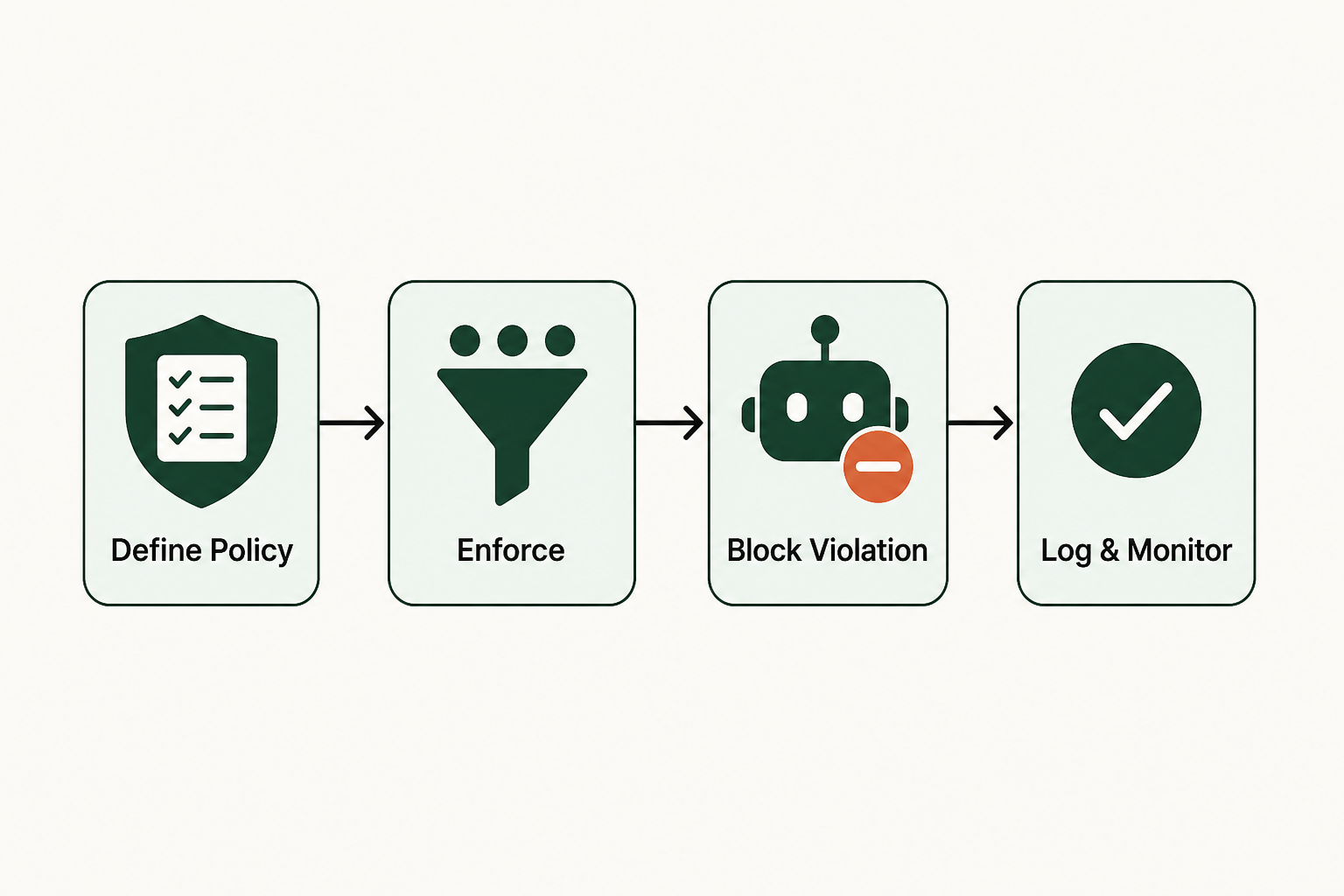
Agentic systems can embed governance controls and regulatory validation into workflows, with architectural guardrails included in the execution path. Governed execution provides that path. It turns access into policy-bound action instead of broad system permission.
For compliance teams, the concern is practical. They need to know which identity was used, which instruction triggered the action, which system changed, which policy applied, and whether the action matched an approved workflow. Without that control plane, an agent can become another privileged actor with weak evidence.
The chaos of ungoverned agent actions
The third problem is fragmentation. As of 2025, enterprises already ran many AI apps, wrappers, automations, plug-ins, task bots, and workflow engines that did not share memory, state, or continuity. Adding agents directly into that mix can multiply the number of paths into the same systems.
That fragmentation is manageable when tools only produce recommendations. It becomes risky when they perform work. If one agent updates a customer record while another triggers a fulfillment change, and a third opens a case without a shared state model, the business gets inconsistent process outcomes. The failure may not look like a dramatic outage. It may look like duplicate work, missed approvals, untraceable changes, or exceptions that land back with operations teams.
An Agentic Harness reduces that sprawl by putting governed execution between agent intent and system action.
Glossary: key terms in AI execution
The mechanics are easier to evaluate when the vocabulary is precise. Teams often use overlapping language for agents, automation, orchestration, and governance, but the operational distinctions determine where control belongs.
- AI agent: A software system that can interpret a goal, reason about steps, use tools, and decide which action to request. In enterprise settings, the agent should not have unrestricted authority to change systems.
- AI execution layer: The intermediary between an agent and enterprise systems. It translates intent into controlled, policy-bound action.
- Agentic Harness: A governed operating layer that gives AI agents the hands to act across systems while preserving control, auditability, cost discipline, and process rules.
- Governed execution: The practice of routing agent actions through permissions, workflow rules, validation, monitoring, and audit before systems are changed.
- Deterministic workflows: Predefined process paths that produce predictable runtime behavior. They constrain how actions occur, even when the agent's reasoning is probabilistic.
- State: The current condition of a process, record, user, approval, or transaction. Enterprise systems rely on state to know what should happen next.
- No-API systems: Applications that lack modern programmatic interfaces, often including legacy systems, homegrown portals, green-screen environments, or older administrative tools.
- Audit trail: The evidence record showing what the agent requested, what action occurred, which controls applied, and what result was returned.
How an execution layer works: from agent intent to action
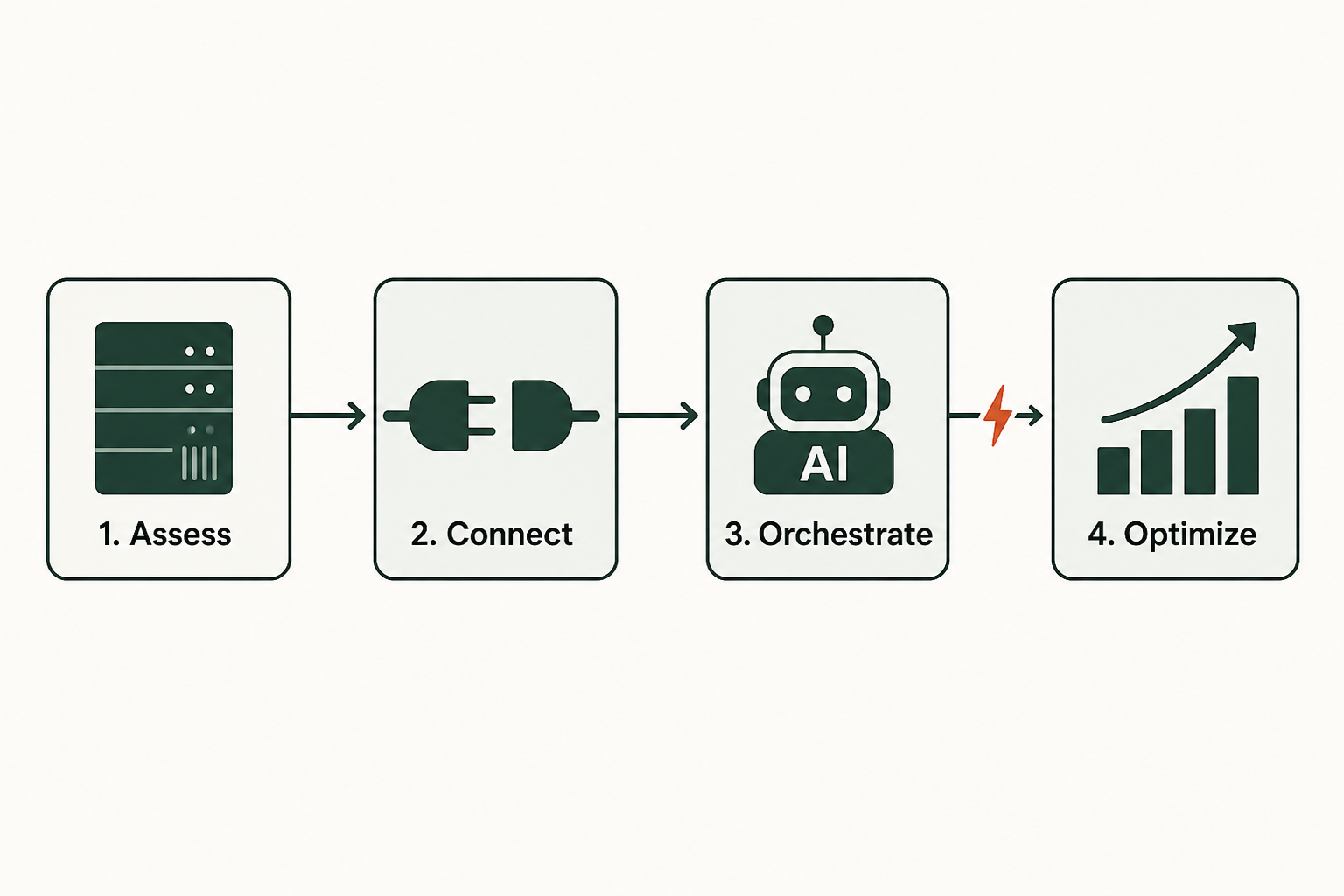
With the risks and terms established, the mechanics are straightforward. An execution layer separates intent from execution. The agent may decide that an order status should be checked or a customer record should be updated, but the layer determines how that request is authorized, sequenced, performed, verified, and logged.
That separation is the foundation of governed execution. It lets enterprises keep the reasoning interface flexible while making the action path predictable.
Connecting to legacy and no-API systems
Enterprise AI often stalls at the same point: the first useful workflow needs a system that was not built for agent access. The data may sit in an ERP, CRM, policy administration platform, claims system, mainframe screen, or homegrown admin portal. Some of those systems have APIs. Many have partial APIs. Others have no practical integration surface for agent execution.
AI agents can analyze source code and architecture artifacts, plus deployment histories, to extract system intent and map how applications and integrations interact. KPMG described this as a way to improve transparency into change impact and reduce reliance on institutional memory. That matters because legacy environments often depend on people who know which screens, fields, dependencies, and order of operations keep a process safe.
An execution layer turns that understanding into controlled action. It does not require every system to become agent-native. Instead, it gives the agent a governed path through the systems the enterprise already runs, including legacy systems and no-API systems. In practical terms, the agent asks for an outcome, while the layer handles the system interaction through approved routes.
For example, an agent might determine that a billing address needs correction. The execution layer can check whether the agent is allowed to request that action, confirm the workflow state, open the right system path, apply the update, verify the result, and record evidence. The agent does not need blanket system access to the billing platform.
Enforcing deterministic workflows for predictability
The more an agent can do, the more the enterprise needs deterministic workflows. A deterministic workflow defines the approved path from request to action, including validations, permissions, exception handling, and verification. It keeps the agent useful while making the action safe enough for operational work.
Agent-driven lifecycle orchestration can enforce standardized integration models while coordinating cross-system updates and maintaining structured awareness of how changes propagate. That is the model enterprises need for agent execution: a controlled path that understands dependencies, not a free-form chain of tool calls.
deterministic workflows are especially important when the same business task touches multiple systems. A claims adjustment might require a policy check, fraud rule validation, document update, payment system entry, and notification. If each step is left to the agent's improvisation, the process becomes difficult to test and hard to audit. If the workflow is deterministic, the agent can still decide that the task should run, but execution follows a governed route.
Upware describes this category as an Agentic Harness: the operating layer that connects context, connectivity, compliance, cost, and control so agents can act across enterprise systems. The operational point is simple: governed execution gives enterprise teams a place to enforce deterministic workflows without making every agent team rebuild the same controls.
Ensuring control through auditing and governance
Control is where an execution layer becomes operational infrastructure rather than a convenience wrapper. The layer should know the policy, the identity, the workflow state, the target system, and the evidence needed after the action. That evidence is what lets process owners, security teams, and auditors trust agentic work.
AI agent coordination improves predictability through automated regression testing and real-time performance monitoring, with deployment sequencing structured around rollback safeguards. Those practices are familiar in software delivery, but they become more important when agents make execution requests against production workflows.
An effective audit path answers several questions without asking teams to reconstruct events manually:
- Who or what initiated the request: the user, agent, workflow, or upstream trigger.
- Which control approved the action: policy, role, threshold, human approval, or system rule.
- What changed in the target system: record, field, transaction, status, or generated artifact.
- Whether the result was verified: success, failure, rollback, exception, or escalation.
- What evidence was retained: logs, timestamps, workflow state, and policy decisions.
For a deeper look at the governance side of that operating model, this AI agent governance guide covers how enterprises define controls before agents act.
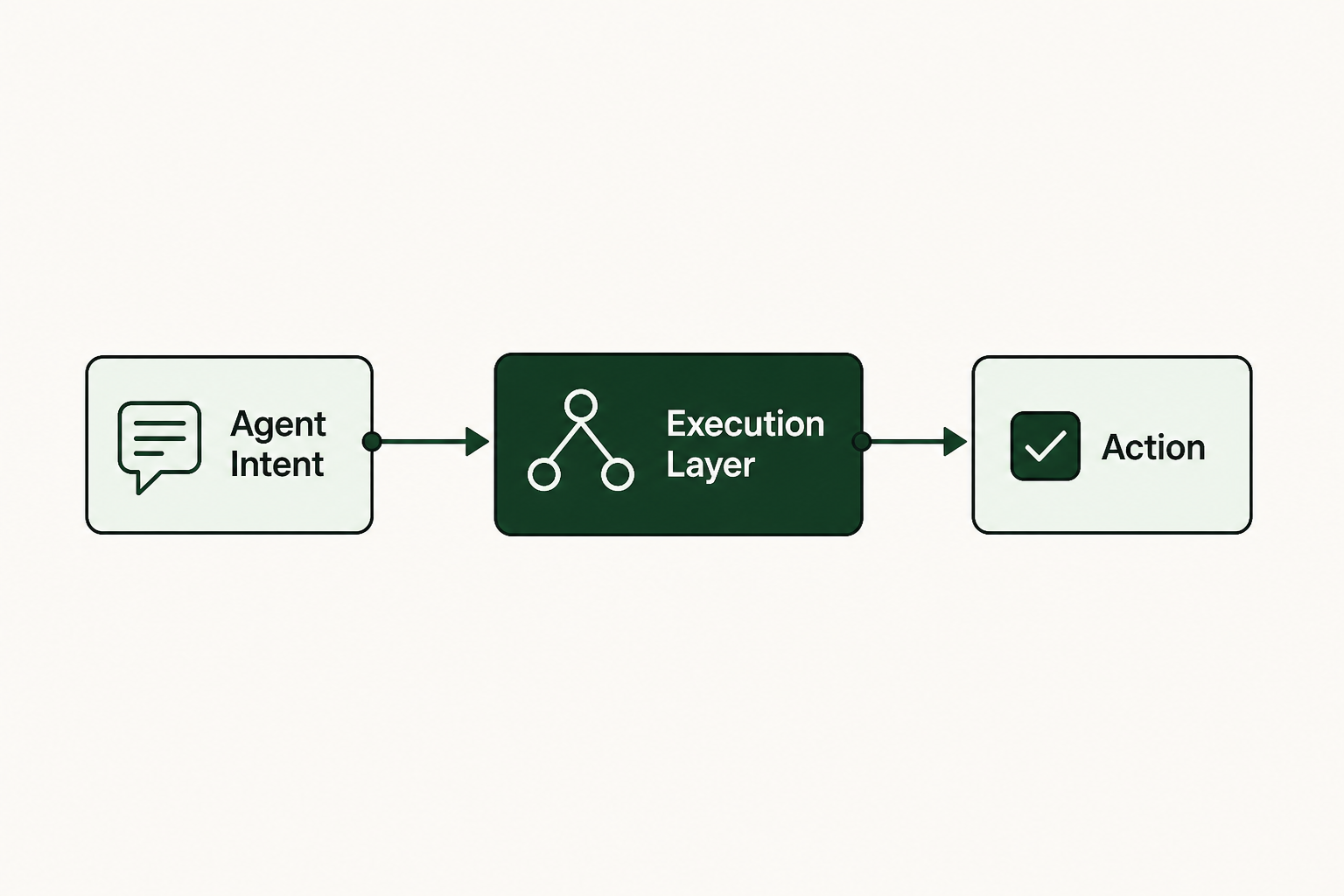 How an execution layer works: from agent intent to action
Benefits of an execution layer for enterprise AI
Once the operating model is clear, the benefits become practical. The value comes from letting agents do useful work without bypassing the controls that make enterprise systems reliable.
AI agent systems have moved from single-function taskers toward orchestrators that coordinate specialized agents for larger functions. KPMG described this as coordinating actions at scale, which is exactly where an execution layer becomes necessary. KPMG described this as coordinating actions at scale, which was exactly where an execution layer became necessary. KPMG describes this shift as coordinating actions at scale, which is exactly where an execution layer becomes necessary. Coordination without controlled execution creates operational noise. Coordination with governed execution can support real process work.
The benefits usually fall into four practical categories:
- Safer system access: Agents request actions through policy-bound paths instead of receiving broad credentials to enterprise systems.
- Predictable runtime behavior: Deterministic workflows constrain execution, with Upware reports 100% predictability in runtime for governed routes.
- Lower operating cost: A controlled path can reduce repeated reasoning and unnecessary model calls, with reported token costs up to 80% lower.
- Faster path from pilot to use: When the layer connects agents to existing systems, teams avoid turning every connection into a custom integration project.
The cost point needs careful framing. Lower token use does not mean AI becomes free, and it does not remove the need to design workflows. It means predictable execution can reduce wasteful back-and-forth, especially where an agent would otherwise keep reasoning through the same operational steps.
System access is often the bigger issue. Enterprise AI pilots usually look promising until they need to touch production systems. Then security and integration demands slow the work down, along with process ownership. Agent-driven lifecycle orchestration allows modernization to be sequenced into measurable increments tied to dependency reduction and stability improvements, with performance gains measured as part of the sequence. The same principle applies to agent execution: start with governed, measurable increments instead of granting open-ended authority.
For midsize-to-large enterprises with legacy systems and homegrown tools, including no-API systems, that incremental model is the difference between a demo and a controlled production path. The execution layer keeps existing system logic and investments intact while giving agents a way to perform bounded work.
Execution layers vs. agent engineering frameworks
This layer also has to be separated from other tools in the AI stack. Agent engineering frameworks, conversational agent platforms, and agentic process automation tools can be useful for building agents, defining prompts, connecting tools, and orchestrating multi-agent reasoning. They are strongest when the job is to create the agent brain.
What they often leave unresolved is the operational gap between agent output and system change. Building an agent that can decide what should happen is different from giving it a governed path to perform that work inside enterprise systems with identity, permissions, workflow state, controls, and audit.
Upware centers on that governed execution layer between agents and enterprise systems. The emphasis is not agent creation for its own sake. It is the Agentic Harness that turns agent intent into compliant action through deterministic workflows, especially where the target systems are legacy or bespoke, or otherwise difficult to reach.
That category distinction matters for buying and architecture decisions. If a team needs a better agent, an agent-building tool may be the right starting point. If the agent already exists but cannot safely update systems, complete tasks, or prove what happened, the missing piece is the execution layer. The two can work together, but they solve different problems.
Putting your knowledge into practice
The useful test for an AI execution layer is not the most polished agent demo. It is the first process where the agent knows the right action but the enterprise cannot safely let it act. That point is where reasoning meets operational reality.
Start with the operational facts:
- Identify the system of record: the ERP, CRM, claims platform, policy system, admin portal, or other application where the work actually changes.
- Map the action boundary: what the agent may recommend, what it may request, and what still requires human approval.
- Define the deterministic workflow: the approved path, required checks, exception handling, and verification step.
- Specify the audit evidence: the records security and compliance teams, plus process owners, need after execution.
- Measure engineering dependency: whether the path can be deployed without pulling scarce developers into every connection.
Upware reports deployment in days and 0 engineering resources for supported governed execution paths, which is why the first use case should be narrow enough to verify quickly but important enough to matter. A good starting process touches real enterprise systems, carries a clear control requirement, and has a visible cost when humans keep doing the system work manually.
For a practical next step, use this guide on creating an AI agent audit trail to define the evidence model before giving agents execution authority.
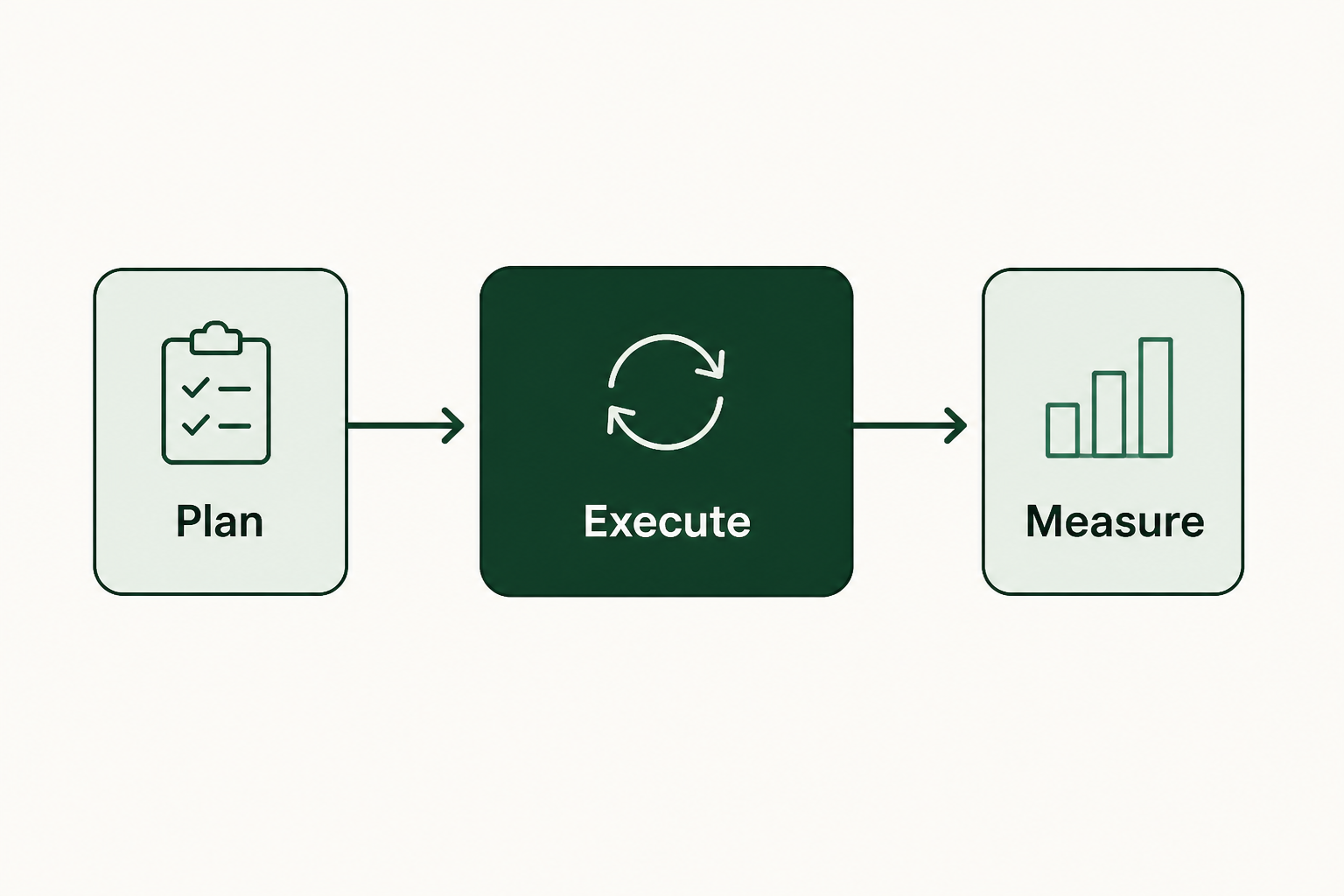 Putting your knowledge into practice
Understand the full power of a robust AI execution layer.
Explore the technology in action, or connect with our team for a personalized discussion.
Frequently asked questions
What is the main benefit of using an AI execution layer?
The main benefit is controlled action. An AI execution layer gives agents a governed route into enterprise systems, so actions follow deterministic workflows instead of open-ended tool calls. That can support predictable runtime behavior, clearer audit evidence, and safer system access without giving the agent unrestricted authority.
How do I get started with an execution layer for my agents?
Start with one workflow where the agent already knows what should happen but cannot safely perform the action. Map the target systems, approval rules and exception paths, plus audit needs. From there, evaluate whether a governed execution path can be deployed without turning the use case into a custom engineering project.
Is this for large enterprises only, or can smaller companies use it?
The strongest fit is a midsize-to-large enterprise environment with mission-critical systems, legacy platforms or homegrown applications, including no-API systems. The need becomes clearer when security and compliance requirements, along with system ownership, prevent agents from receiving direct access to production systems.
How is an Agentic Harness different from traditional automation or RPA tools?
An Agentic Harness is built around governed execution for AI agents. Traditional automation usually follows predefined scripts or integrations, while agentic work starts with a reasoning system that may request different actions based on context. The Agentic Harness controls how those requests become system changes, with policy, workflow state, and audit built into the execution path.
How does an execution layer handle systems that do not have APIs?
An execution layer gives agents a controlled path to act across systems that may lack modern APIs, including legacy systems and homegrown admin tools. The goal is to preserve existing system logic while adding governed connectivity, verification, and audit around the AI agent's requested action. Explore AI execution layers: Unlock smart automation's potential.