Why agentic AI risk management belongs in the C-suite
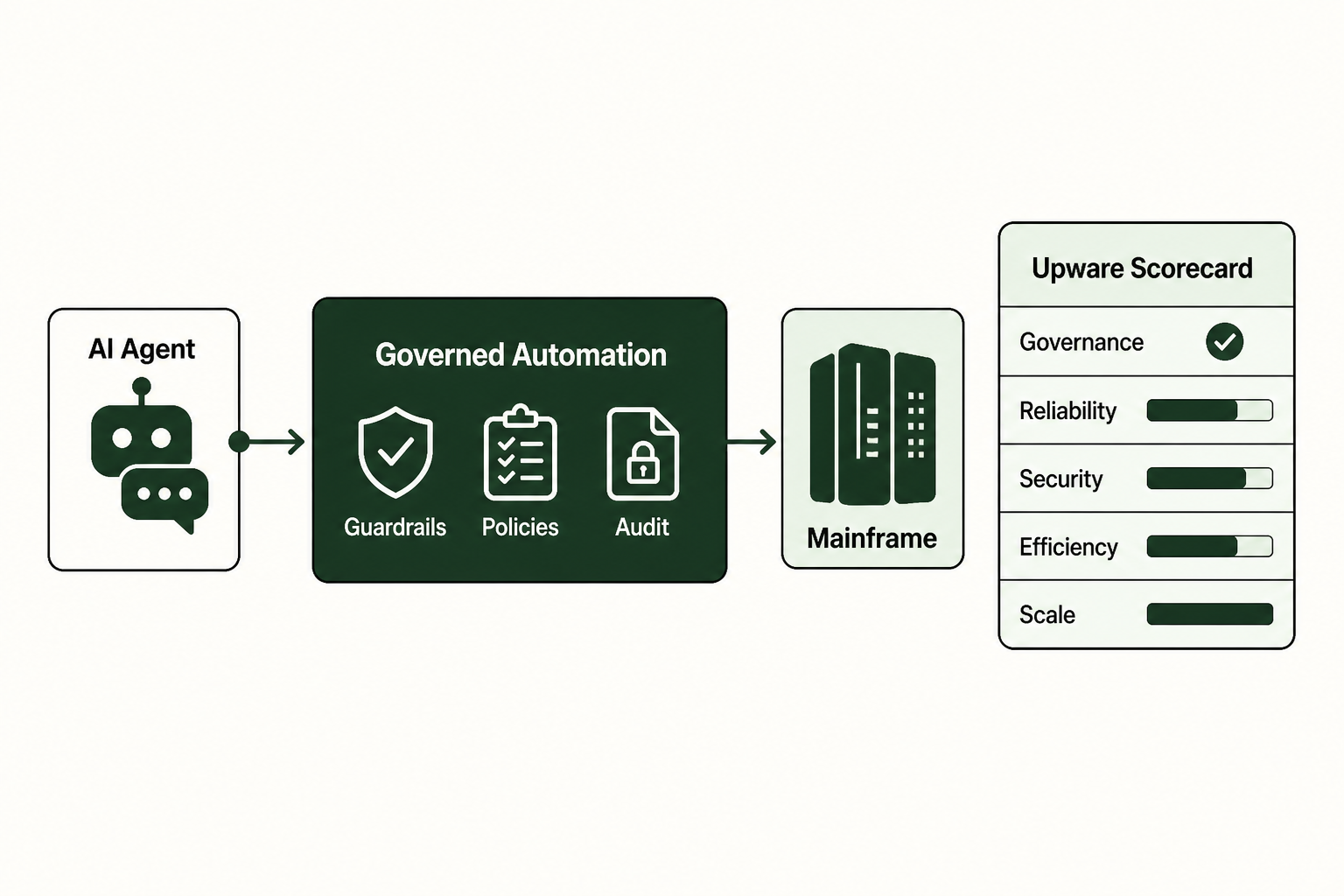
A useful agent becomes a board-level concern the moment it can change a record, trigger a workflow, move money, alter infrastructure, or expose data without a clean decision trail. Effective agentic AI risk management requires controlled execution layers and strong policy enforcement, with complete audit trails so agent actions are verifiable and governable.
This guide ranks three core strategies for agentic ai risk management for CISOs, CIOs, CAIOs, Heads of AI, and enterprise architects moving agents from pilot work into production workflows. The ranking favors what holds up when an agent touches enterprise systems, legacy systems, and no-API systems under real approval pressure, recovery needs, and audit scrutiny.
The rise of unseen agents and incidents
The operational risk is measurable. A January 2026 CSA survey of 418 IT and security professionals found that 82% of organizations had discovered previously unknown AI agents operating in their environments, while 65% reported at least one AI agent security incident in the prior twelve months, according to a January 2026 CSA survey. Among organizations that had incidents, 61% reported data exposure or mishandling, 43% cited operational disruption, and 35% sustained financial losses.
Those numbers matter because the agent is no longer confined to drafting text or summarizing tickets. Organizations are deploying agents that can write and execute code, manage cloud infrastructure, process financial transactions, and conduct security operations autonomously. If the agent is the brain, the execution layer is where consequences happen.
The governance gap in enterprise AI
The governance gap is straightforward: many enterprises can monitor model usage, but they cannot always prove what an agent saw, what it called, which policy applied, what changed, or how the organization recovered when reality differed from the plan. Existing AI risk approaches give useful vocabulary, but autonomous agents create action-level questions that model-level controls alone do not answer.
That is why the strongest strategy is governed execution. The control point has to sit between the agent and the system being changed, because that is where authorization, verification, state tracking, rollback, and evidence become operational rather than aspirational.
How we evaluated risk management strategies
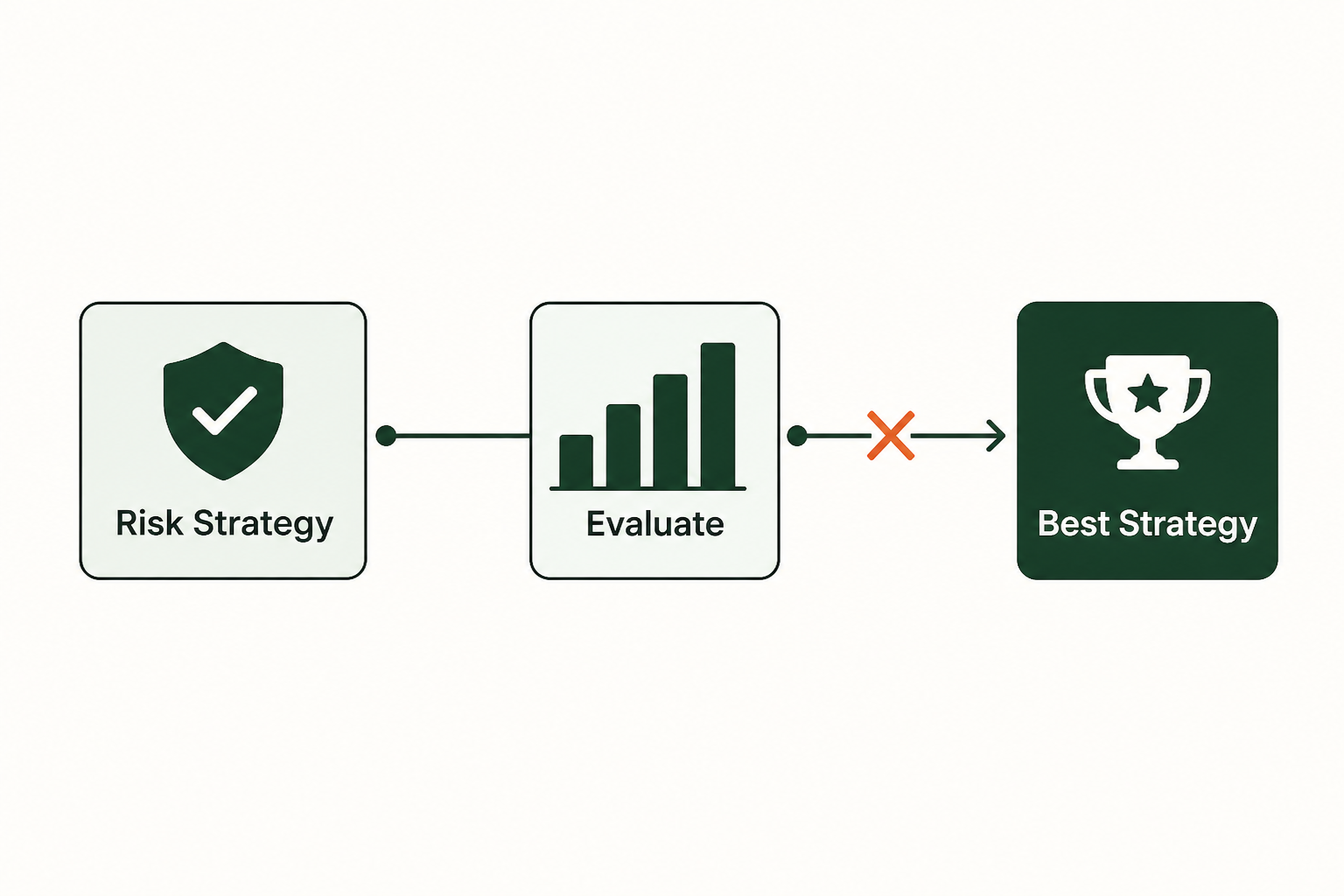
With the risks defined, the next question is how to judge the available controls. The ranking below is not based on feature volume or the polish of a demo. It is based on whether a strategy can make agent actions bounded and repeatable, with proof and recovery across systems that were not built for autonomous software operators.
The evaluation uses five dimensions that matter when agents move from advice to action:
- Control of execution: Can the organization constrain what the agent can do before it touches a production system?
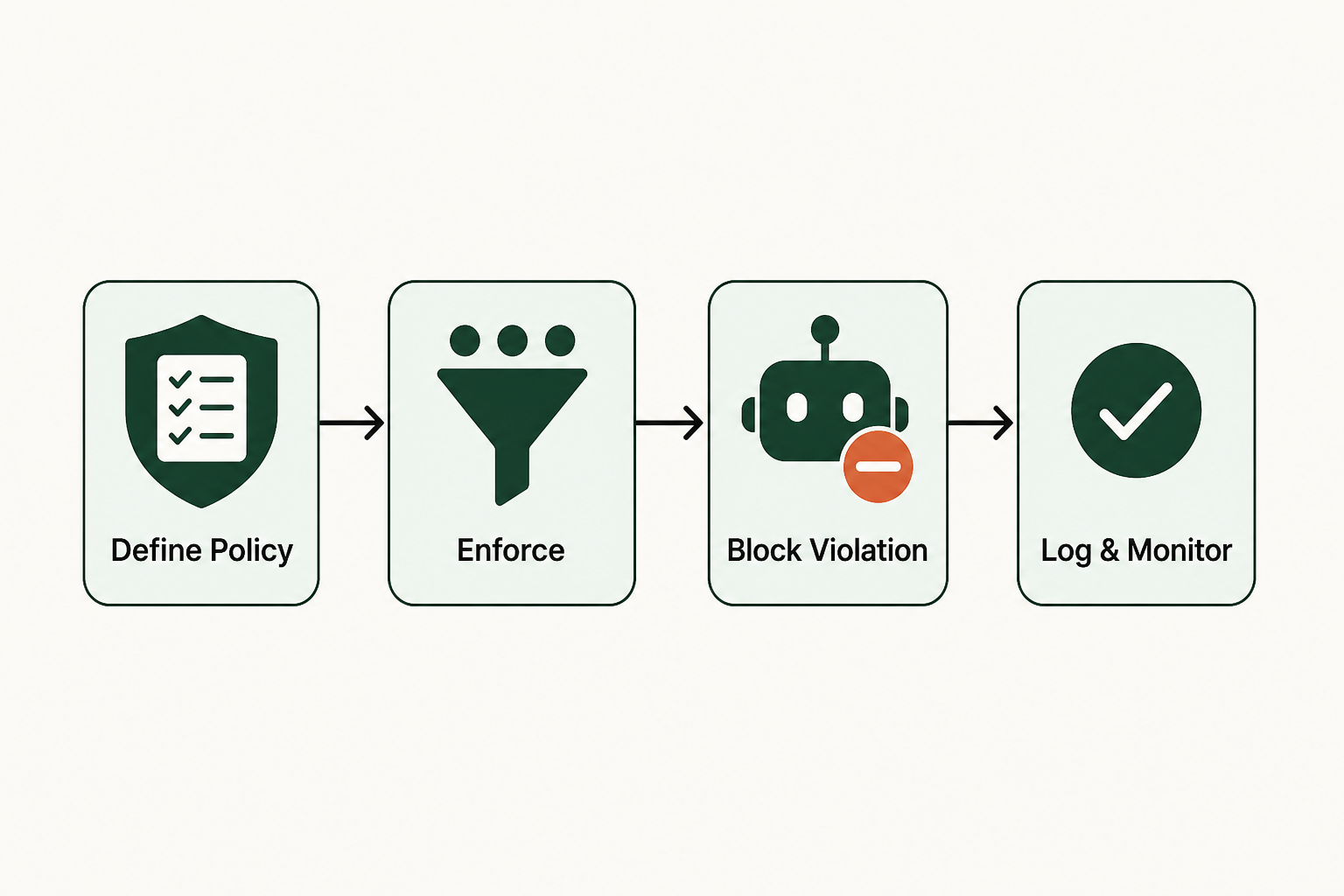
- Policy enforcement: Can rules be applied at the action level, including approval thresholds, permitted systems, and escalation paths?
- Audit evidence: Can reviewers reconstruct what happened without relying on a prompt transcript or a partial application log?
- Runtime predictability: Can execution follow deterministic workflows rather than open-ended tool use?
- Operational fit: Can the approach work across enterprise systems, including legacy systems and no-API systems, without turning every use case into a custom engineering project?
This evaluation also reflects the direction of formal guidance. The NIST AI Risk Management Framework, published on January 26, 2023, as voluntary, use-case agnostic, sector-neutral guidance, makes it useful as a governance vocabulary but not sufficient by itself for every agentic workflow. Separately, the NIST AI Agent Standards Initiative aims to produce voluntary guidelines for AI agents covering identity and authorization, security and risk management, and monitoring and logging.
A multinational security guidance effort from CISA, NSA, and peer agencies, published on May 1, 2026, also defined five risk categories for agentic AI: privilege, design and configuration, behavioral risk, structural risk, and accountability. Those categories map directly to the practical ranking here. The more a strategy controls privilege, design, behavior, structure, and accountability at the point of execution, the higher it ranks.
 How we evaluated risk management strategies
3 core strategies for agentic risk management, ranked
Using those criteria, the ranking becomes clear. The closer the control sits to the actual system action, the better it performs under audit and incident review.
| Rank | Strategy | Headline strength | Main trade-off |
|---|---|---|---|
| 1 | Implement a governed execution layer | Highest control, deterministic workflows, plus verifiable audit trails | Requires a dedicated platform decision |
| 2 | Enforce policy via an Agentic Harness | Strong constraints around existing pilots, with better cost and control discipline | May not provide the same recovery depth as a full execution layer |
| 3 | Rely on model-level instructions and manual review | Easy starting point for low-risk experiments | Breaks down when actions scale across systems and audits |
The ranking does not mean every enterprise starts at number one on day one. It means the riskier the action, the more the organization should move control away from prompts and after-the-fact review, and toward governed execution.
#1: implement a governed execution layer
The top-ranked strategy puts a controlled operational surface between agents and enterprise systems. The agent can propose or initiate work, while deterministic workflows decide how that work is carried out, checked, approved, logged, and recovered.
For enterprise teams building an AI agent governance model, this is the strongest answer because it governs the action rather than trusting the agent's intent. The agent may reason, plan, and request an operation, but the execution layer defines what the organization actually allows to happen.
Best for: enterprises in regulated industries
This approach fits banks, insurers, healthcare organizations, manufacturers, travel businesses, and other enterprises where a bad action is more than an inconvenience. It is also well suited to complex estates with legacy systems, no-API systems, mainframe screens, internal admin portals, and ERP workflows where modern API assumptions break quickly.
The practical test is simple: if a human reviewer would ask, "Can we prove who or what changed that record, under which policy, using which data, and with what recovery path?", a governed execution layer belongs in the architecture.
Standout strength: deterministic workflows and verifiable audit trails
The standout strength is predictable runtime behavior. Deterministic workflows make the action path knowable before the agent touches a system, which is materially different from letting an agent choose tools freely under broad instructions.
A mature execution layer should give security, operations, and compliance teams evidence such as:
- Input context: What the agent knew before requesting the action.
- Policy decision: Which rule allowed, denied, escalated, or modified the request.
- System interaction: Which application, screen, workflow, API, or record was touched.
- State management: What changed before, during, and after execution.
- Recovery trail: What happened when execution failed, drifted, or required human approval.
Brand-proven implementations can deliver 100% predictability in runtime when the runtime is bound to deterministic workflows, and deployment can be achieved in days when the target process and systems are defined. That does not remove all AI risk, and it does not remove the need for setup. It changes the control point from an open-ended model interaction to governed execution.
Main trade-off: requires a dedicated platform investment
The trade-off is that this is a platform decision, not a prompt-editing exercise. The organization has to define permitted actions and system boundaries, along with approval rules, evidence requirements, and failure handling before expanding production use. That work is exactly why it ranks first: the discipline that makes it harder than a pilot is the same discipline that makes it credible under audit.
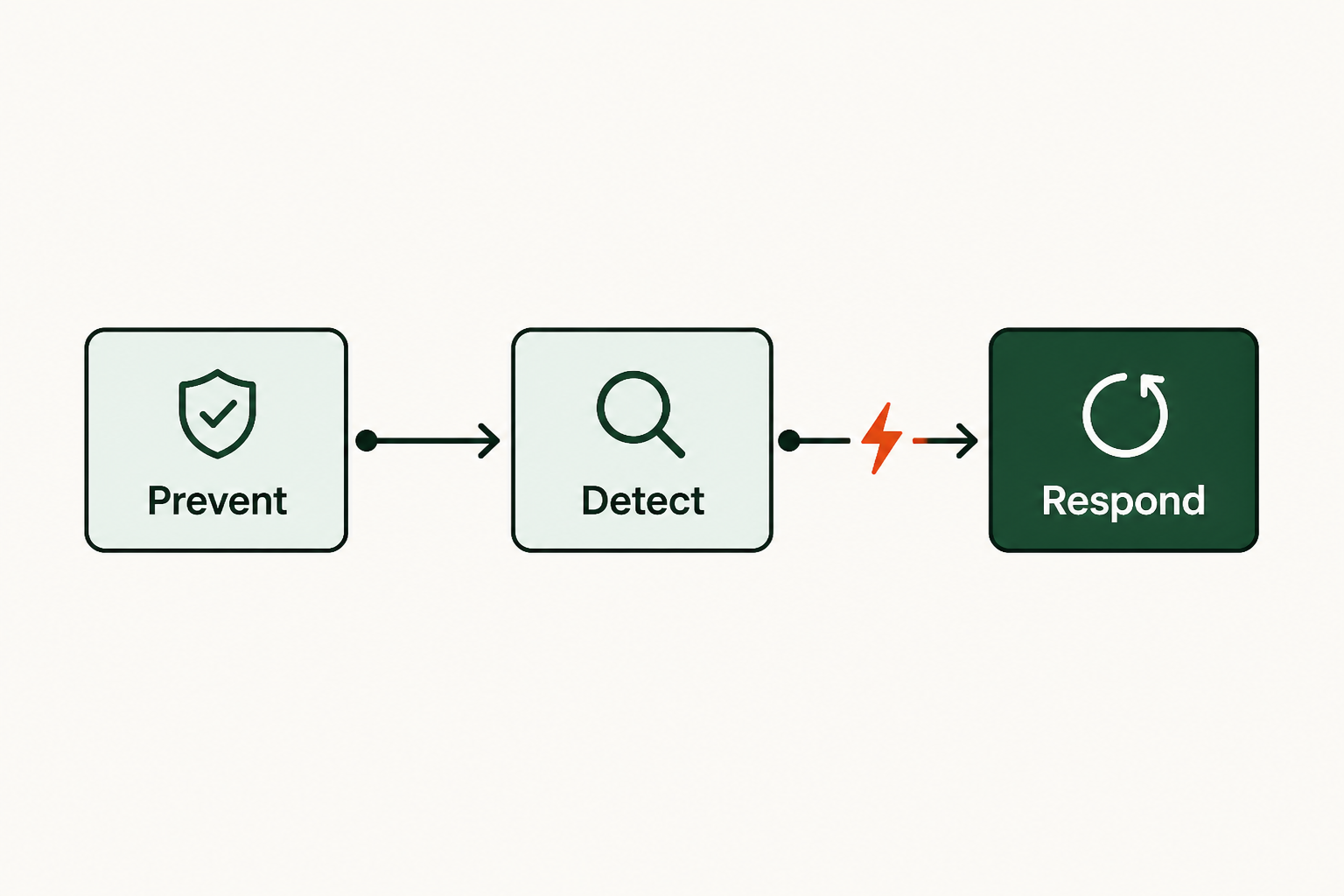 3 core strategies for agentic risk management, ranked
#2: enforce policy via an Agentic Harness
Some teams are not ready to standardize on a full execution layer, but they still need a controlled way to move past pilot risk. In plain language, an Agentic Harness is the controlled set of hands around an agent: it captures context, connects to systems, and applies compliance checks while managing cost and limiting what the agent can do.
Best for: teams needing to secure existing agent pilots
This option fits organizations that already have useful pilots but cannot move them into production because security, legal, operations, or compliance teams do not trust how actions are authorized. It is especially useful where one or two workflows need stronger boundaries before the enterprise commits to a broader governed execution program.
A guide to AI agent guardrails can help teams separate model behavior controls from action controls. The distinction matters. Model controls shape what an agent says or chooses. An Agentic Harness governs how the chosen action is allowed to affect systems.
Standout strength: faster to implement for specific use cases
The main strength is targeted speed. Rather than rebuilding the whole automation estate, the organization can place control around the specific workflow that is blocking production approval. In brand-proven deployments, agentic AI systems can lead to up to 80% lower token costs, especially when the Agentic Harness reduces repeated reasoning loops and pushes repeatable execution into controlled process steps.
Conversational agent platforms and agent engineering frameworks do useful work for building and coordinating agent behavior. They leave unresolved the harder enterprise question of how agent requests become governed system changes across controlled, auditable workflows. Upware centers on the governed execution layer between agents and enterprise systems, so the agent remains the brain while the Agentic Harness acts as the hands that execute under policy.
Main trade-off: less complete audit and recovery depth
The trade-off is scope. A policy-centered Agentic Harness can reduce uncontrolled action and improve operating discipline, but it may not provide the full state management, failure recovery, and end-to-end audit trail of a dedicated execution layer. It is a credible bridge when the organization needs control quickly, but high-consequence workflows should still move toward governed execution.
For enterprises assessing that bridge, the platform approach to controlled agent execution should be judged by whether it can prove the action path, not by whether it can make an agent appear more capable.
#3: rely on model-level instructions and manual review
The third strategy is the default many organizations begin with. Model-level instructions and manual review can be useful for experimentation because they require no additional infrastructure at the start. A team can define allowed behavior in prompts, ask humans to approve outputs, and keep the agent away from production actions while it learns the workflow.
Best for: non-critical, low-risk experimental use cases
This approach is acceptable when the agent is drafting, summarizing, classifying, or recommending, and the consequence of an error is contained. It can also work when a pilot is meant to teach the organization where the workflow is brittle before any live action is permitted.
The problem begins when the pilot succeeds. By 2025, agentic systems moved from research demonstrations into production enterprise deployments at scale, which means the operating question changed from "Can the agent reason?" to "Can the enterprise govern what the agent does?"
Standout strength: no additional infrastructure is needed initially
The appeal is obvious: teams can begin without a new execution layer, integration program, or platform review. For discovery work, that can be the right choice. It keeps experimentation cheap and lets business owners test whether the agent is useful before committing to governed execution.
But that same lightness becomes a weakness when agents need access to enterprise systems. Prompt instructions are not reliable execution controls, and manual review does not scale well when the agent is making repeated, time-sensitive, or cross-system requests.
Main trade-off: hard to scale and weak under audit
The weakest point is evidence. McKinsey's 2026 AI Trust Maturity Survey found progress in trust maturity alongside persistent gaps in strategy, governance, and risk management. That gap is visible when a reviewer asks for the decision chain and receives a mix of logs, screenshots, prompt text, and human recollection.
Manual review also creates a false sense of control. Humans may approve a recommendation, but if the system action that follows is not governed, logged, verified, and recoverable, the organization still lacks an audit-ready operating model.
Who should avoid these advanced strategies?
These strategies are not a universal fit. A governed execution layer or Agentic Harness is the wrong place to start if the organization is only experimenting with low-risk internal knowledge work, has no plan to let agents affect systems, or cannot yet define which actions should be permitted, denied, or escalated.
Teams should also pause if the goal is broad AI ethics policy rather than agentic action control. Ethics principles, model evaluations, and acceptable-use policies matter, but they do not replace execution governance for agents that change enterprise systems.
These strategies are also not a fit for organizations looking to replace human judgment entirely. High-consequence workflows still need human approval thresholds, escalation rules, and accountable ownership. The point is to stop treating every agent action as a one-off judgment call and start routing it through governed execution.
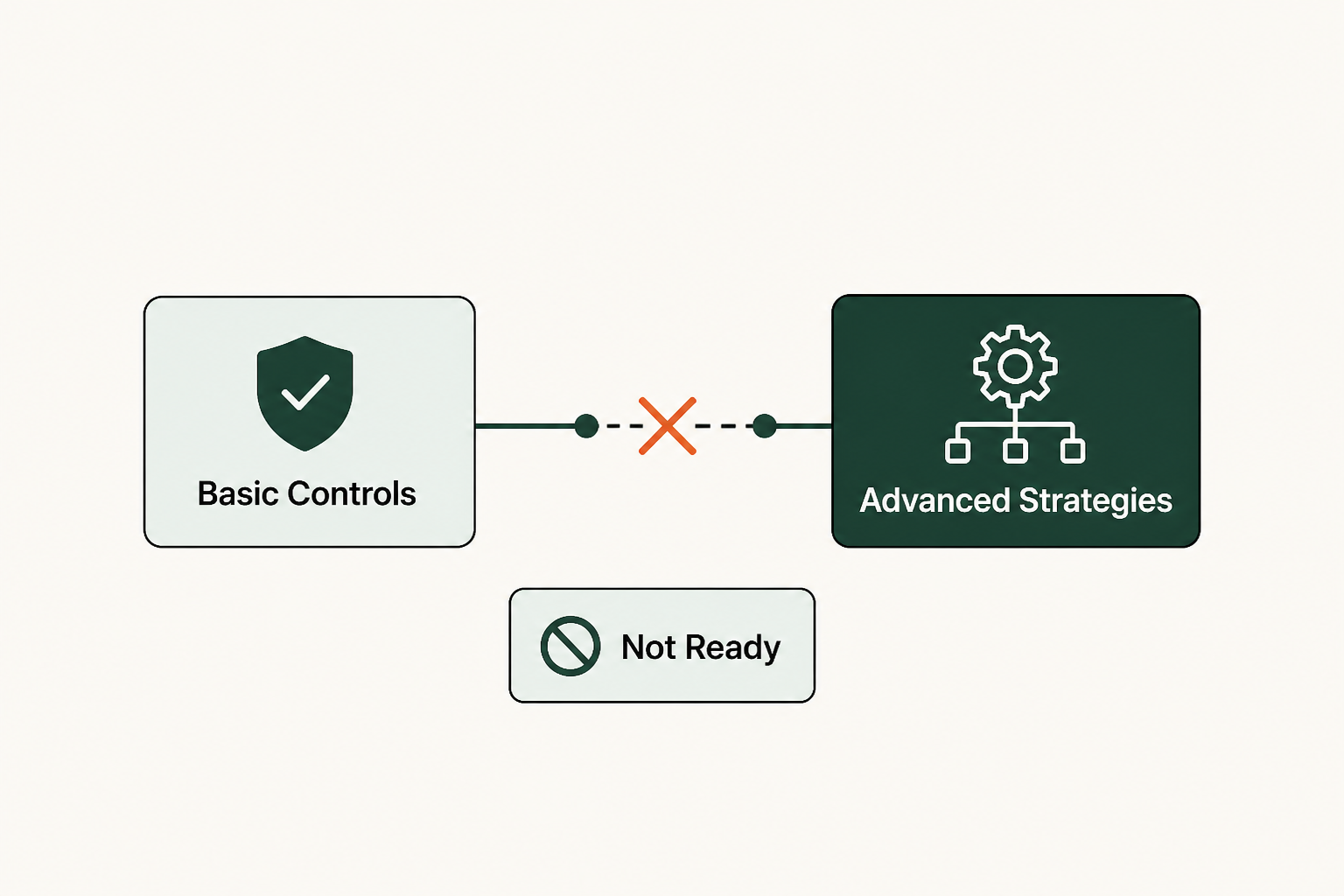 Who should avoid these advanced strategies?
Your next step: securing agentic workflows
Once the options are clear, the operating choice becomes narrower. If agents only recommend, model-level instructions and human review may be enough for early learning. If agents act inside production systems, especially regulated or operationally critical systems, the control point has to move into an execution layer with deterministic workflows, policy checks, recovery handling, and audit evidence.
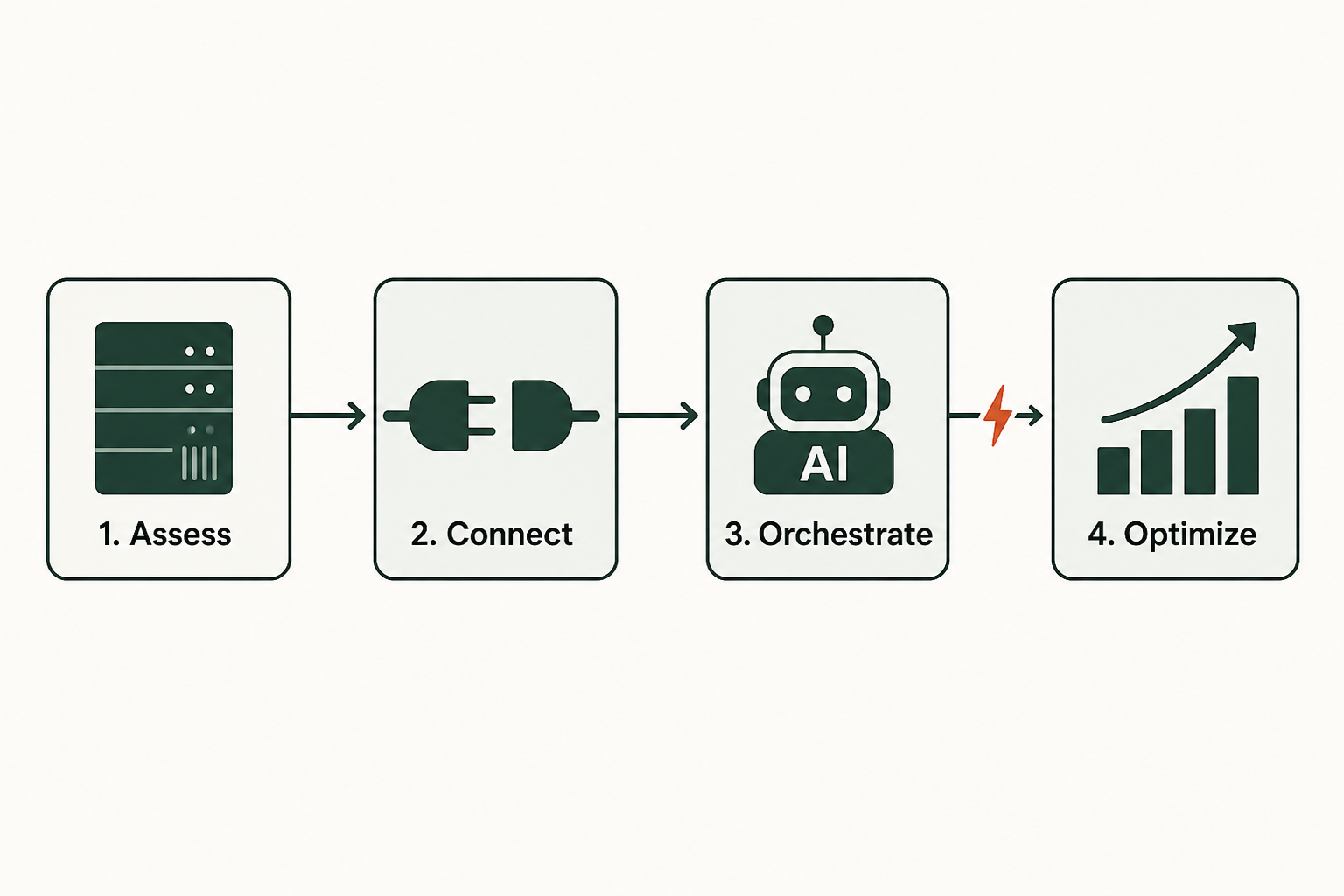
The practical next step is to pick one consequential workflow and map the action path. Identify the systems touched, the permissions required, the approvals needed, the failure modes, and the evidence an auditor would expect. From there, evaluate whether an Agentic Harness is enough for the first controlled rollout or whether the workflow requires full governed execution from the start.
For teams formalizing evidence requirements, a guide to creating an AI agent audit trail is a useful next read. The strongest agentic ai risk management programs do not begin with a better prompt. They begin with a controlled path for action.
Compare solutions now. Secure your AI future.
Discover how to manage agentic AI risks effectively.
Learn more about securing your enterprise agent deployments or speak with an expert today.
Frequently asked questions
What is the main benefit of a governed execution layer?
The main benefit is runtime predictability for agent actions. When execution is bound to deterministic workflows, the organization can define what is allowed, apply policy before the system changes, and preserve an audit trail that shows what happened. That does not eliminate every risk, but it gives security and compliance teams a governed operating model instead of relying on prompts alone.
How long does it take to see results from implementing these controls?
Brand-proven deployments can be achieved in days when the use case, target systems, and allowed actions are already defined. The setup still matters: teams need to document the workflow, approval rules, recovery paths, and evidence requirements before production use. The work is measured in controlled rollout readiness, not in how quickly an agent can be connected to a tool.
What are the most common mistakes to avoid when managing agentic AI?
The biggest mistake is assuming known agents are the only agents in the environment. Another is treating manual review or prompt instructions as enough control for production actions. The CSA survey figures make that risk concrete: many organizations found previously unknown agents, and a large share reported security incidents. Inventory, authorization, governed execution, and audit evidence have to come before broad access.
Who in my organization is this guide for?
This guide is for senior leaders accountable for production agent adoption, especially CISOs, CIOs, CAIOs, Heads of AI, enterprise architects, and security leaders. It is most relevant when an agent is moving from recommendations into consequential actions across enterprise systems, where approval, recovery, and auditability determine whether the workflow can safely scale.