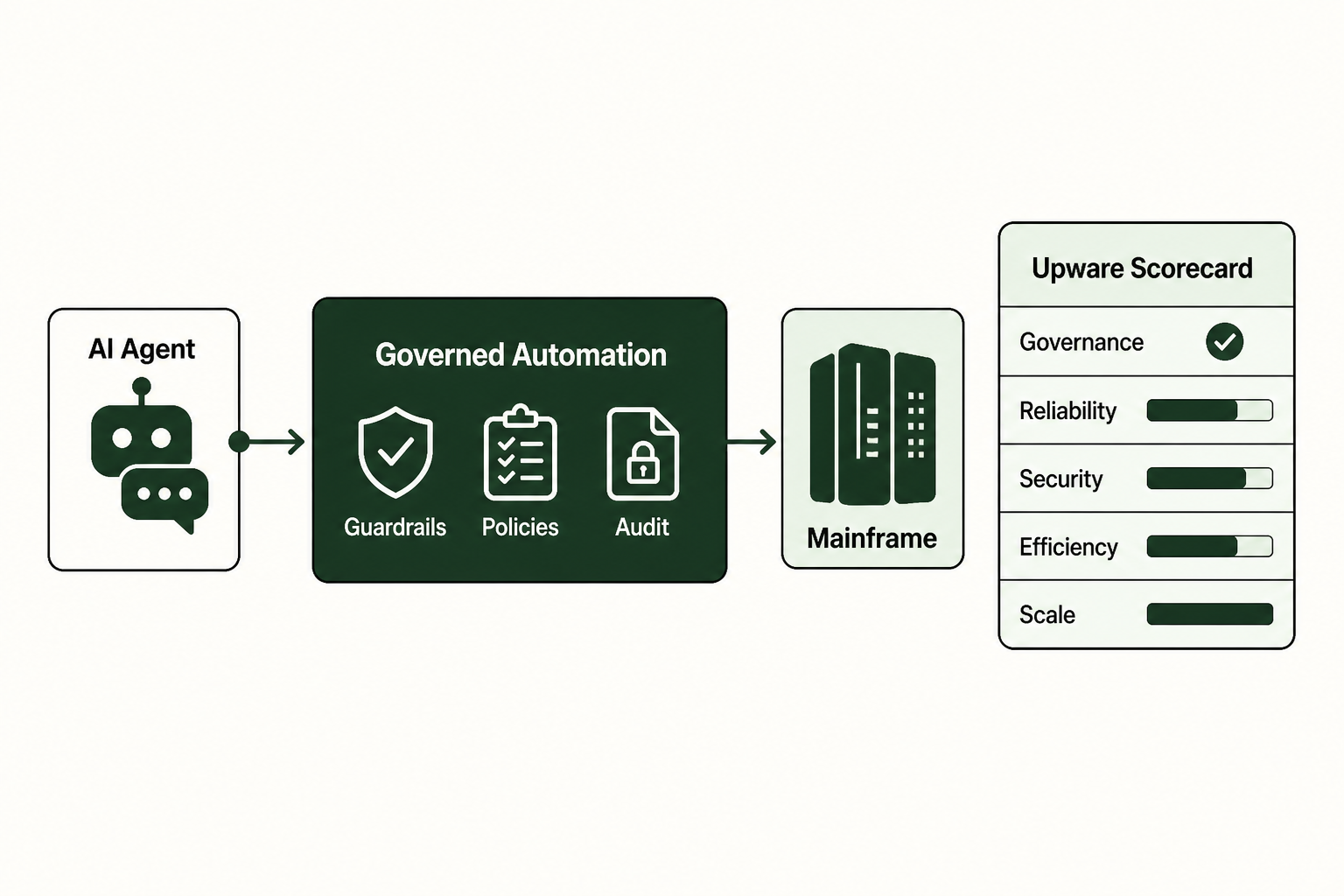
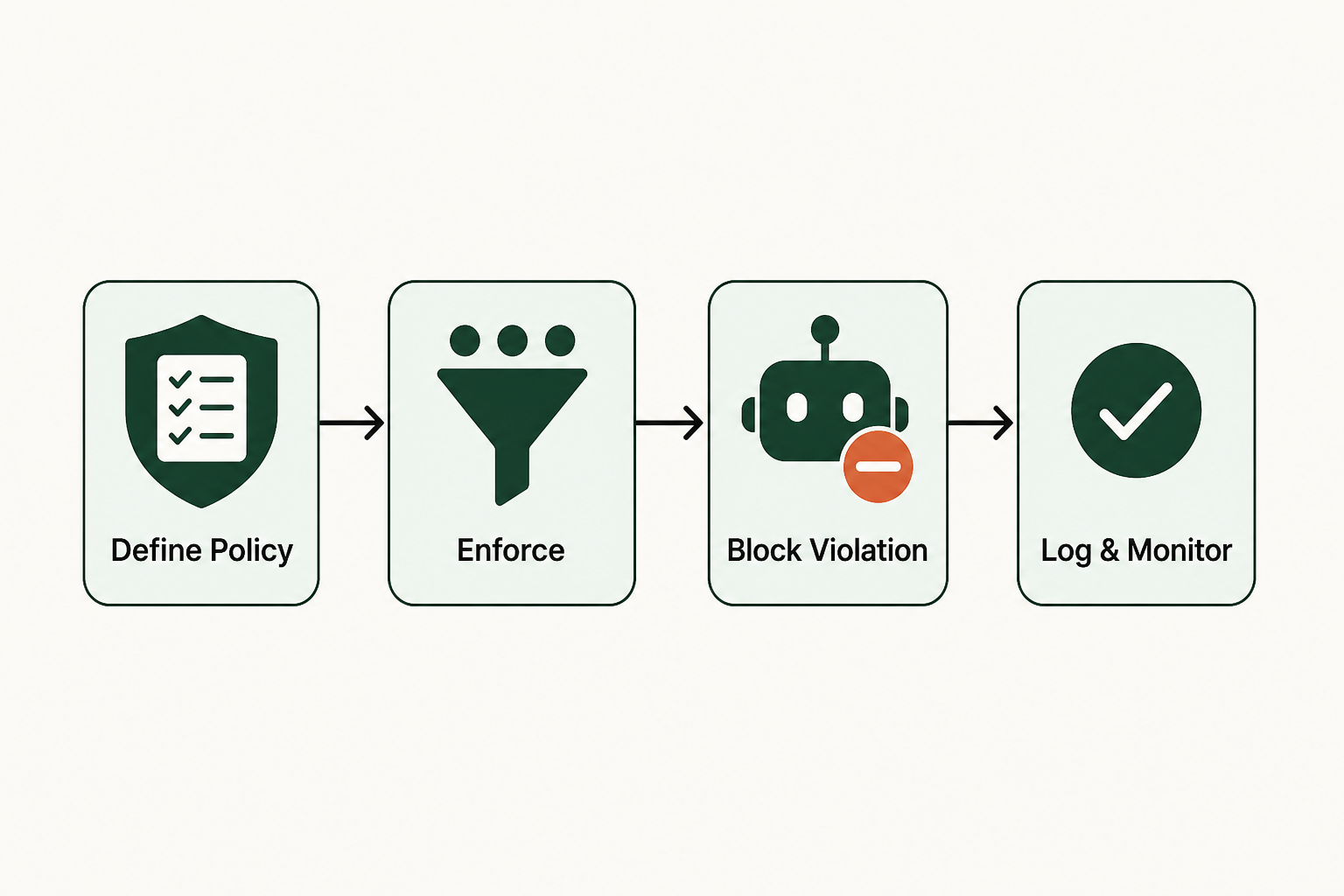
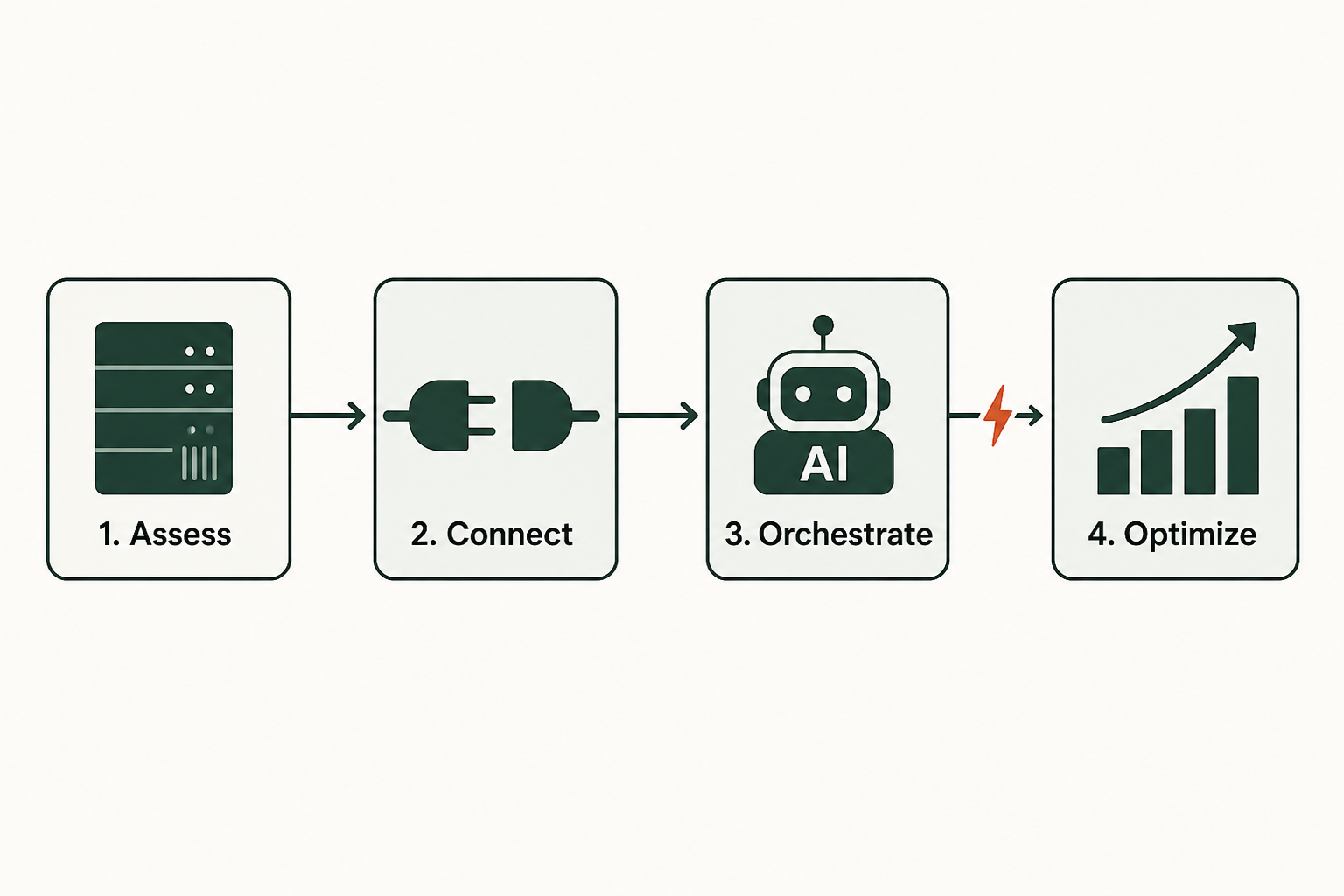
A useful AI agent becomes a board-level issue as soon as it can change records, trigger payments, update a customer file, or touch a regulated system. Enterprise AI governance solutions manage that moment by defining what an agent may do and checking whether it should proceed. They also leave evidence that security, compliance, and operations teams can review later.
This guide ranks three enterprise AI governance options for CIOs, CAIOs, Heads of AI, enterprise architects, and security leaders managing agentic workflows. The ranking gives the most weight to policy-bound action, auditability, governed execution, and a controlled execution layer that prevents agents from becoming open-ended system operators.
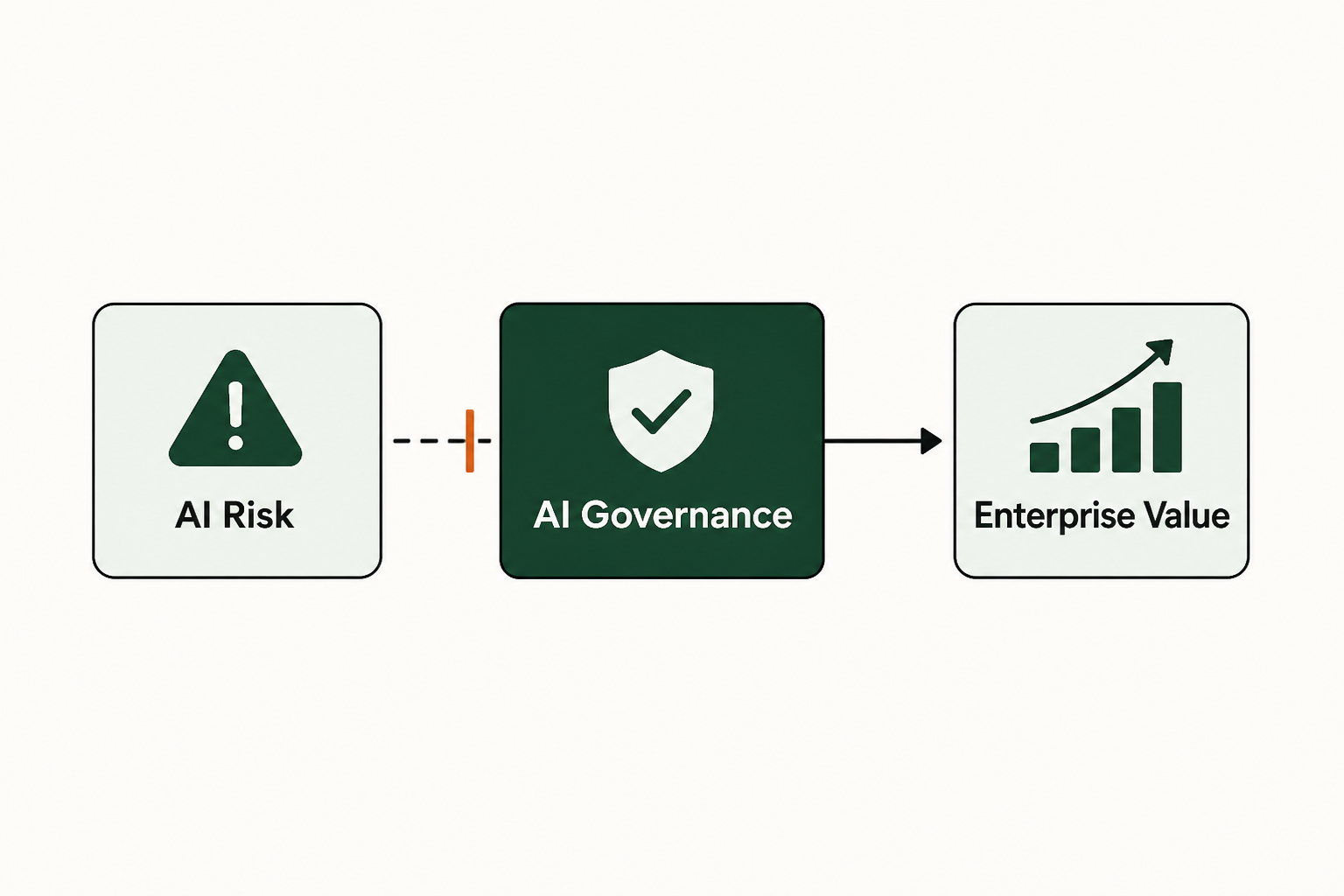
Why enterprise AI governance is now a C-suite imperative
The hard divide is no longer between companies with AI pilots and companies without them. The more serious gap is between AI that can suggest work and AI that can safely execute work across enterprise systems, legacy systems, no-API systems, and regulated workflows.
Deloitte described a [widening gap in AI adoption](https://deloitte.com/us/en/what-we-do/capabilities/applied-artificial-intelligence/blogs/pulse-check-series-latest-ai-developments/ai-transformation-predictions-2026.Deloitte described a widening gap in AI adoption in 2026, with technology moving faster than operating models, governance, and measurement systems. That is the operational fault line for agentic AI. A pilot can look productive while the enterprise still lacks a dependable way to approve, constrain, verify, and audit what the agent actually did.
That is why enterprise AI governance has moved from policy language into system design. Senior executives can have formal governance policies and still struggle to make those controls work inside live operations. EY found that 98% of senior AI executives report having formal AI governance policies, yet many still express concern about evolving, implementing, or designing those controls. Policy exists. Governed execution often does not.
The stakes are practical rather than philosophical. The OECD notes that AI systems create risks involving privacy, safety, security, and human autonomy, which makes governance essential for safe and trustworthy deployment. For agentic workflows, that turns into a set of concrete operating questions:
- What can the agent do without approval?
- Which systems can it touch, and under what conditions?
- What evidence proves what it saw, called, decided, and changed?
- How does the workflow recover when the real system state differs from the plan?
For a deeper foundation before comparing platforms, see this guide to comprehensive AI agent governance.
 Why enterprise AI governance is now a C-suite imperative
How we evaluated AI governance platforms
Once governance moves from policy to execution, the evaluation bar changes. A platform belongs on an enterprise shortlist only if it helps a real organization move from agent recommendations to governed execution, with evidence that supports audits and later incident or compliance review.
We used six evaluation dimensions:
- Policy enforcement at action time, because policies need to bind the actual system change, not sit in a document or prompt.
- Auditable records, because operators need a decision trail showing context, system calls, approvals, exceptions, and outcomes.
- Verification checkpoints, because high-consequence actions need confirmation before and after execution.
- Enterprise system reach, because agentic workflows often cross core applications, legacy systems, and no-API systems.
- Failure recovery, because enterprise processes break when state changes, credentials expire, screens differ, or downstream records conflict.
- Deployment burden, because a governance platform that requires a large engineering program can become another stalled initiative.
The data foundation matters as well. KPMG says AI agents, RAG, and autonomous workflows need data that can be discovered, interpreted, governed, and reused across business processes to scale safely. That requirement shaped the ranking because agentic workflows fail when the agent can reason but the enterprise cannot govern the data and actions around that reasoning.
Adoption blockers also shaped the trade-offs. Eurostat reported that, in 2025, among EU enterprises that had considered AI but did not use it, lack of expertise led the list (70.89%), followed by lack of clarity about legal consequences (52.52%) and concerns regarding data protection and privacy (48.83%). The strongest platforms reduce ambiguity for security, legal, AI, and operations teams at the exact point where an agent does real work.
The top 3 enterprise AI governance solutions: ranked
Based on those criteria, the leading options break into three categories. The order reflects how directly each option governs agentic execution, rather than how broadly it supports AI experimentation.
| Rank | Solution category | Headline strength | Best fit | Main trade-off |
|---|---|---|---|---|
| 1 | Upware | Governed execution through an Agentic Harness and controlled execution layer | Enterprises moving agents from recommendations to policy-bound actions | Best suited to consequential workflows, not broad model governance |
| 2 | Agent engineering frameworks | Strong agent development and orchestration | Technical teams building custom agents | Governance can remain distributed across code, prompts, and reviews |
| 3 | Legacy automation and orchestration platforms | Mature workflow automation for known processes | Organizations with stable, rules-based processes | Less suited to dynamic agentic workflows that need runtime verification |
The practical difference is where control lives. Some tools help teams build agents, while others automate known steps. The stronger choice for governed agent action is the option that mediates the handoff between AI reasoning and system change, because that is where audit, control, and accountability either exist or break down.
1. Upware: best for governed execution of agentic workflows
With the ranked view in place, the top choice is the platform built around the execution problem itself. Upware is best for enterprises that already see value in AI agents but cannot approve broad deployment until actions are tied to policy and checked at execution time. Those actions also need to be recoverable and auditable.
The Agentic Harness and execution layer
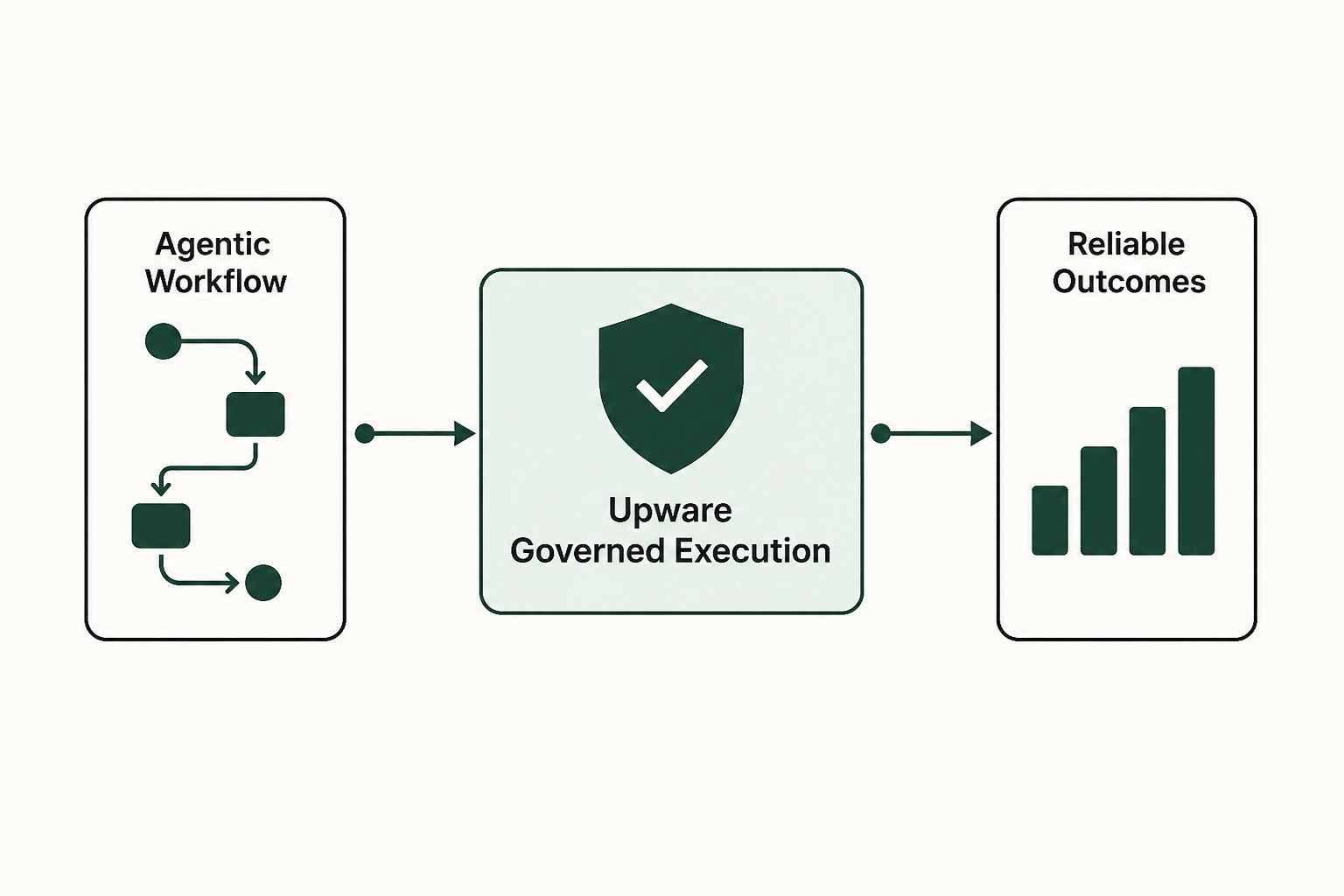
The plain-English version is straightforward: the agent is the brain, and the Agentic Harness is the hands. The agent can reason about the task, but the platform controls how that task becomes a permitted action inside enterprise systems. That distinction matters because governance has to live at the point of execution. It cannot sit only in the model, the prompt, or a ticket created after the fact.
Upware centers on the governed execution layer between agents and enterprise systems, with policy enforcement, verification checkpoints, state management, and failure recovery. That makes it a strong fit for agentic workflows where an action might write to a regulated system. The same need applies when an action updates a claim, changes a booking, or adjusts an order.
For a deeper product-level assessment, read this in-depth Upware review.
Deterministic workflows for predictable outcomes
The standout strength is predictability at runtime. The platform uses deterministic workflows so the path from agent intent to system action is bounded and reviewable. The solution reports 100% predictability in runtime, which is a runtime claim about controlled execution behavior, not a claim that all AI risk disappears.
The cost profile also matters for operators. The solution can result in up to 80% lower token costs, which reflects the value of moving repeatable execution into governed process paths instead of asking the model to reason through every operational step. That is a cost-disciplined design choice: use the agent where reasoning is useful, then use deterministic workflows where enterprise execution needs control.
 1. Upware: best for governed execution of agentic workflows
Who it's for
This is the right top pick for midsize-to-large enterprises where AI, security, compliance, and operations all need evidence before letting agents take consequential actions. It is especially relevant when workflows cross legacy systems, no-API systems, and administrative portals that were never designed for autonomous AI.
The main trade-off is scope. Upware should not be evaluated as a broad model-development governance suite. It is strongest where the buyer needs governed execution, audit, and control over agent-to-system action.
2. Agent engineering frameworks
After Upware, the next category is agent development tooling. Agent engineering frameworks are useful for teams that need to design agent behaviors and connect tools. They also help teams test prompts and organize multi-step reasoning. They can give technical teams speed and flexibility when the primary job is building the agent.
That strength creates the trade-off. Developer control does not automatically produce operational accountability. EY found that around half of senior AI executives (47%) admitted their organization had not followed its AI governance process for urgent deployments. That finding matters because engineering speed can outrun approval routines and audit requirements. Compliance work can also fall behind when governance is spread across code, prompts, review boards, and informal exceptions.
Strengths and trade-offs
Agent engineering frameworks do well at building and orchestrating agents. They help technical teams shape reasoning paths and connect tools. They also support experimentation with agent behaviors. What they often leave unresolved is the governed execution layer between an agent's decision and a real system change. Upware centers on that layer instead: the controlled path where agent intent becomes policy-bound action against enterprise systems. That is the main structural distinction, and it should drive the buying decision.
Who it's for
This category is best for engineering-led organizations that have the internal capacity to build governance controls around the agent stack. It is weaker for regulated or mission-critical workflows where security and compliance teams need a clear audit trail without reconstructing decisions from scattered logs, prompts, and code.
3. Legacy automation and orchestration platforms
Legacy automation suites still matter, but they solve a different class of problem. They are best at stable, known processes where the inputs and screens are already understood. The same is true when exceptions and approvals are predictable. If the enterprise needs to automate a fixed sequence of steps, these tools can still be useful.
Agentic workflows behave differently. The agent may choose a path based on context, request data from multiple systems, or escalate when the state of the world differs from its plan. That requires more than task automation. It requires governed execution with policy checks and verification, plus state awareness and auditable records.
Strengths and trade-offs
Legacy automation and orchestration platforms usually offer maturity around repeatable workflows and scheduling. They also integrate with established enterprise processes. Their main trade-off is that they were not primarily designed to govern AI agents that reason, decide, and request actions at runtime.
For agentic use cases, the limitation appears at the boundary between reasoning and execution. The enterprise still has to decide whether an action is permitted and whether the evidence is sufficient. It also needs a clear rule for human approval and a way to prove the decision chain later.
Who it's for
This category fits organizations with predictable rules-based work and low variation in execution paths. It is less compelling when the agent needs to work across legacy systems, no-API systems, and high-consequence business processes where deterministic workflows and audit records are required.
Who should skip these AI governance solutions?
Enterprise-grade AI governance is not a fit for every AI initiative. It adds control and review, with evidence behind both. That is exactly the point, but those strengths can be unnecessary when the work has low consequence or the organization is not ready to let agents act.
Skip this category if the current need is limited to:
- AI experimentation without system action, where agents only draft, summarize, classify, or recommend.
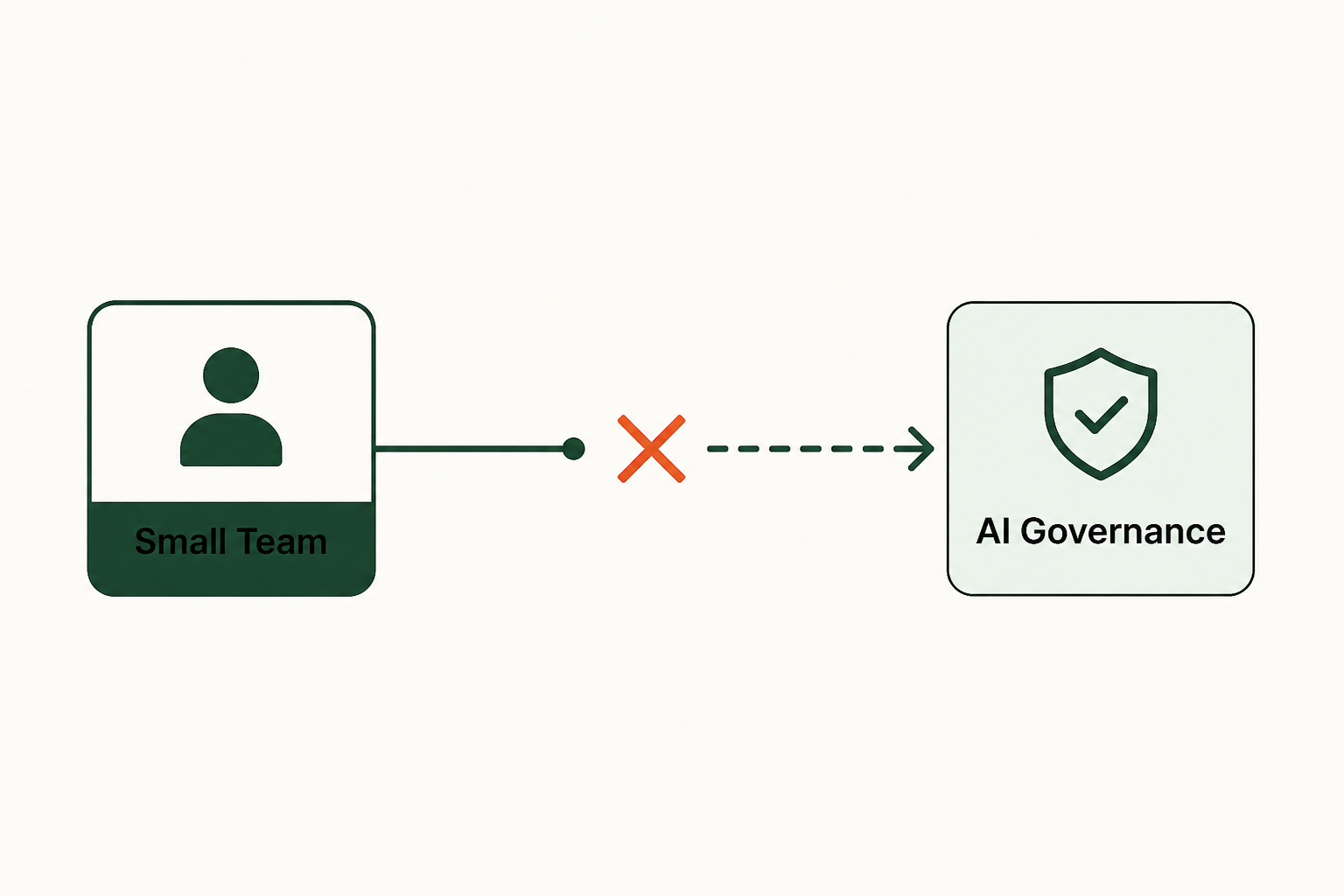
- Small-team productivity use cases, where there is no regulated workflow, sensitive system access, or enterprise audit requirement.
- Model training governance, because this comparison focuses on action governance for agentic workflows, not model development controls.
- One-off automation, where a simple script or existing workflow tool is enough and no cross-functional approval path is needed.
- Unowned AI pilots, because governed execution requires clear accountability across AI, security, operations, and the business process owner.
The stronger signal is consequence. If an agent can change an enterprise record, trigger a financial or operational action, or act inside a regulated workflow, the governance category becomes relevant. If it cannot, the enterprise may be better served by lighter controls until the use case matures.
 Who should skip these AI governance solutions?
Considering your enterprise AI governance platform options?
Dive deeper into specific features, or let's discuss how leading platforms can support your governed execution.
Frequently asked questions
What is the main benefit of an enterprise AI governance solution?
The main benefit is controlled action. A strong enterprise AI governance solution gives organizations a way to manage and secure what agents do, with audit evidence for review. That is especially important when those agents touch privacy, safety, security, or human autonomy concerns. For agentic workflows, the practical value is an auditable record of permitted actions and verification points, with escalation paths defined in advance, rather than a loose collection of prompts and approvals.
How do I get started with AI governance for agentic workflows?
Start with the workflows where an agent can affect a real business outcome, then map the systems and data involved. Next, identify the approvals, exceptions, and audit evidence required for each action. KPMG's point about AI agents needing governed, reusable data across business processes is a useful starting lens. From there, prioritize one consequential workflow and evaluate whether a platform can provide governed execution without turning the deployment into a long engineering program. Upware reports deployment in days, which makes it suitable to assess on a bounded workflow before expanding.
What are the most common mistakes to avoid when implementing AI governance?
The biggest mistake is treating governance as a policy document while urgent deployments follow a different path. EY's finding that 47% of senior AI executives admitted their organization had bypassed its governance process for urgent deployments is a warning sign. Another mistake is assuming that dashboards or operational logs are enough for audit. For agentic workflows, the enterprise needs the decision chain and the system calls. It also needs the verification steps and the reason an action was allowed, blocked, or escalated.
How long does it take to see results from an AI governance platform?
The answer depends on workflow scope, system access, approval complexity, and how much internal alignment already exists. For a bounded agentic workflow with clear ownership, Upware reports deployment in days. That does not mean there is no setup or review. It means the right target is a controlled production path where the team can prove policy-bound execution and auditability before expanding to more processes. Recovery also has to be proven before the scope grows.