Legacy application modernization updates older software systems so they can keep doing critical work while becoming easier to maintain. It also improves connection points and day-to-day operation, including security. For enterprise teams, the pressure point is no longer whether the old system still runs. It is whether that system can safely participate in AI-enabled workflows without losing control over records and approvals, money movement and access, or compliance.
What is legacy application modernization?
A legacy application is any older system that still supports important work but makes change difficult. It may run on a mainframe, an AS/400 environment, a packaged ERP, a heavily customized CRM, a homegrown admin portal, or a no-API system that was never designed to be called by another tool. The application may be stable and valuable, with deep ties to operations, which is exactly why modernization is hard.
Legacy application modernization does not mean throwing the system away. It means reducing the constraints around older software so the organization can preserve business logic that still matters while improving performance and maintainability. It also means improving scalability and compatibility. EY describes legacy application modernization as the [strategic transformation of systems that constrain business agility, scalability, and innovation](https://ey.com/content/dam/ey-unified-site/ey-com/en-gl/about-us/analyst-relations/documents/ey-gl-horizons-report-legacy-application-modernization-services-10-2025.EY describes legacy application modernization as the strategic transformation of systems that constrain business agility, scalability, and innovation, often involving re-architecting legacy systems into modular, scalable, and adaptive solutions using cloud-native technologies, APIs, automation, microservices, and DevOps practices.
That definition matters because the business problem is usually operational, not cosmetic. A system can have an old interface and still be business-critical. It can run reliably and still block AI integration because it lacks modern access controls or APIs. It may also lack event streams or audit-ready execution paths. The modernization question is not, "How do we make this application look new?" The real question is, "How do we make this system reachable enough for the next layer of work, with safety and governance built in?"
A useful modernization program keeps three ideas separate:
- The system of record holds authoritative data and business rules.
- The integration surface determines how other tools can read from it or act inside it.
- The control model defines who, or what, is allowed to make changes, under which conditions, with what audit trail.
AI raises the stakes on all three because it turns integration from passive access into active execution.
Why modernize now? The AI imperative
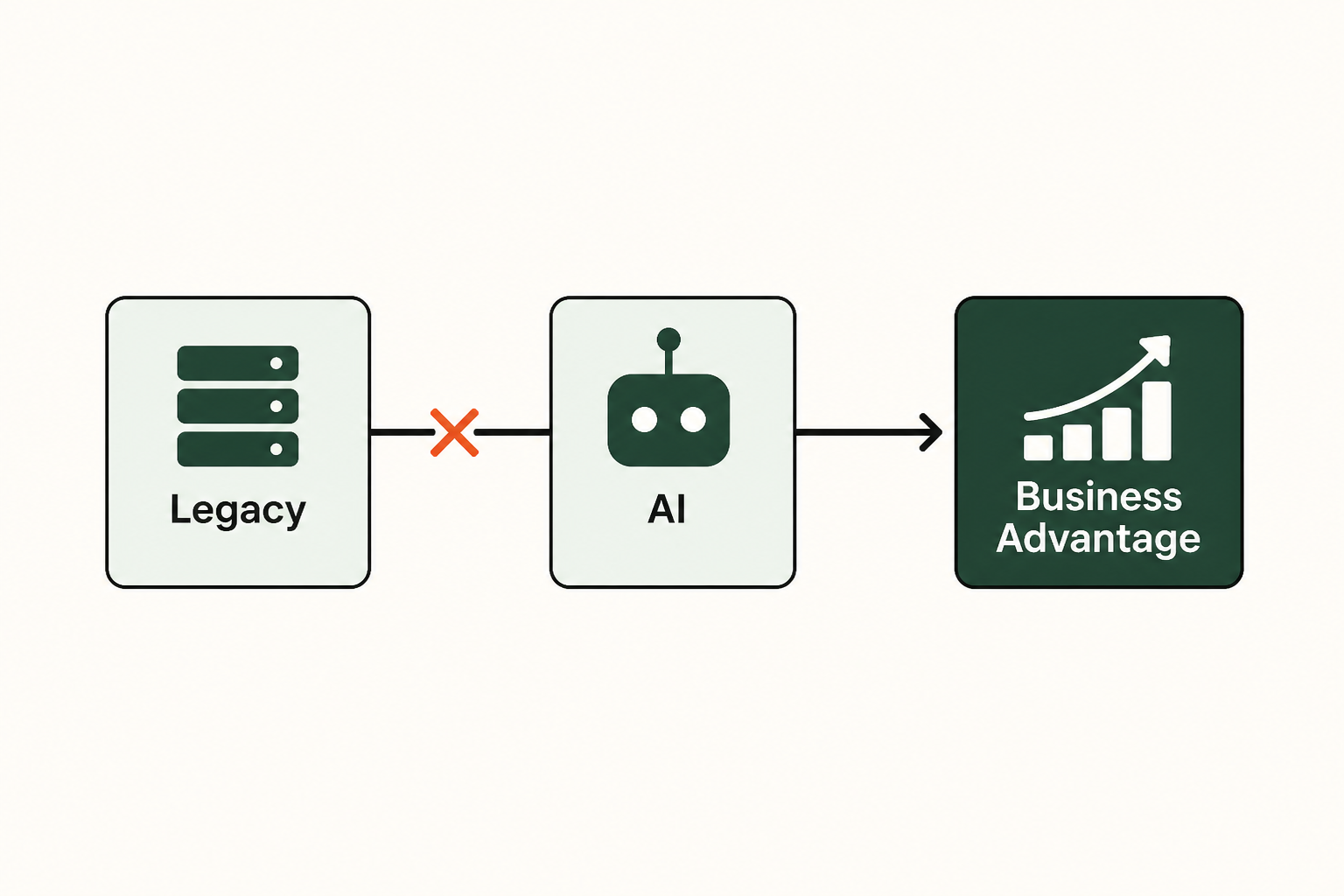
Once modernization is framed as operational control, the urgency becomes clearer. AI agents are useful only when they can reach the systems where work actually happens. A model can summarize policy, draft a response, or recommend an action, but it remains a demo if a person has to copy the answer into the ERP, check the CRM manually, or update a claims platform by hand.
That is where legacy systems become a strategic constraint. In one reported survey from 2022, 79% of organizations said legacy applications hinder digital transformation initiatives.com/2022/02/07/report-79-of-orgs-report-legacy-apps-hinder-digital-transformation). The age of that figure makes it more useful as background than as a current benchmark, but the operating pattern still appears across large environments: business teams want faster digital execution, while the systems that hold the work were built for controlled human operation, batch jobs, specialist access, or tightly scoped integrations.
AI integration exposes the gap more sharply than ordinary software integration. Traditional applications usually call APIs in predictable ways. Agents interpret context, choose a next action, and may need to move across multiple enterprise systems to complete a task. Without governed execution, a connection that looks technically possible can still be unacceptable to security, compliance, and process owners.
IDC's Software Development and Application Modernization Survey found that [agentic AI has reached parity with established, non-agentic AI tooling in modernization work](https://my.idc.com/getdoc.jsp?IDC's 2026 Software Development and Application Modernization Survey found that agentic AI has reached parity with established, non-agentic AI tooling in modernization work, while trust and governance concerns remain a constraint on broader adoption. That is the central modernization tension for AI: the organization wants agents to do useful work, but it cannot give an open-ended agent unrestricted access to systems of record.
 Why modernize now? The AI imperative
Key modernization approaches: glossary / key terms
To choose a modernization path, teams need shared language before they need a tool shortlist. The terms can blur together, so this section works as a practical glossary. It explains what each approach changes and what it leaves alone, then addresses where it does or does not help with AI integration. Gartner defines mainframe and legacy systems modernization tools as software that supports the modernization of applications running on mainframe and/or other legacy platformscom/reviews/market/mainframe-and-legacy-systems-migration-and-modernization-tools), but the right technique depends on the business risk and the system's role, as well as the integration target.
Re-platforming and re-hosting
Re-hosting means moving an application to a different infrastructure environment with minimal change to the application itself. The familiar shorthand is "lift and shift." It can reduce infrastructure risk or make operations easier, but it does not automatically make the application ready for AI integration. If the old system had no usable API, no clean authorization model, and no audit-friendly execution path, changing where it runs leaves the core integration problem mostly intact.
Re-platforming goes further. It changes the runtime platform while preserving much of the application's existing behavior. That can improve maintainability and scalability, especially when an organization wants to reduce dependence on aging infrastructure without rewriting business logic from scratch. Still, re-platforming does not guarantee that agents can safely act inside the system. The integration surface and control model still need explicit design.
Re-factoring and re-architecting
Re-factoring changes the internal structure of code without changing the intended business behavior. Teams use it to make software easier to maintain and test. They may also use it to extend or integrate the application. For AI readiness, re-factoring can help expose cleaner interfaces and reduce brittle dependencies, but it requires technical knowledge of the application and discipline around regression risk.
Re-architecting is a larger change. It reshapes how the application is organized, often toward modular services and clearer domain boundaries, with more scalable patterns. That approach can create a stronger foundation for AI-driven workflows, but it can also become a long program if every legacy dependency has to be redesigned before the business sees value.
Wrapping and API-fication
Wrapping means placing a controlled access layer around an existing system so other tools can interact with it without changing the core application immediately. API-fication is one form of wrapping, where the organization creates formal interfaces for actions or data that were previously available only through screens and files, or through specialist processes.
For AI integration, wrapping is often attractive because it respects existing investments. It can preserve the system of record while giving agents a governed way to request actions. The risk is that a thin wrapper without process control becomes another fragile integration. The wrapper must enforce authorization and capture context. It also has to constrain actions and provide an audit trail, or it simply moves the risk to a newer-looking interface.
AI integration: from blockage to governed execution
The modernization method matters, but AI changes the standard for success. The hard part is not merely connecting an agent to a database or screen. The hard part is deciding what the agent is allowed to do, proving why it did it, and limiting execution so the organization can trust the result.
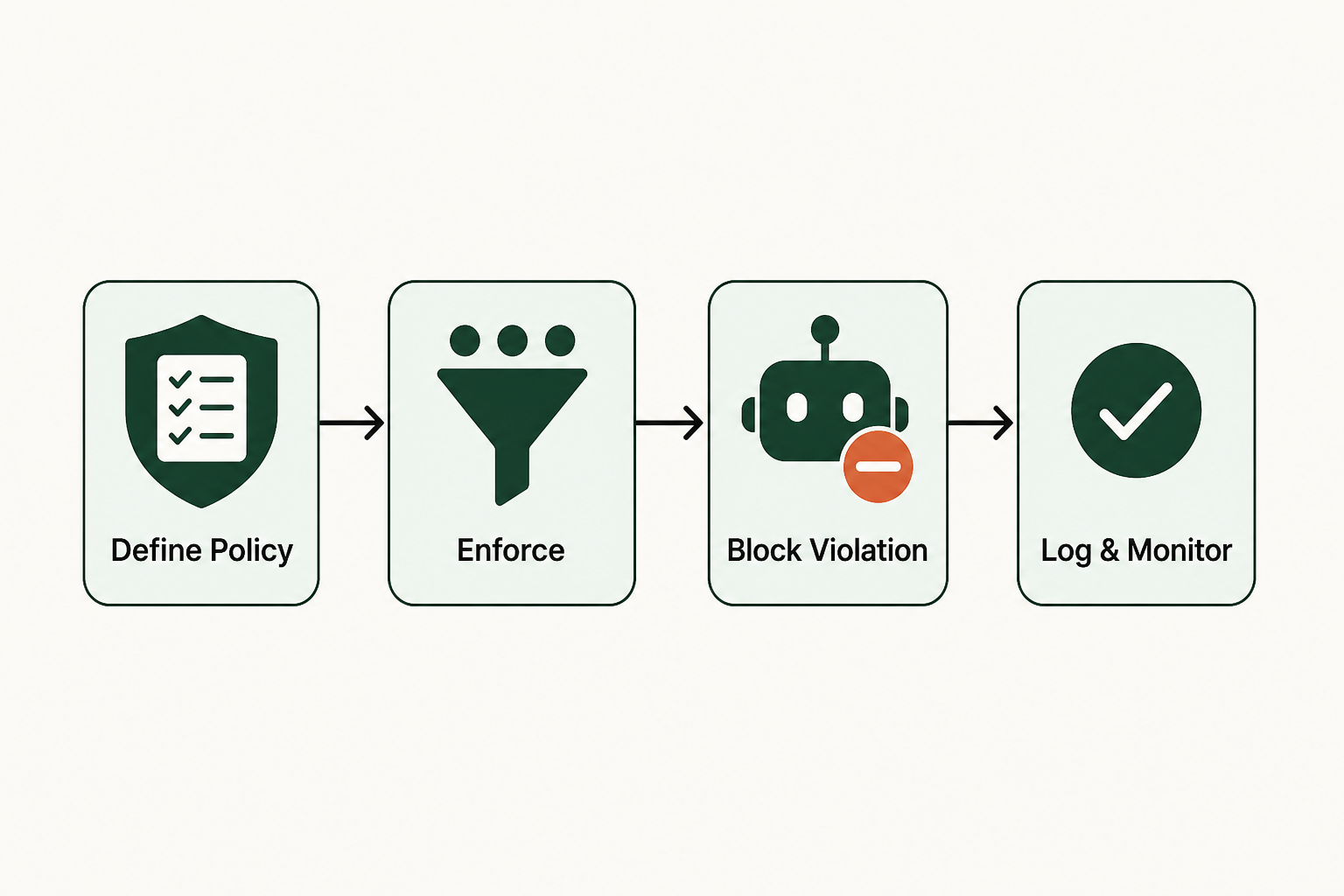
That is why governed execution is becoming the practical center of AI-oriented modernization. A model can reason and classify. It can also summarize or plan. But when work touches enterprise systems, execution needs boundaries. The system must know which identity is acting, what context justified the action, what data was accessed, what change was made, and whether the path followed approved policy.
This shifts the modernization lens from "Can we integrate?" to "Can we operate this safely?" A direct connection may satisfy a proof of concept, but it often fails the enterprise test because integration and authorization become tangled. The agent needs enough access to be useful, while security teams need assurance that access is narrow and monitored, with reversal possible where the process allows.
A governed execution model usually includes several control points:
- Connectivity control defines which legacy systems, APIs, screens, or portals can be reached.
- Action control limits what the agent can read, write, submit, approve, or escalate.
- Context control records the business reason and source data, along with the policy basis for the action.
- Compliance control creates an audit trail that can be reviewed by humans and internal teams.
- Cost control keeps execution predictable rather than letting repeated model calls expand unnoticed.
Those controls explain why enterprise AI governance belongs in the modernization conversation. Governance is not paperwork added after the agent works. It is part of the operating model that lets the agent work inside systems the business cannot afford to damage.
The same point applies to deterministic workflows. AI can help decide what should happen next, but execution inside an ERP or a homegrown portal, such as a claims platform or core banking application, should follow approved paths. Deterministic workflows give the organization a repeatable route from intent to action. That route does not remove the need for oversight, but it gives compliance and operations teams something concrete to inspect.
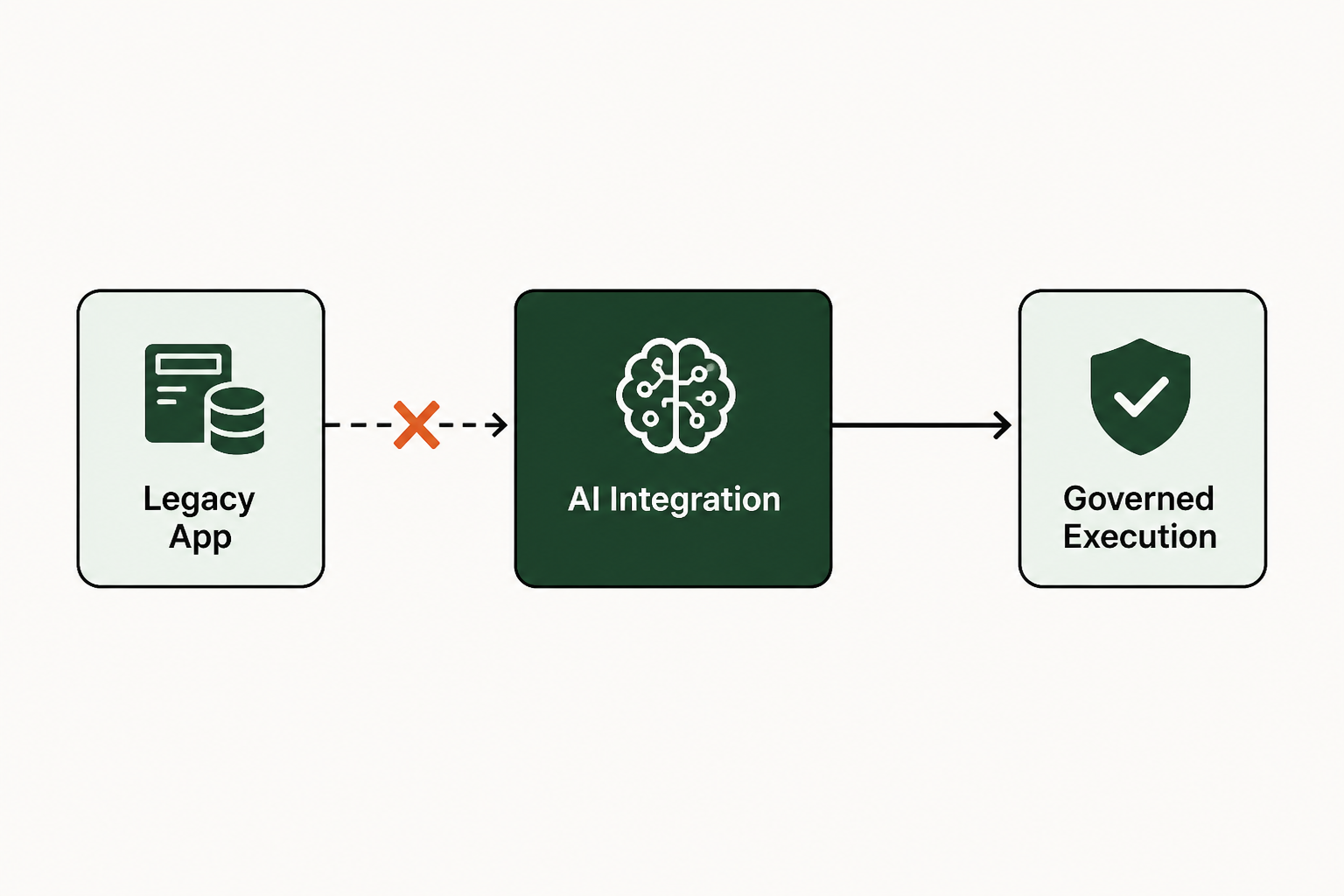 AI integration: from blockage to governed execution
The Agentic Harness: enabling deterministic workflows
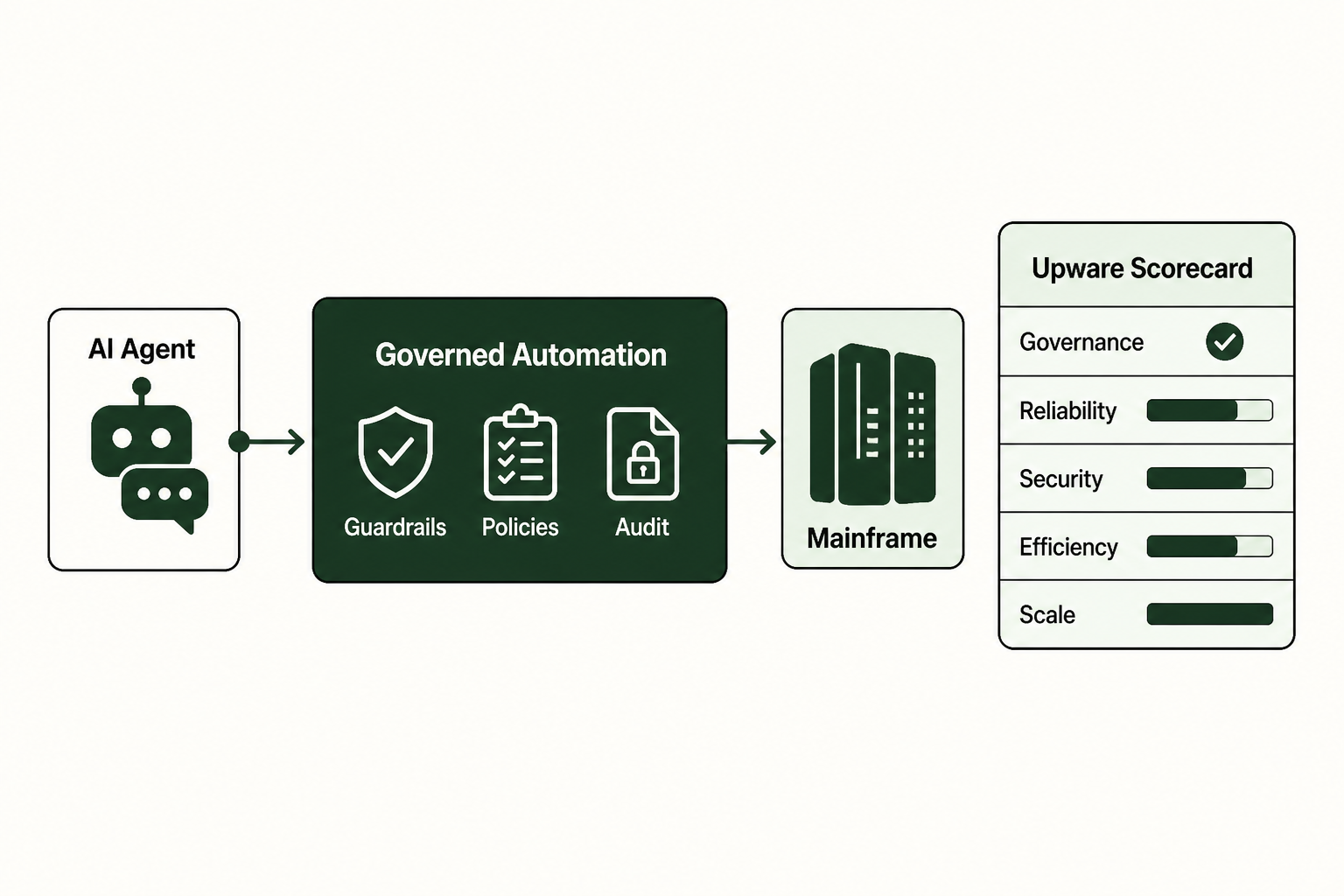
If direct connection is too open-ended, enterprises need a controlled layer between reasoning and action. The Agentic Harness is that operating layer: it sits between AI agents and enterprise systems, giving agents a governed way to execute work without turning every system connection into a custom engineering program. In plain language, the agent is the reasoning component, while the Agentic Harness is the controlled path that turns a decision into an approved action.
This matters most in legacy environments because the systems were usually built for human users, batch integration, or narrow application-to-application calls. They were not designed for agents that interpret context and move across systems. The Agentic Harness gives that movement an execution layer with policy and monitoring built in, plus audit built into the path.
Upware describes its platform around this idea: agents may decide what needs to happen, but governed execution controls how work is carried out across enterprise systems. The platform connects enterprise and legacy systems, including homegrown and no-API systems, through a single gateway. That gateway is used to connect and monitor AI interactions, as well as govern and audit them, without custom engineering or consultants. The company states deployment in days and 0 engineering resources, which should be read as a platform deployment claim rather than a promise that every enterprise workflow needs no setup or review.
Conversational agent platforms and integration and orchestration platforms can be useful for building agents, connecting applications, and coordinating tasks. What they often leave unresolved is the governed execution layer between agents and the operational systems where business changes actually occur. Upware centers on that layer instead, with an Agentic Harness designed to make agent actions predictable and compliant, with auditability across hard-to-reach systems.
The distinction is practical. An enterprise modernization leader does not need only an agent that can answer a question. They need an execution layer that can say, "This agent may update this field in this system for this workflow, under this authorization, with this recorded evidence." That is where deterministic workflows become more than an architectural preference. They mark the difference between a controlled operating model and an experiment that depends on manual cleanup.
Teams evaluating this path should look for the following capabilities:
- System reach across packaged, legacy, homegrown, and no-API systems.
- Governed execution that constrains actions before they touch production workflows.
- Audit visibility that records what happened, why, and under whose authority.
- Operational predictability so process owners understand how work moves through the system.
- Safe AI agent operation patterns that define boundaries before agents are scaled.
For a deeper view of the controls around agent behavior, the related guide on safe AI agent operation is a useful next read. It complements modernization because guardrails shape the decision boundary, while the Agentic Harness controls the execution path.
You can also review the governed execution layer in the platform context, where context capture and connectivity are treated as operating requirements alongside compliance, cost, and control rather than optional add-ons.
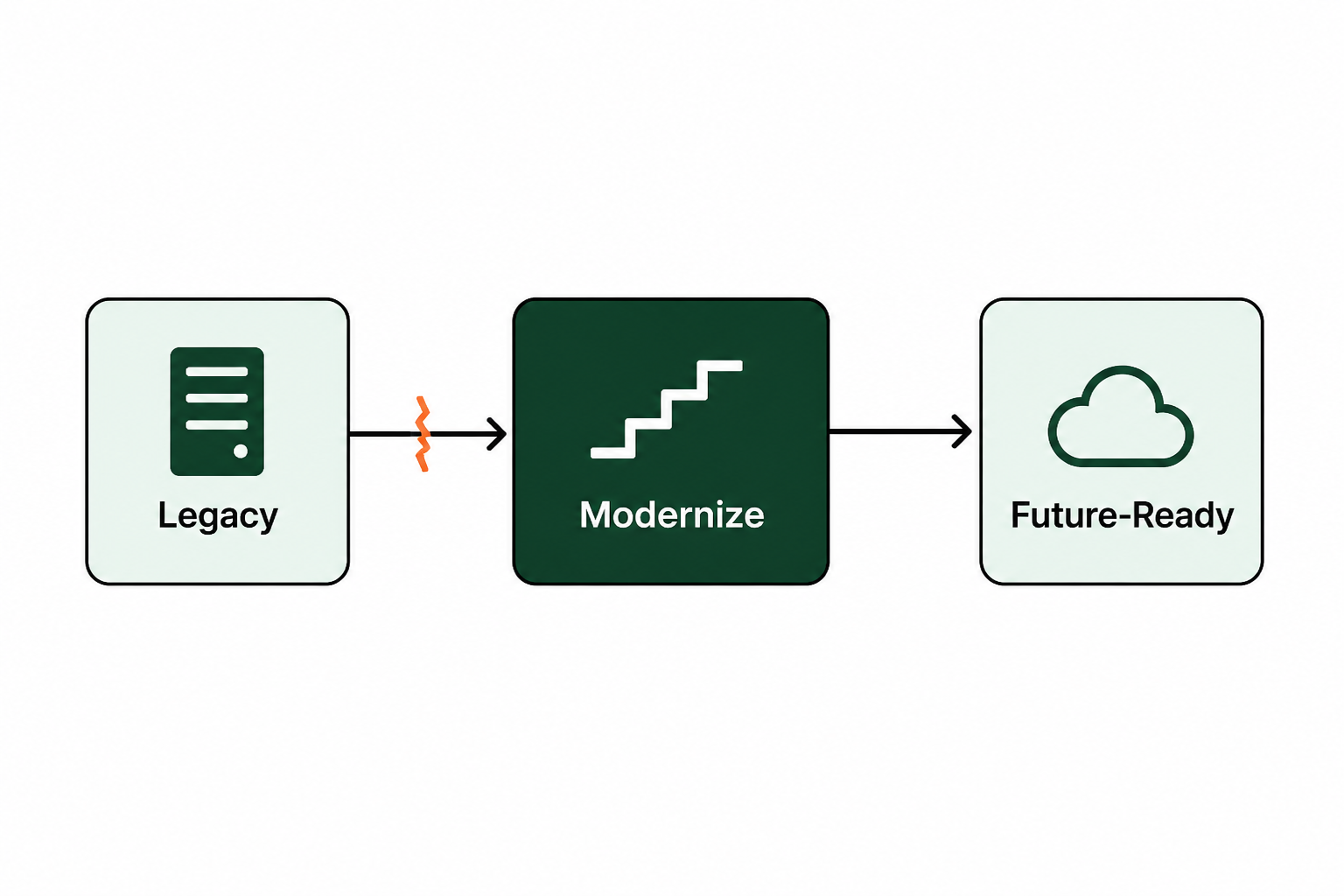
Moving forward: your next steps in modernization
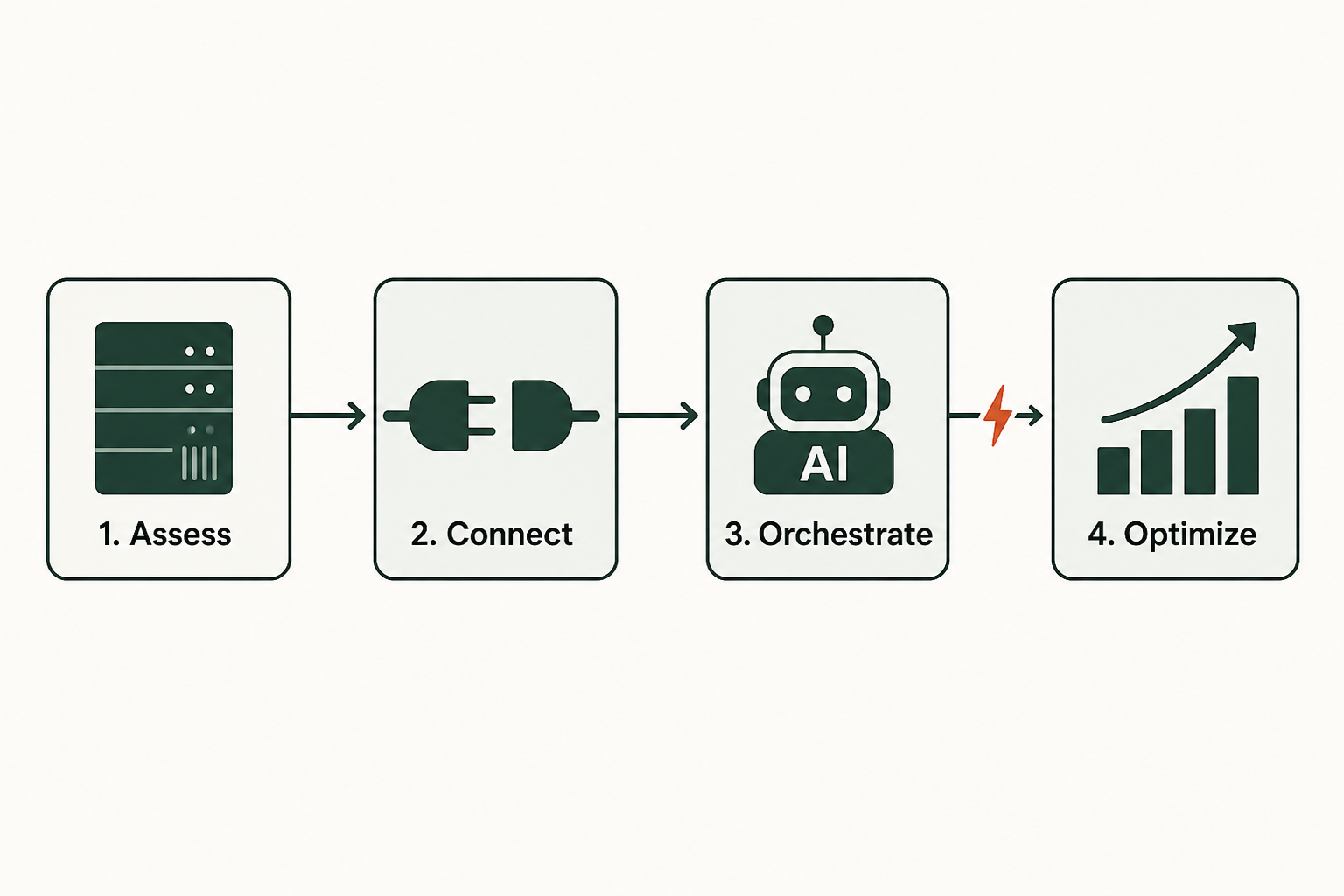
The practical next step is to map the business workflows where AI would create value only if it could act inside an existing system. Those workflows reveal whether the real barrier is data access; authorization; missing APIs; brittle screens; manual approvals; audit requirements; or some combination of all six.
Do not begin with a full estate rewrite unless the evidence demands it. For many enterprises, the better first move is to identify one high-value process and separate the modernization problem into three parts:
- What must stay stable because it holds core business logic or regulatory records.
- What must become reachable because agents or modern applications need to interact with it.
- What must be governed because the action changes money, customer records, claims, orders, access, or compliance posture.
That framing keeps legacy application modernization tied to business execution rather than platform replacement. It also gives technical and risk teams a shared language. The system of record may remain, and the connection path may change. Governed execution becomes the condition for AI use.
If your first blocker is an older platform with limited integration options, the guide to connecting legacy systems is a practical place to continue. The decision ahead is not whether legacy systems still matter. They do. The decision is whether they remain isolated from the AI workflows the business is trying to run, or whether they are connected through controls strong enough for production work.
 Moving forward: your next steps in modernization
Plan your future: Modernize your legacy applications today!
Transforming your legacy systems can start today.
Discover how our modernization solutions function or speak with an expert about your AI integration strategy.
Frequently asked questions
What is the main benefit of modernizing legacy applications for AI?
The main benefit is making older systems usable in modern workflows without discarding the business logic they still contain. For AI, that means agents can reach the systems where records, approvals, claims, orders, and customer updates live, while the organization improves compatibility, performance, and control around those systems.
How do I get started with legacy application modernization?
Start with a workflow, not a technology preference. Pick a process where the business wants AI assistance but the agent cannot complete the work because it needs access to an ERP, CRM, mainframe, homegrown portal, or no-API system. Then identify what access is required, what actions must be restricted, and what audit evidence process owners need before they approve production use.
Who in the organization is typically responsible for this?
Responsibility usually spans enterprise applications, integration, automation, security, and business process ownership. A CIO, CAIO, or transformation sponsor may approve the investment, but the practical evaluation often sits with the leader who owns system connectivity and must prove that AI agents can act across enterprise systems without weakening control.
What are the most common mistakes to avoid in a modernization project?
The most common mistake is treating modernization as a race for speed while ignoring durability. IDC found that organizations consistently prioritize durable quality, maintainability, and scalability over speed or cost when applying AI to legacy modernization work. Another mistake is connecting an agent directly to a system before authorization and monitoring are designed, along with audit requirements.
How long does it take to see results from modernization?
Timing depends on the scope. A full re-architecture can take much longer than wrapping a specific workflow with controlled access. For AI integration, early results usually come from choosing a bounded process and preserving the system of record. The next step is adding a governed execution path that lets an agent perform a narrow set of approved actions.