What "agentic AI compliance" means for enterprise systems
Agentic AI compliance is the practice of making sure AI agents can act inside enterprise systems without turning every action into an unmanaged model decision. In plain English, it means the agent can help do real work, while controls cover its access and choices. Approvals and records also have to be strong enough for regulation, internal policy, and audit. The hard part is that an agent does more than answer a prompt. It may decide which system to call, what data to read, which next step to take, and when to escalate or stop.
That shift matters because agentic AI refers to semi- or fully autonomous systems that can perceive, reason, and act on their own, as MIT Sloan described in 2025 in its explanation of semi- or fully autonomous AI systems. In an enterprise, those actions may touch customer records, payment workflows, claims files, case queues, ERP screens, ticketing systems, or legacy systems that were never designed for autonomous software.
So compliance cannot sit only in a policy document or a prompt instruction. It has to show up at the point of action. If an agent can update a customer status, submit a transaction, create a case, or change a field in a system of record, the enterprise needs control before the action, verification during the action, and an audit trail after the action.
Regulated operators already know the standard. In financial services and other regulated sectors, teams must be able to explain every decision made by an AI system, including why a customer was flagged as high-risk or why a transaction was escalated. Agentic AI raises the bar because the decision chain may include a plan and tool calls. It may also include data access, policy checks, retries, and handoffs.
The practical question is narrow and unforgiving: if the agent acts, can the organization prove what it saw and what it called, then explain what it decided and why the final action was allowed?
Foundations: key challenges in agentic AI compliance
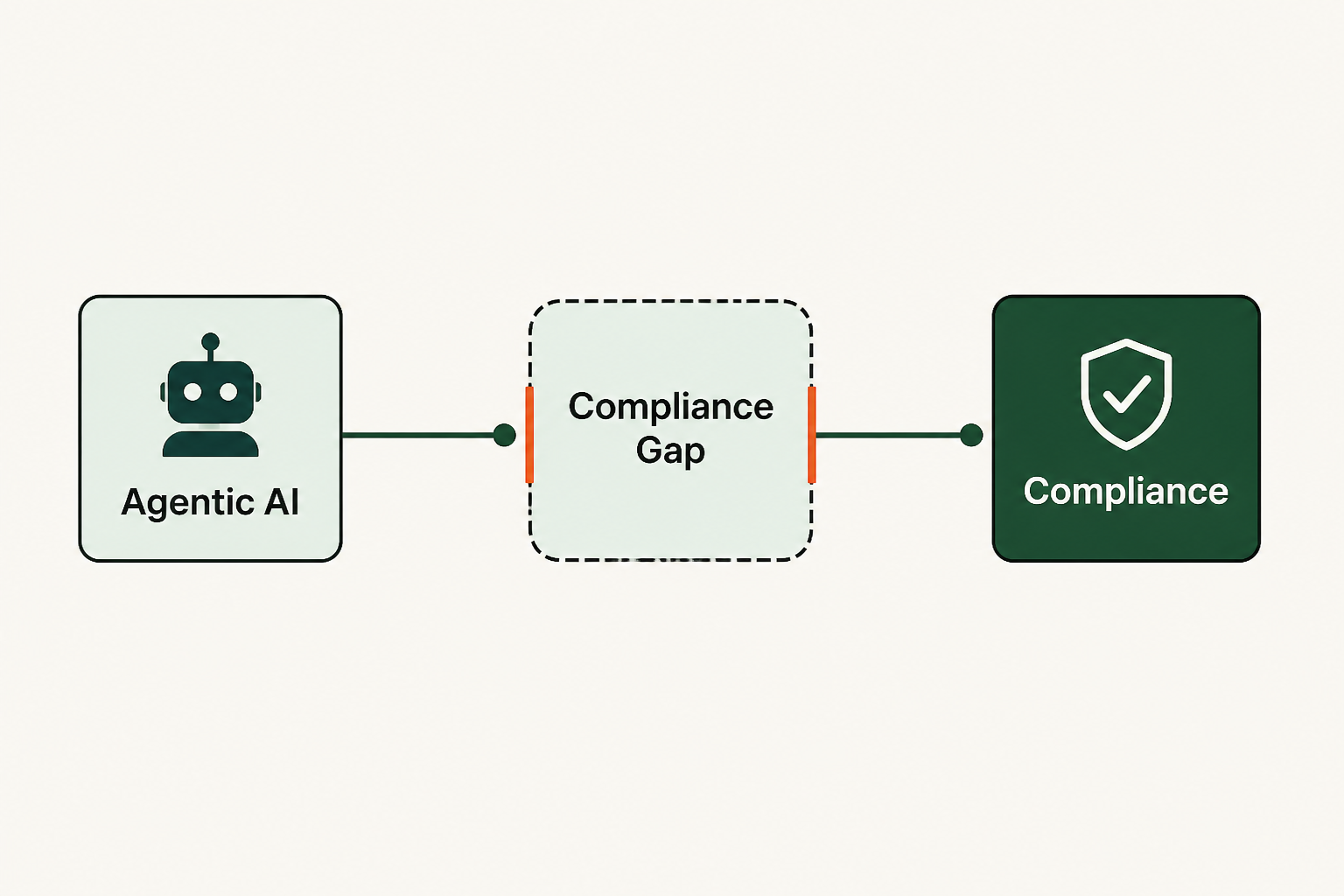
Once the definition is clear, the harder issue is why agentic AI compliance behaves differently from ordinary software compliance. Traditional enterprise applications usually follow fixed paths. A user clicks a button, a business rule runs, and a database changes. A log then records the event. Agentic systems may start with a goal, choose a path, adapt as conditions change, and use external tools along the way. That creates a different compliance problem, because the enterprise has to govern the reasoning path and the system action, not just the final output.
 Foundations: key challenges in agentic AI compliance
Explainability and auditability
The audit problem is not whether a log exists. It is whether the log explains the work at the level a regulator needs. Risk teams and incident reviewers need the same clarity. A useful record has to connect the goal and inputs to each policy check. It also has to show tool calls and human approvals, then tie them to the final action. If the record only says "agent completed task," it is operationally thin.
Governed execution becomes the operating principle here. The enterprise needs a decision trail that can be reviewed after the fact, along with controls that shape the action before it happens. Without that, the agent may look productive in a dashboard while compliance teams still cannot answer a basic audit question.
Control and predictability
Control is harder with agentic systems because the agent is designed to adapt. That flexibility is useful when the environment changes, but it becomes risky when the action affects sensitive records, regulated processes, or mission-critical operations. Compliance teams do not want a model to improvise around a blocked path if that workaround creates an unauthorized system change.
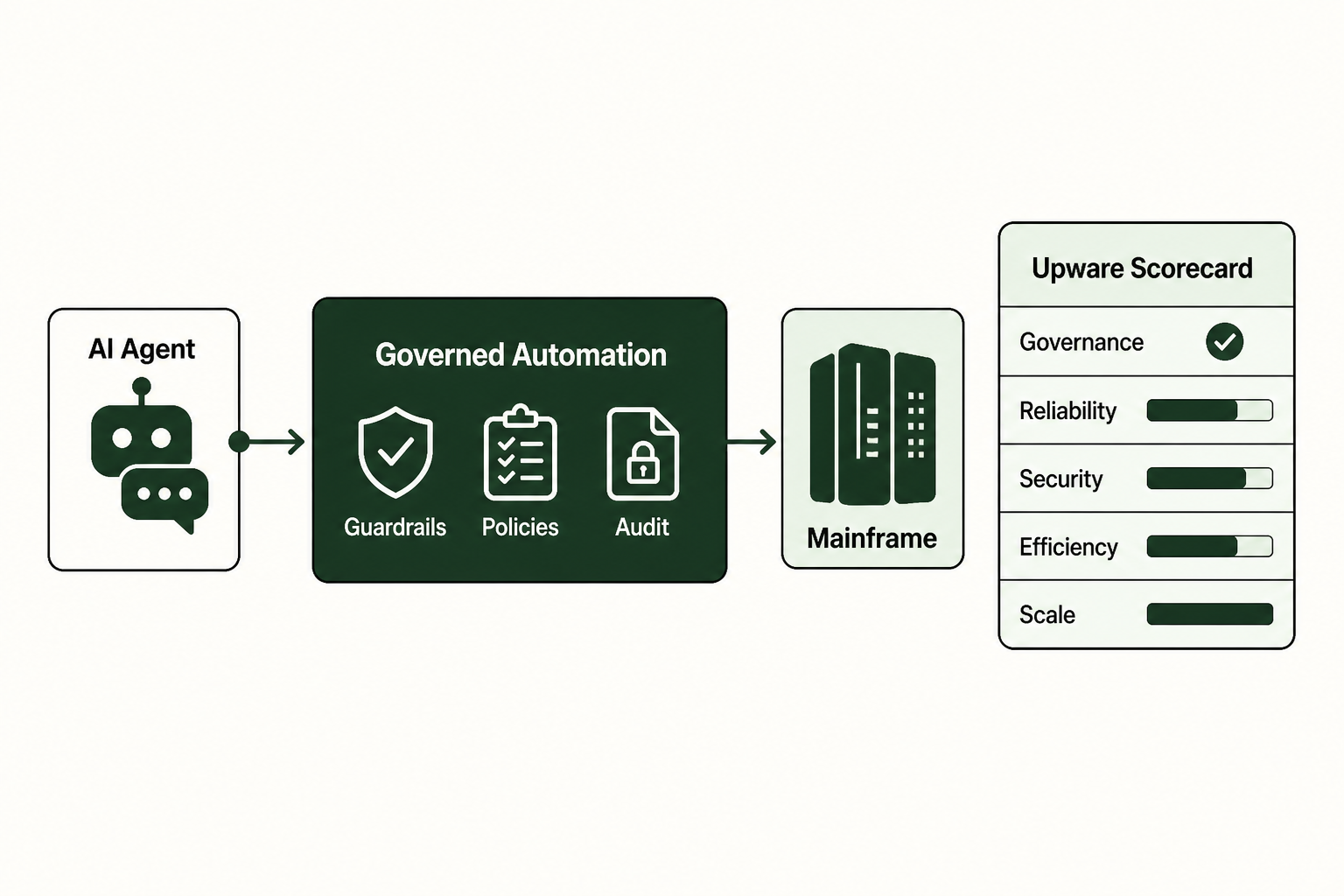
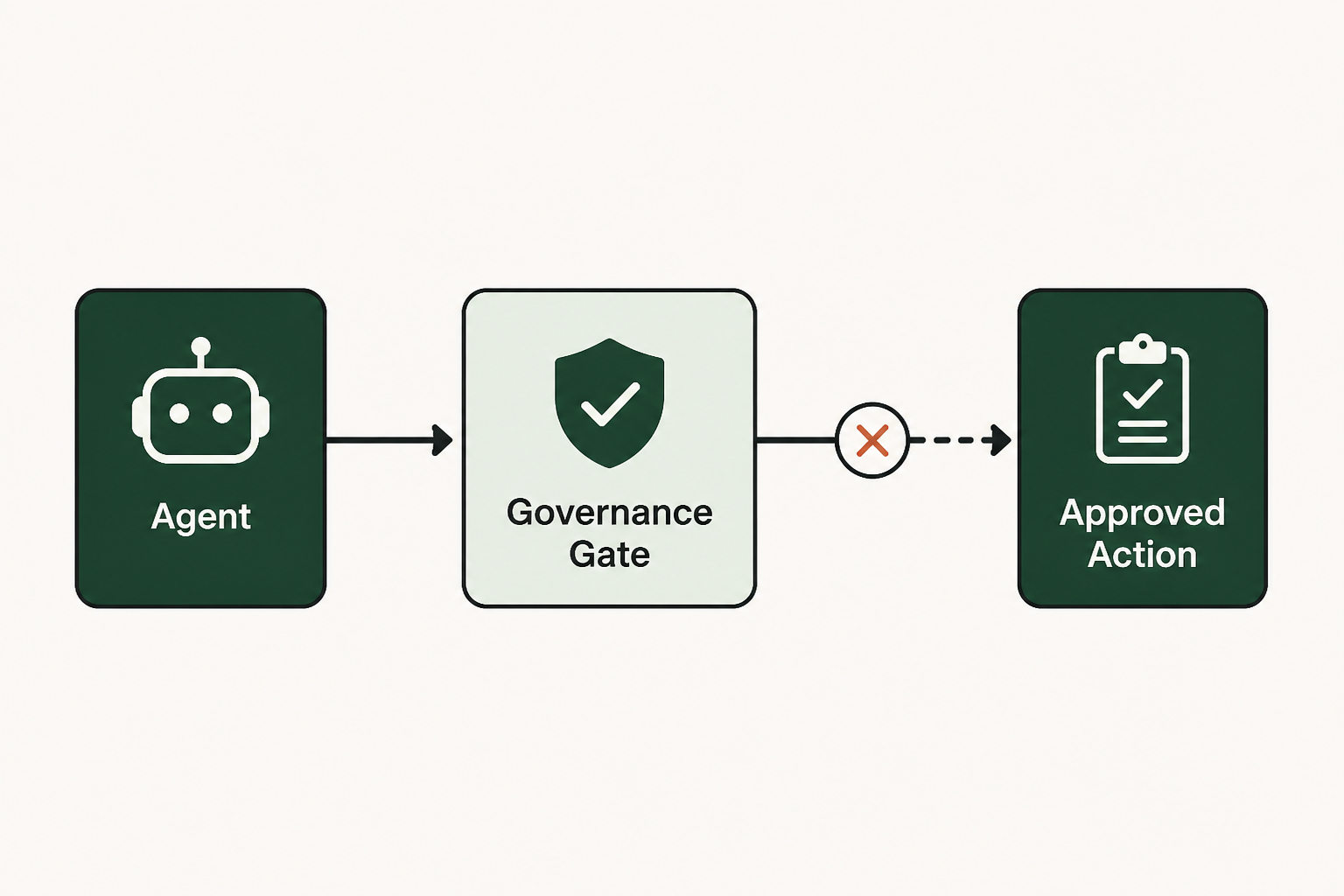
A compliant design separates reasoning from execution. The agent can interpret the goal and propose the next action, but the execution layer decides whether that action is permitted, whether it needs approval, whether the input state is valid, and whether the result matches the expected outcome. Agents are the brain; the Agentic Harness is the hands.
Data privacy and security risks
Agentic AI also changes the data-access problem. Because an agent may plan and execute multiple steps, it may need permissions across systems, and broad permissions are exactly what security and privacy teams resist. The risk is not limited to exposure of sensitive data. It also includes inappropriate use of data during a chain of actions that no one can reconstruct.
The Cloud Security Alliance analysis of Five Eyes guidance says the Five Eyes guidance identifies five categories of risk inherent to agentic AI deployment: privilege; design and configuration; behavioral; structural; and accountability. Those categories map closely to enterprise concerns. Who authorized the agent? How was it configured? Did it behave within bounds? Could one failure affect many systems? Who is accountable when an action causes harm?
Glossary of agentic AI compliance terms
To govern agentic systems, teams need shared language. The terms below appear throughout enterprise discussions of agentic AI compliance, and each one points to a different control problem.
-
Agentic AI
An AI system that can pursue a goal with some autonomy, including planning steps, using tools, interacting with digital environments, and adapting as work progresses.
-
AI agent
The software component that interprets a goal, reasons about possible actions, and selects the next step. In enterprise systems, the agent should not have unrestricted authority to change records or trigger workflows.
-
Agentic AI compliance
The policies, controls, records, and review mechanisms that keep agent actions aligned with regulation, internal policy, and ethical guidelines.
-
Governed execution
The discipline of controlling how an agent's intended action is carried out, including permissions, policy checks, validation, escalation, and evidence capture.
-
Execution layer
The operating layer between the agent and enterprise systems. It receives intended actions, applies controls, performs or blocks work, and records what happened.
-
Agentic Harness
A controlled operating structure around agents that lets the model reason while deterministic workflows, system connectors, verification checkpoints, and audit records govern execution.
-
Deterministic workflows
Predefined workflows that behave predictably at runtime. They are useful for high-consequence actions because the enterprise can inspect, approve, and test the path before production use.
-
Audit trail
The evidence record showing the request and data used. It also shows decisions made, controls applied, systems touched, and outcome produced.
The regulatory environment for agentic AI
Those control problems explain why regulators and internal risk teams treat agentic AI differently from ordinary automation. Agentic AI is not scrutinized only because it uses AI. It attracts attention because it can act with limited human intervention, access data across systems, and affect people or business outcomes through a series of steps.
The EU AI Act is a useful example because it ties obligations to risk. Organizations deploying an AI system in the EU market must first classify the system under the EU AI Act risk tiers, which include prohibited, high-risk, limited-risk, and minimal-risk categories. That classification shapes the compliance architecture. Risk assessments and audit requirements may apply. Human oversight may also apply.
Agentic systems can complicate that classification because the same agent architecture may be used across different workflows. A low-risk internal assistant is one thing. An agent that touches credit decisions, employment workflows, patient operations, fraud review, or regulated customer communications is another. The compliance burden follows the use case and the data. It also follows the degree of autonomy and the consequence of the action.
State privacy frameworks and human-oversight obligations also matter because agentic AI can independently plan, execute, and adapt a series of actions. Data access has to be bounded by purpose, not granted broadly because the agent "might need it." Human review also cannot be reduced to a final rubber stamp if the critical decision happened several steps earlier.
For enterprise leaders, the practical questions are specific:
-
Which actions are allowed
Which actions are allowed without human approval, and which are not.
-
Which data sources the agent may access
Which data sources the agent may access for a given workflow.
-
Which decision points create evidence
Which decision points create evidence that can be reviewed later.
-
Which failures trigger recovery or escalation
Which failures trigger recovery or escalation rather than continued autonomous action.
-
Which person or function owns accountability
Which person or function owns accountability when the agent changes a system of record.
The regulatory question is no longer limited to whether the model produced acceptable text. It is whether the operating environment around the agent can prove compliant behavior when the agent takes action.
Designing for governed execution in agentic systems
Given that regulatory posture, enterprises need to design for compliance before agents touch production systems. The safest pattern is to treat the agent as a reasoning component, then route consequential work through an execution layer that applies policy and verifies state. That execution layer also records evidence and controls failure handling. That is the difference between an agent that is merely instructed to behave and an agent whose actions are governed by system design.
Policy enforcement and verifiable actions
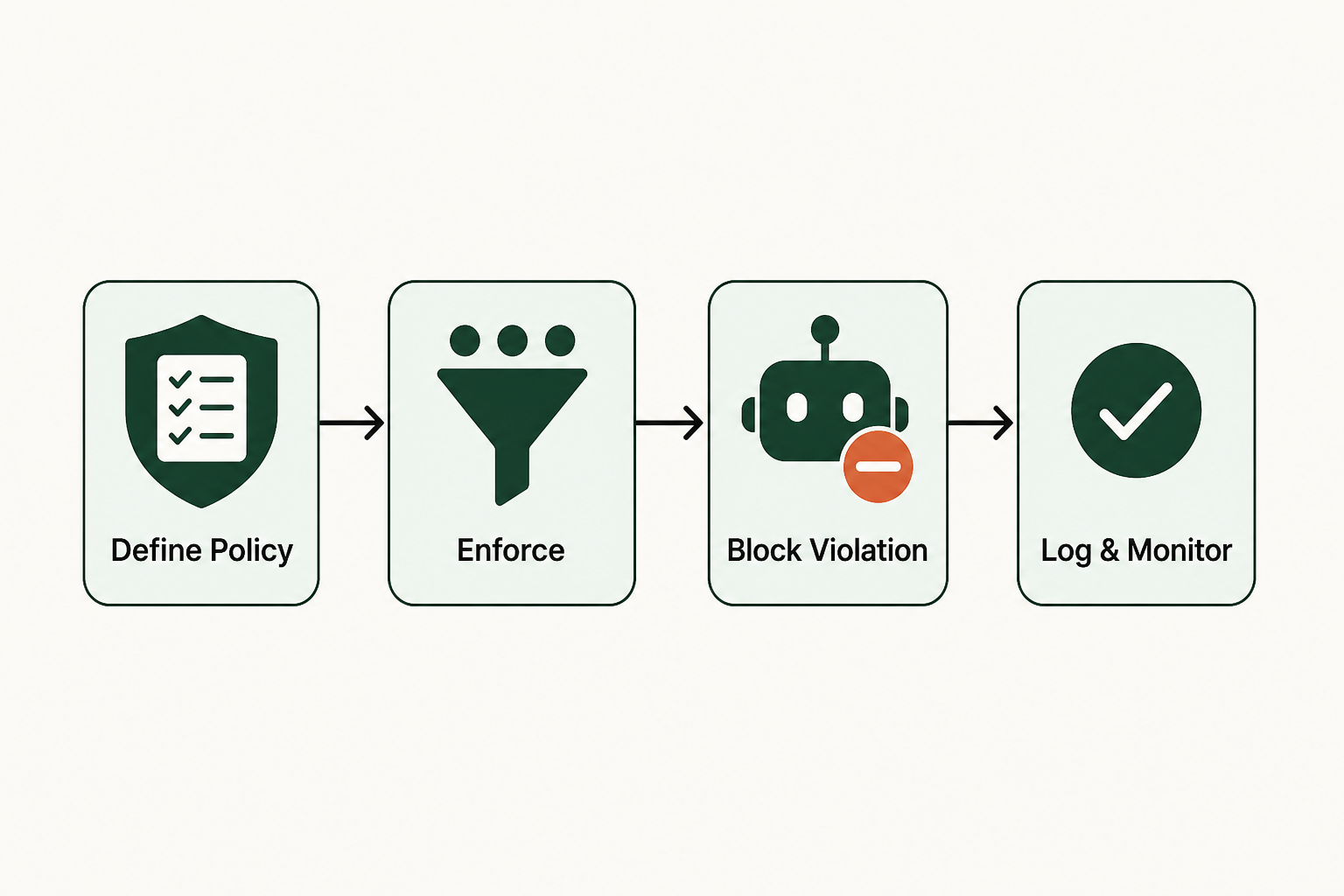
Policy enforcement has to happen where work is executed. A prompt can tell an agent not to approve a refund above a threshold, but a governed execution design makes that threshold enforceable before the refund is submitted. The same logic applies to customer data access and account changes. It also applies to payment initiation, claim updates, and other actions that affect regulated or mission-critical systems.
A verifiable action has a complete chain behind it. The system should show the intended action and the policy evaluated. It should also show the data state observed and the approval path followed. The record then needs to identify the system touched, the response received, and the recovery path if the outcome did not match the plan. Without that chain, audit teams are left interpreting fragments.
Deterministic workflows vs. unconstrained agents
Deterministic workflows matter because they keep runtime behavior predictable. An unconstrained agent may decide that a blocked API call should be worked around through another route. In some settings that flexibility is useful. In a regulated workflow, it can create a control failure.
With deterministic workflows, the enterprise defines the permitted path for a class of action. The agent can still reason about what should happen, but the execution layer controls how the work is performed. That design supports 100% predictability in runtime for the governed workflow path, because the runtime action follows a defined route rather than open-ended improvisation.
 Designing for governed execution in agentic systems
The role of the Agentic Harness
The Agentic Harness is the practical structure that makes this split usable. It gives agents a controlled way to act across enterprise systems, including legacy systems and no-API systems, without granting the model broad unmanaged authority. The agent proposes or selects an action. The Agentic Harness executes through policy-bound steps and verification checkpoints. It also handles state management and failure recovery.
Agent engineering frameworks and agentic process automation tools do useful work: they help teams build agents, connect tools, and orchestrate multi-step activity. What they often leave unresolved is the governed execution layer between agents and enterprise systems, where policy, verification, audit, and recovery have to operate at runtime. Upware centers on the governed execution layer instead, so agent actions are mediated before they change systems that matter.
That distinction matters for production adoption. Compliance teams do not need a poetic explanation of an agent's intent. They need a controlled operating path and bounded system access. They also need evidence that the path was followed. The Agentic Harness gives the enterprise a way to let the agent reason while deterministic workflows decide how the work is actually carried out.
Benefits of a structured approach to compliance
The compliance case is strongest when it connects directly to operating discipline. A structured approach to agentic AI compliance helps teams move from pilot behavior to production behavior because security, legal, compliance, AI, and operations can inspect the same control model. The discussion becomes concrete: which actions are bounded, which records are created, and which exceptions go to humans?
In regulated compliance work, the labor model can also change. Deloitte describes a pattern where compliance experts move from manually reviewing 100 customer files to supervising an AI agent monitoring 10,000 customers and focusing on complex cases. That does not remove human judgment. It changes where that judgment is spent.
The main benefits are practical:
-
Predictable action paths
Deterministic workflows reduce ambiguity around how a task is executed, especially when a workflow touches several systems.
-
Stronger audit readiness
A controlled execution layer records the decision chain, not just latency, token usage, or final output.
-
Cleaner human oversight
High-consequence actions can require approval without forcing every low-risk step into manual review.
-
Cost discipline
Structured execution can reduce repeated model calls, with proof points including up to 80% lower token costs.
-
Faster controlled deployment
For supported workflows, deployment in days is possible because the execution pattern is predefined rather than rebuilt from scratch each time.
A structured approach also makes audits less painful. If your team needs to prepare for an agentic AI audit, the useful evidence is not a broad statement that the model was governed. It is the trail showing how each consequential action was authorized, checked, executed, and reviewed.
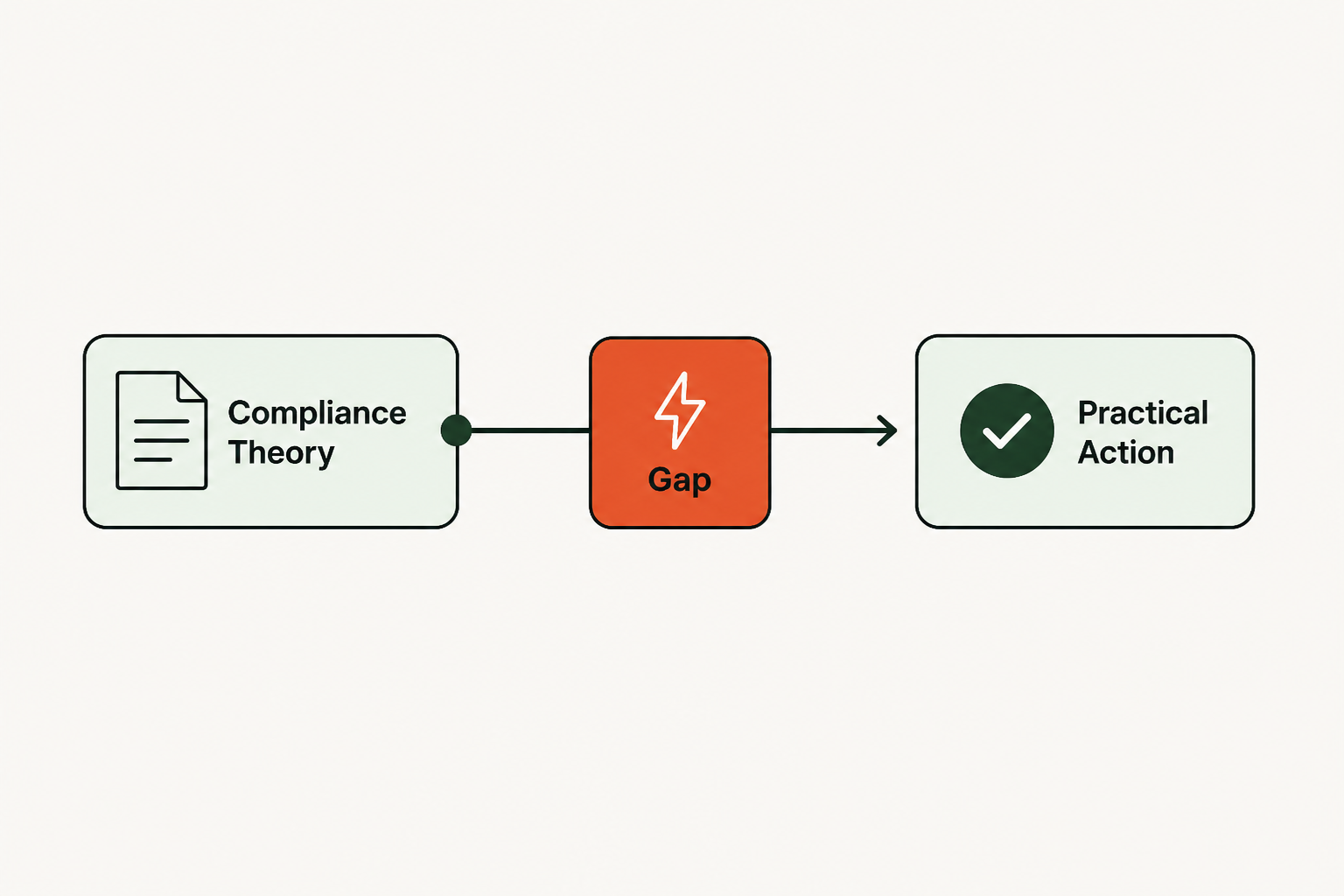
Next steps: from compliance theory to practice
The useful work starts when the principles are mapped to real enterprise workflows. Begin with one process where agent action is valuable but approval is blocked by control concerns. Good candidates are workflows with sensitive data and system-of-record updates. Multi-step exceptions and manual review queues that already have written policies are also useful candidates.
Do not start by asking how autonomous the agent can be. Start by defining the execution boundary:
-
Name the system changes
Name the system changes the agent may request or perform.
-
Classify the data access
Classify the data access needed for that workflow.
-
Define the policy checks
Define the policy checks that must run before action.
-
Choose the escalation points
Choose the escalation points for high-consequence or uncertain cases.
-
Specify the audit record
Specify the audit record required for incident, compliance, and business review.
 Next steps: from compliance theory to practice
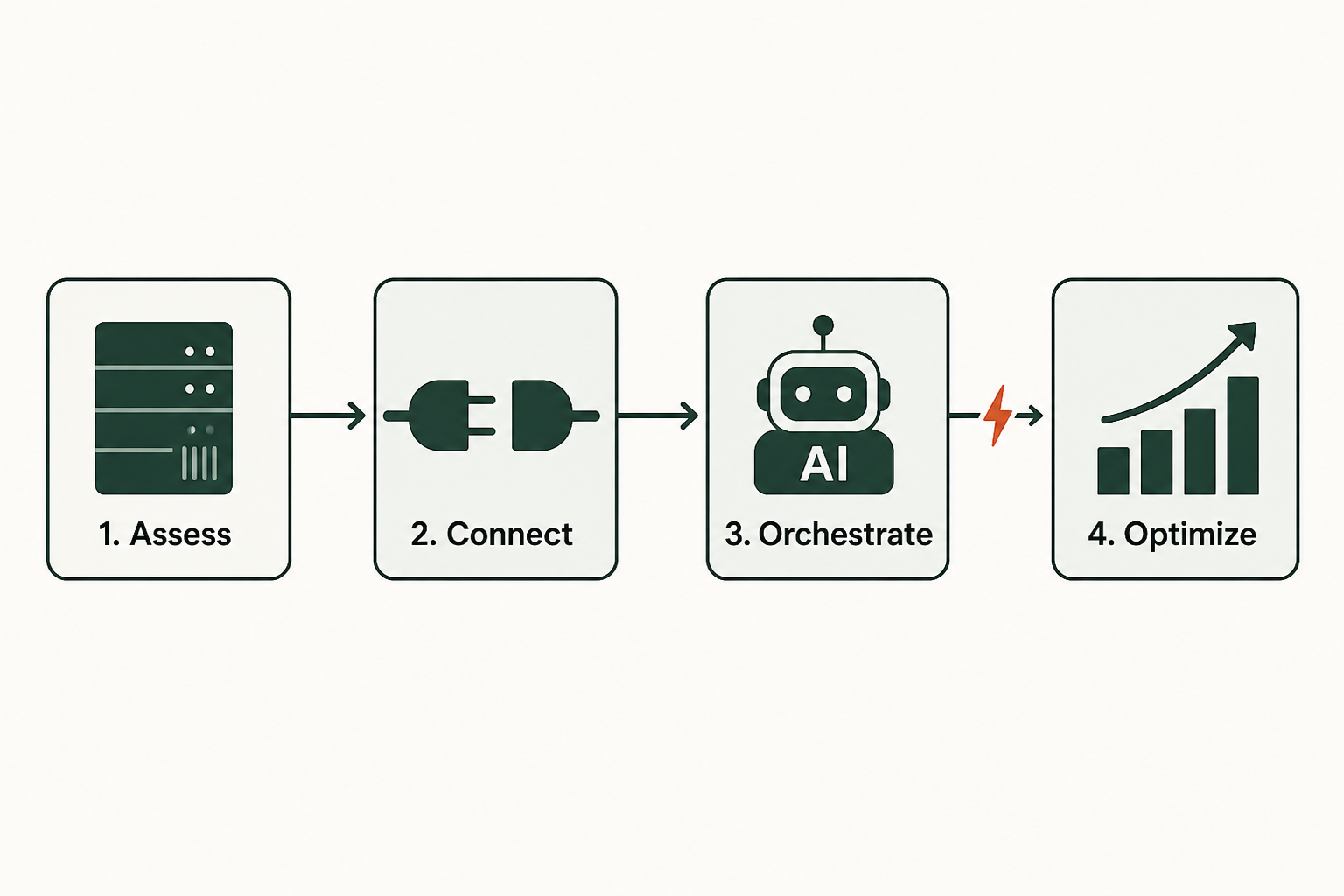
From there, connect the workflow to a broader governance model. The deeper question is how many agentic workflows can share the same policy and execution pattern across enterprise systems. Evidence patterns need to scale with them. At that point, an implementing an AI agent governance framework discussion becomes useful, because isolated controls do not scale well across departments, systems, and risk categories.
Agentic AI compliance is not a paperwork layer added after deployment. It is the operating design that decides whether agents can be trusted with consequential work. The trade-off is clear: governed execution narrows what the agent can do freely. For enterprise systems, that constraint is the point.
Ready to implement robust agentic AI compliance in your organization?
Discover our compliance solutions in action or speak with an expert about your needs.
Frequently asked questions
What is the main benefit of agentic AI compliance?
The main benefit is that the enterprise can let agents perform bounded work while preserving control, auditability, and accountability. In regulated environments, teams must explain why an AI system flagged a customer, escalated a transaction, or took a related action. Agentic AI compliance gives the organization the records and controls needed to answer those questions without relying on memory, screenshots, or incomplete operational logs.
How do I start implementing agentic AI compliance in my organization?
Start with one consequential workflow rather than a broad governance program. Identify the systems touched and the data accessed. Then identify the actions that change records, the policies that apply, and the points where human approval is required. Then design the execution path so the agent can reason about the work, while policy checks, verification, system changes, and audit records are handled through governed execution.
Who in the organization is typically responsible for agentic AI compliance?
Responsibility usually spans several functions. The CIO, CAIO, or Head of AI may own production adoption, while security, compliance, legal, enterprise architecture, and operations define the constraints. The cleanest operating model gives each function a clear role. AI owns agent behavior. Security owns access boundaries. Compliance owns evidence requirements. Operations owns process integrity, and executive sponsors own risk acceptance.
What are the most common mistakes to avoid when deploying agentic AI?
The most common mistake is giving the agent broad access and treating prompt instructions as control. Other mistakes include logging only outputs rather than the full decision trail and skipping human approval for high-consequence actions. Teams also get into trouble when they ignore privilege and accountability risks or deploy agents into workflows where data-access obligations are unclear. Agentic systems need bounded authority, verifiable actions, and recovery paths when reality differs from the plan. Navigate agentic AI compliance complexities with our expert guide.