What is AI agent monitoring and why does it matter?
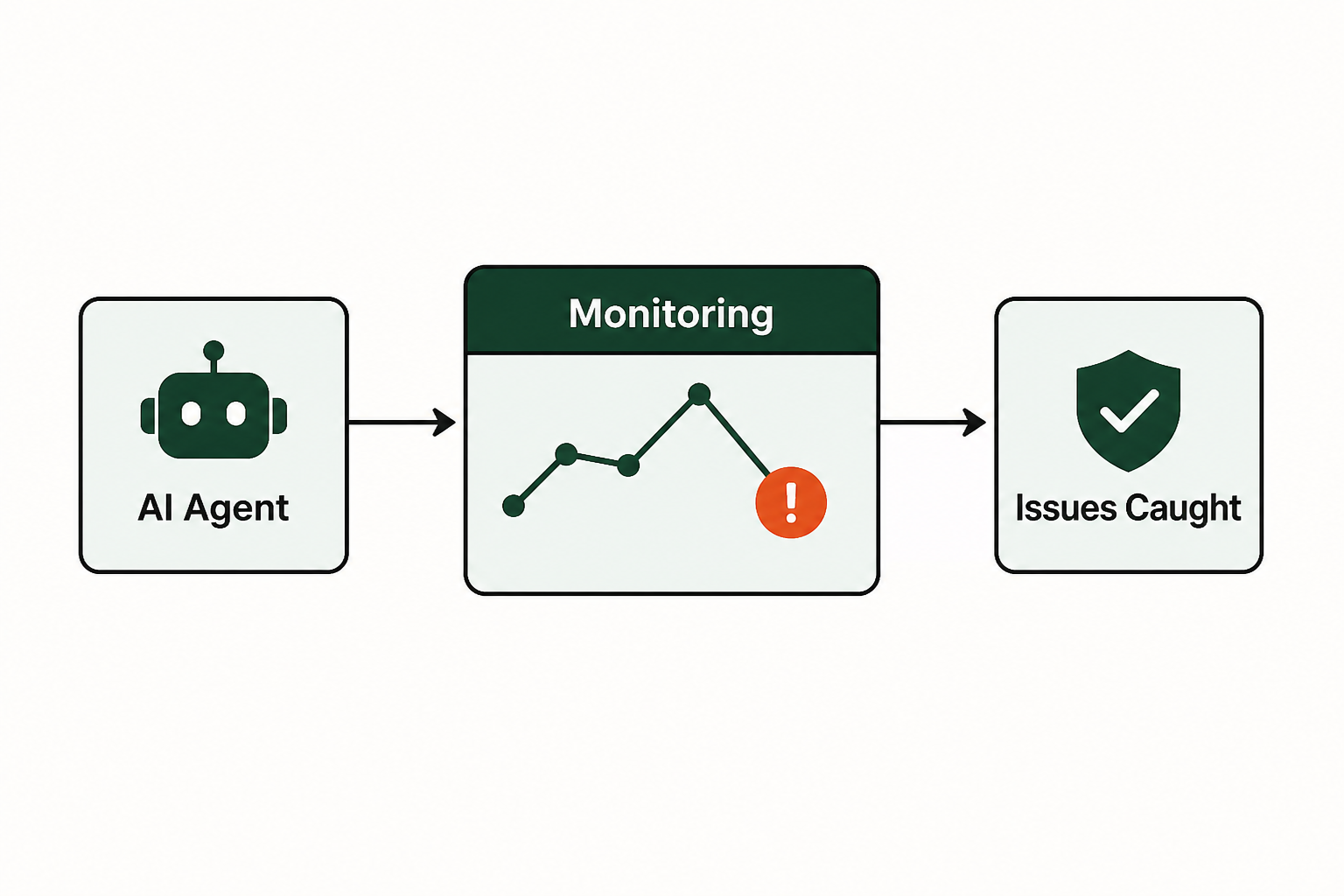
AI agent monitoring is the process of observing autonomous AI agents, tracking their behavior and outputs so they operate effectively and securely. For an enterprise, that means watching what an agent sees and decides. It also means recording what the agent calls, changes, escalates, and records while it works across real systems.
The pressure point is simple: agents can act. A chatbot may answer a question. An agent can plan work, invoke tools, pass information between systems, and take actions that affect customer records. It can also affect approvals, payments, or internal operations. Researchers describe AI agents as systems that use large language models to autonomously plan, invoke tools, and take actions with real-world consequences.
That action layer changes the enterprise problem. Monitoring cannot stop at whether the model produced a fluent response. Leaders need to know whether the agent had the right permission and followed the approved workflow. They also need to know whether it used the right source of truth, changed the right system, and left enough evidence for audit.
Large organizations are treating this as a governance issue because AI agents are moving from assistive tools into workforce-like roles. [That shift creates a practical access and control challenge](https://pwc.com/us/en/industries/tmt/library/trust-and-safety-outlook/ai-agents-workforce-governance.That shift creates a practical governance challenge: agents need enough reach to complete cross-functional work, but not so much autonomy that they create unmanaged security, compliance, or trust risks.
For a CIO or CAIO, and for a Head of AI or security leader, monitoring is the control loop around agent execution. It tells the organization whether the agent is doing what it was allowed to do. It also shows when a human should step in and whether the business can prove what happened after the fact. Without that loop, production agents become hard to approve because every useful action also creates a possible blind spot.
 What is AI agent monitoring and why does it matter?
Key components of an AI agent monitoring system
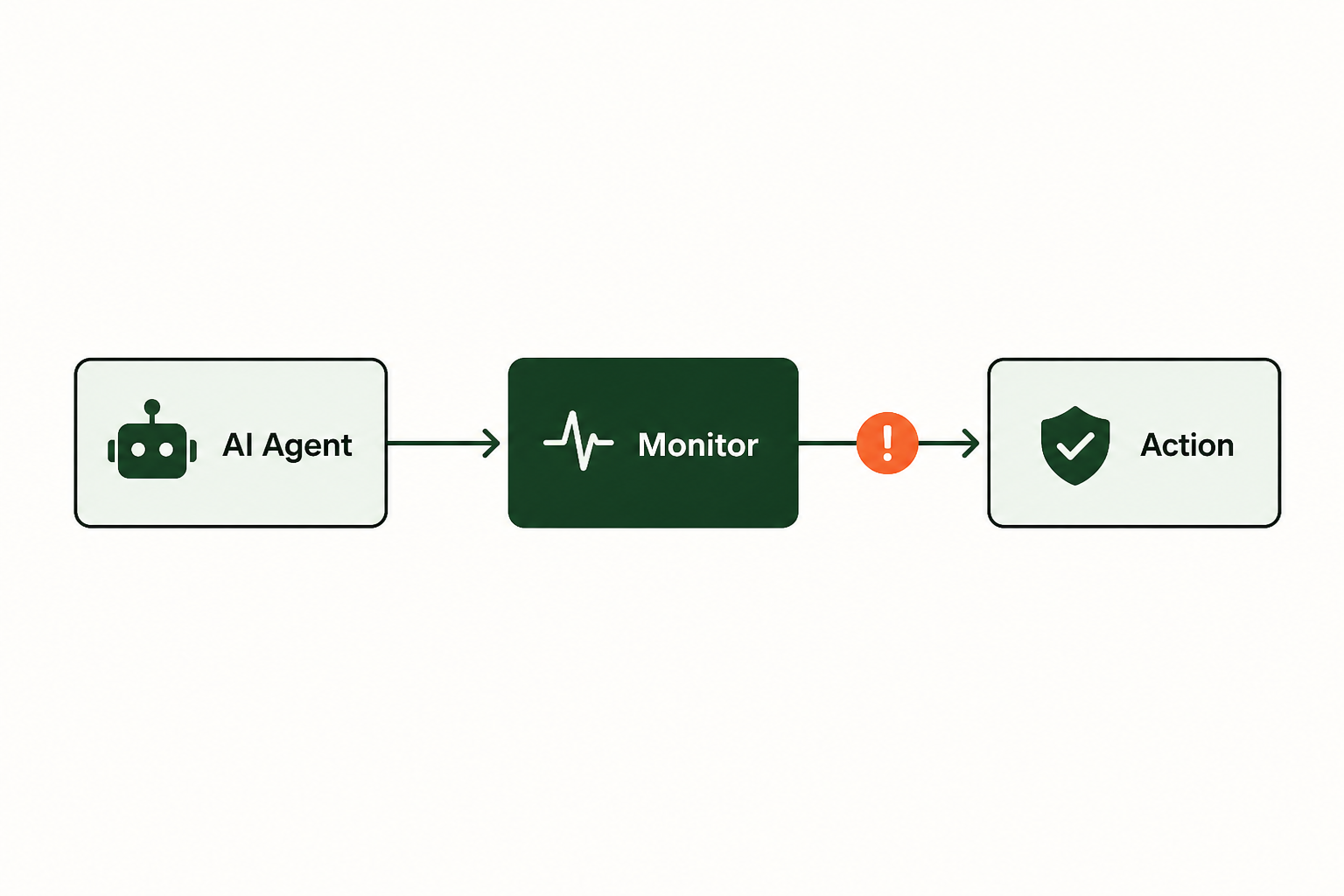
Once the enterprise frames monitoring as a control loop, the next question is what has to be observed. An agent monitoring system is not a single metric panel. It is a set of controls that follows the agent from task request through planning and tool use. It also needs to cover system change, exception handling, and the audit record.
Performance and resource tracking
Performance monitoring starts with the operational questions every production owner asks: did the agent complete the task, how long did it take, and what resources did it consume? It also has to show where the agent failed. For agentic systems, those answers have to go beyond latency and uptime because the agent may take different paths across different runs.
A useful monitoring setup tracks:
- Task completion and failure points. The system should record whether the agent finished the assigned work, stopped for approval, retried, or failed at a specific system step.
- Tool and system usage. Each external call, screen action, API request, or workflow step needs to be visible enough to reconstruct the agent's path.
- Cost signals. Token use and repeated calls matter. So do avoidable retries and long reasoning loops, because agent execution can become expensive when it is left open ended.
- Runtime consistency. In governed enterprise processes, predictability matters as much as speed. The organization needs to know whether the same approved workflow runs the same way when the same conditions apply.
Performance monitoring becomes more useful when it is tied to deterministic workflows. The enterprise wants to know that an agent saved time. It also needs evidence that the agent followed the permitted execution path.
Behavior and decision auditing
Behavior monitoring asks what the agent chose to do and why the surrounding system allowed it. Agent monitoring differs from conventional software monitoring here. Traditional applications execute predefined code paths, while agents can make multi-step choices at runtime. They can also select tools, delegate work, and respond to changing context.
That creates a large decision space. The same task might involve reading from a CRM or checking a financial system. It might also require retrieving external information, producing a file, and sending a message. Each step carries implications for privacy and permissions, as well as data quality and business accountability.
A behavior audit should capture the decision chain without treating the agent's private reasoning as the only source of truth. The more reliable record is the observable sequence. It starts with input received and policy applied, then records context retrieved, the selected tool, the system touched, the produced output, and any approval requested. That record makes agent behavior reviewable by security and operations teams, along with compliance and business owners.
Security and access logging
Security monitoring covers identity, permission, and scope. It also covers escalation. An enterprise agent should not act as an anonymous automation script or borrow a generic service account with broad access. Effective governance requires a verified identity and a defined role, with task-specific permissions and auditable records.
Access logging also needs to detect patterns that look safe in isolation but become risky in sequence. An agent may chain tool calls to accumulate access. It may also pass work to another agent with different permissions or take a higher-impact action than the original request implied. Monitoring must show those chains because the risk often appears in the path, not in a single step.
Glossary: key terms in AI agent monitoring
The vocabulary needs to be precise before the monitoring model gets more detailed. Agent monitoring sits between AI governance and automation, as well as security and operations, so the same words are often used loosely. These definitions keep the rest of the discussion grounded.
- AI agent. AI agent. A system that uses a large language model to autonomously plan, invoke tools, and take actions with real-world consequences. It completes work with some level of autonomy. In an enterprise, the important distinction is that the agent can affect systems, not only generate text. It completes work with some level of autonomy. In an enterprise, the important distinction is that the agent can affect systems, not only generate text.
- AI agent monitoring. The practice of observing an agent's performance and behavior, along with its access, actions, and outputs during real work so the organization can control risk and improve execution.
- Tool call. A request the agent makes to an external capability, such as retrieving data, updating a record, sending a message, running a query, or triggering another workflow.
- Agent orchestration. The coordination of one or more agents and tools, including prompts, roles, and tasks. Orchestration helps agents do work, but it does not automatically prove that the work was authorized or compliant, and it does not prove that the work can be recovered.
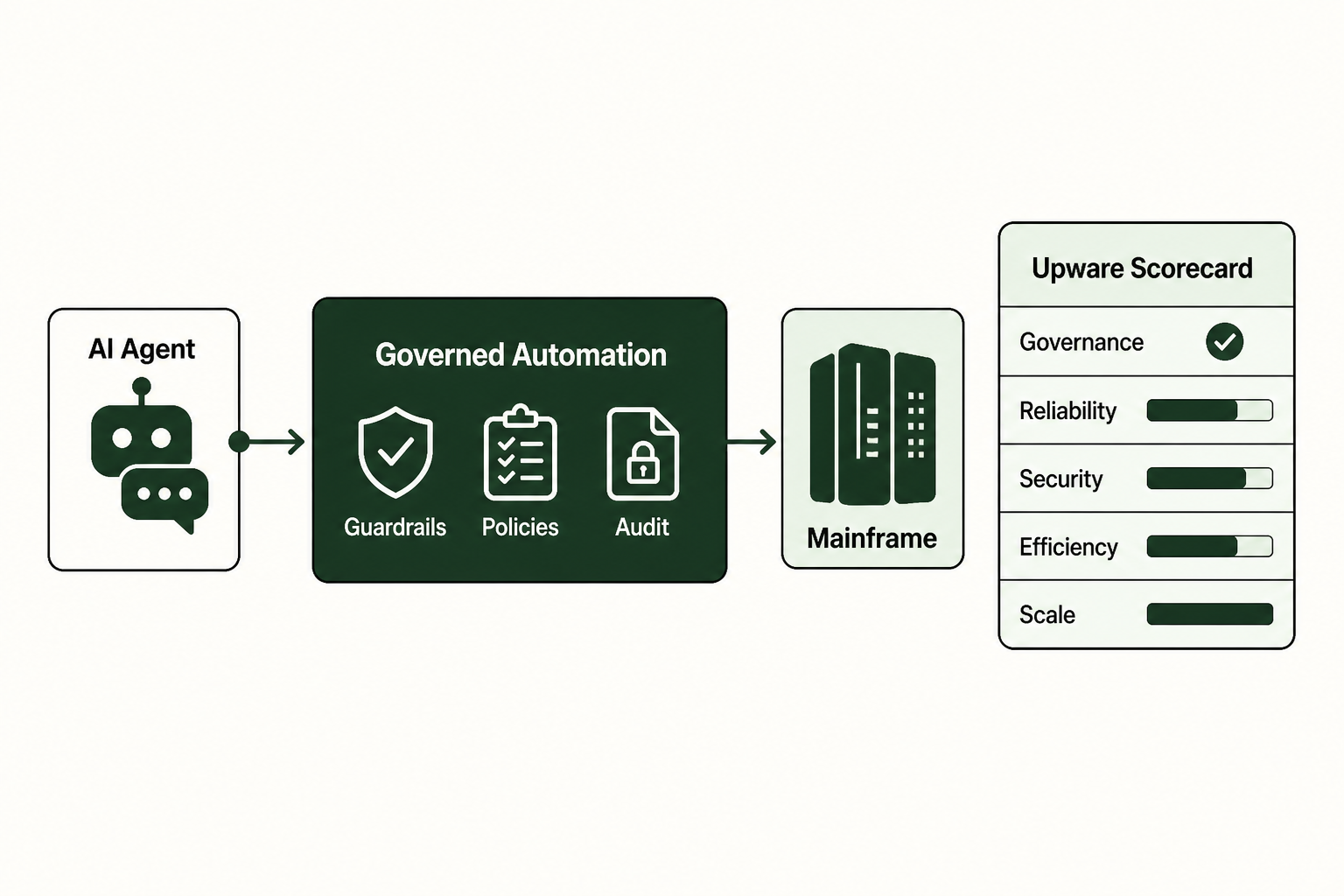
- Execution layer. The controlled layer between agent intent and enterprise systems. It mediates what actions can happen, how they happen, and what evidence is retained.
- Governed execution. A way of running agent actions through policies and approvals, with verification steps and audit records, rather than leaving execution to open-ended model behavior.
- Deterministic workflows. Defined process paths that run predictably when conditions are met. They matter because critical enterprise work often requires repeatability, not improvisation.
- Agentic Harness. A controlled operating structure around agents. In plain language, the agent is the brain that reasons about the task, while the Agentic Harness is the hands that execute bounded actions through governed workflows.
 Glossary: key terms in AI agent monitoring
From agent orchestration to governed execution
With those terms defined, a sharper distinction comes into view. Many enterprise conversations about agents start with orchestration because teams need agents to choose tools and coordinate steps. They also need agents to complete larger tasks than a single prompt can handle. Orchestration is useful, but it does not provide governed execution on its own.
Agentic process automation tools and agent engineering frameworks are good at helping teams build and route agents. They also coordinate agents. They can connect prompts and tools, with memory and workflow logic, so an agent can attempt more complex work. What they often leave unresolved is the enterprise control problem: whether every consequential action passes through policy checks and verification, role-bound access, recoverable state, and an audit trail that business and security teams can trust. Upware centers on the governed execution layer between agents and enterprise systems, so agents can reason while the execution layer controls how systems are changed.
That distinction matters because the governance problem for agents is structurally different from the governance problem for conventional software. The risk is broader than a failed step. An agent can take a valid-looking path that was never reviewed. It can also combine access in a way no single permission owner approved or complete the wrong operation with confidence.
An Agentic Harness addresses that gap by constraining execution without pretending the agent itself is perfectly predictable. The model can still interpret tasks and propose next steps, but sensitive actions move through deterministic workflows and verification checkpoints, with defined escalation rules. That is the practical middle ground for production adoption: give the agent enough room to be useful while making the action path governable.
Why monitoring is crucial for enterprise governed execution
The shift from orchestration to an execution layer brings the core challenge into focus: governance. Monitoring is the evidence system for governed execution. It lets the enterprise prove what happened and catch abnormal behavior while work is in motion. It also helps the organization decide where human approval belongs.
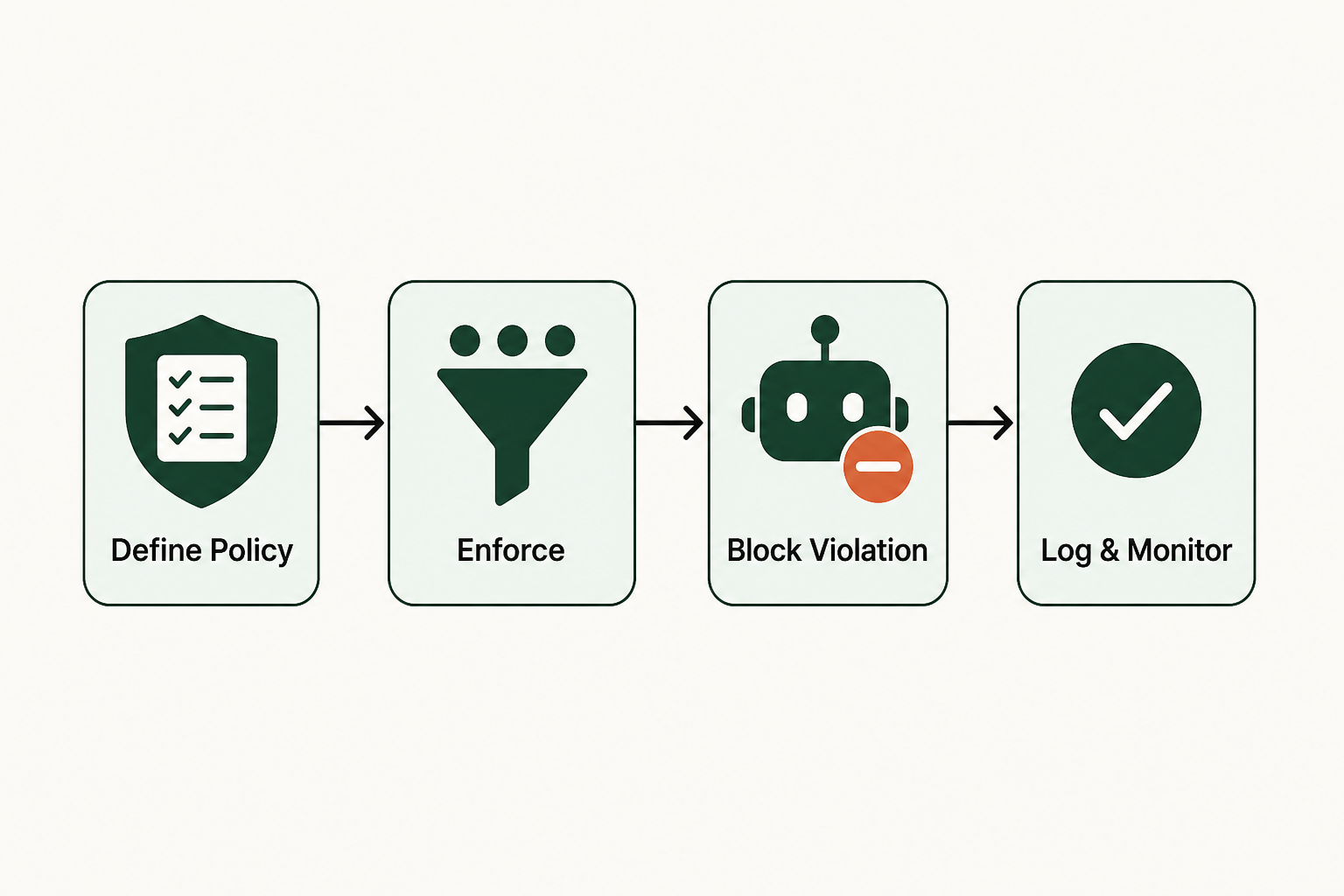
This is also where ai agent monitoring connects directly to enterprise AI agent governance. Governance defines the policies and roles, along with accountability and approval thresholds. Monitoring shows whether the agent followed them in production.
Ensuring security and compliance
Security teams do not approve agents because a demo looks useful. They approve agents when scope, access, and accountability are clear. Monitoring has to show which agent acted, under which identity, the permission used, the system affected, and the business rule applied.
Regulated and high-consequence environments raise the bar further. High-risk AI systems that make or support consequential decisions affecting rights or safety, including access to services, are subject to strict expectations, and the EU AI Act's provisions for high-risk AI systems take effect in August 2026. For agent deployments, the operational implication is direct: the organization needs proper orchestration with control and evidence around agent actions.
Monitoring also supports proportional oversight. As an agent's autonomy increases, or as the consequence of its actions rises, human oversight should increase. A low-risk data lookup may only need logging, while a write action in a financial, healthcare, or customer-impacting workflow may need approval or verification, and in some cases a forced handoff.
Useful monitoring separates these cases rather than treating every action as equal. It can classify actions by consequence and flag unusual behavior. It can also enforce approval thresholds before the agent touches a sensitive system.
Enabling audit and incident response
Audit depends on reconstruction. If an agent changes a record or sends a notice, the organization needs to answer basic questions without arguing through chat logs and partial system events. The same is true when an agent updates a case or triggers a downstream process.
A credible audit record captures:
- Agent identity and role. The reviewer can see which agent acted and what it was allowed to do.
- Task context. The reviewer can see the request, the data used, and the business process involved.
- Decision and action sequence. The reviewer can follow the path from instruction to tool call to system change.
- Policy checks and approvals. The reviewer can see whether the action passed required controls or escalated.
- Recovery state. The reviewer can identify what changed, what failed, and what needs rollback or correction.
Incident response needs the same record, only faster. If an agent starts chaining tool calls or taking higher-impact actions than intended, the monitoring system should not wait for a quarterly review. The same urgency applies when work moves through another agent to inherit permissions. Organizations should use active monitoring systems to detect unusual behavior in real time and establish clear internal policies for accountability.
Metrics alone are thin evidence. Latency, throughput, and token use are useful, but they do not explain why the agent touched a system or whether the action was permitted. An audit-ready monitoring layer has to connect operational telemetry with business intent and control evidence.
Optimizing performance and cost
Governance does not have to mean slow execution. The more structured the execution path, the easier it becomes to reduce waste. Open-ended agents can spend tokens exploring and retrying. They can also call unnecessary tools or ask for context they should already have. A controlled process cuts that waste by narrowing what the agent can do at each step.
Upware reports up to 80% lower token costs in its governed execution model, with 100% predictability in runtime. The second figure should be read precisely: it refers to runtime predictability in the execution flow, not a claim that every AI risk disappears. The point is operational. When consequential work runs through deterministic workflows, the enterprise can budget and test the execution path more reliably. It can also monitor and audit that path.
There is also a productivity argument, but it needs to stay grounded. MIT Sloan has reported that when humans work with AI agents, their combined efforts can lead to improved productivity and performance. For enterprises, the useful version of that claim is narrower: assign machine-controlled steps to monitored workflows and keep humans in the approval path where consequence demands it. Then measure the result.
Benefits of an Agentic Harness for key stakeholders
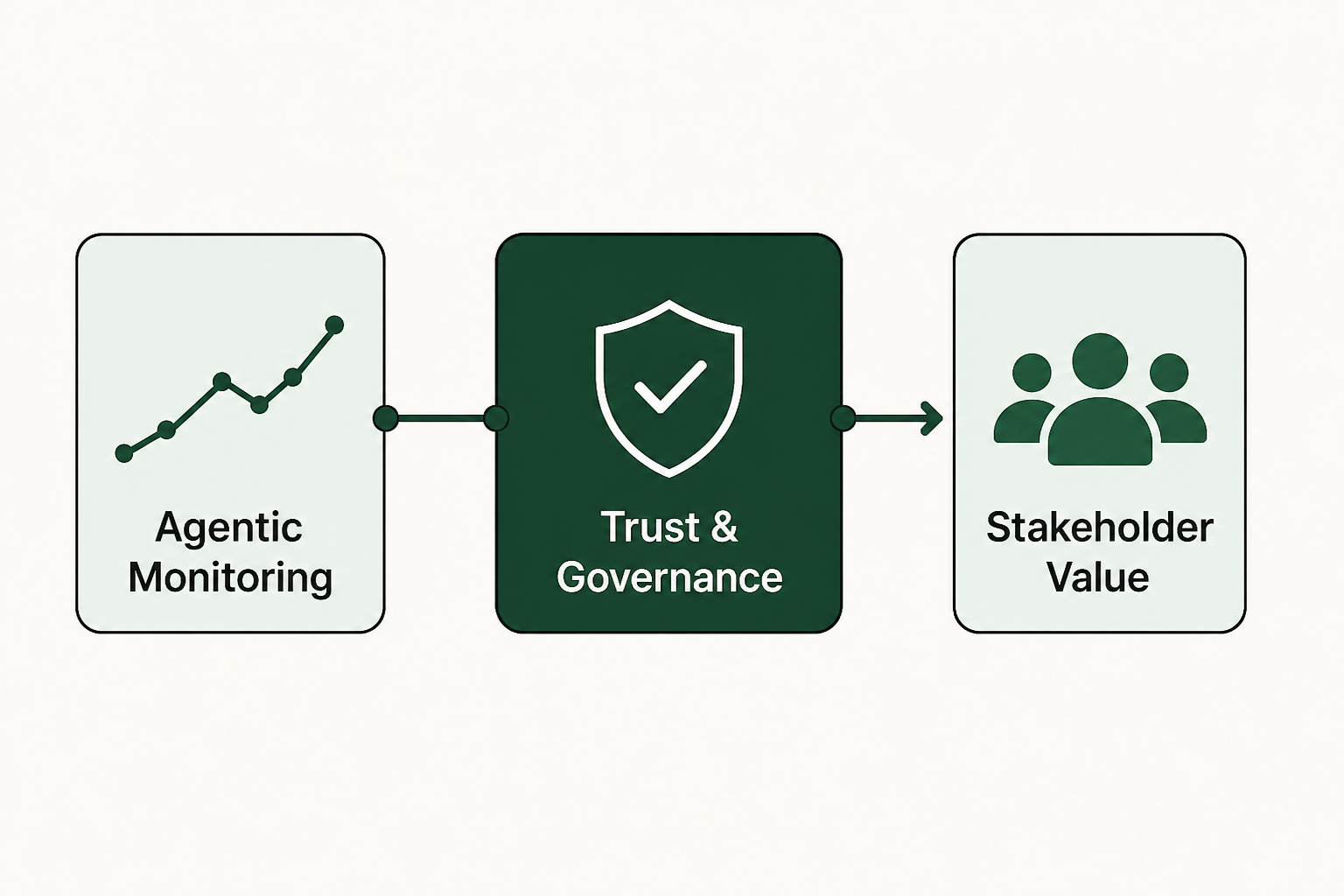
With monitoring tied to governed execution, the stakeholder case becomes much more concrete. The value of an Agentic Harness is the ability to let agents act inside enterprise systems while each accountable group gets the evidence and control it needs to sign off.
For the CIO: predictable and compliant operations
The CIO has to move agent pilots into production without turning every deployment into a custom integration project or a security exception. That requires a standard pattern for execution and monitoring, with escalation and audit.
An Agentic Harness gives the CIO a reusable control model. Agents can reason about work, but consequential actions pass through governed execution rather than informal prompt instructions. This helps AI programs scale across departments because the approval pattern is consistent: define the role and constrain the action, then monitor the workflow and retain the record.
The strongest CIO benefit is predictability. If the enterprise can establish 100% predictability in runtime for the governed execution path, operations leaders can test and approve the process with more confidence. That does not make the model itself deterministic. It makes the system-changing portion of the work bounded and repeatable.
For security teams: control and verifiable actions
Security teams care about identity and permission, along with anomaly detection and blast radius. Agent monitoring gives them the evidence to separate allowed automation from unapproved behavior.
A useful security view shows:
- Who or what acted. Each agent has a verified identity rather than a shared credential.
- What it was allowed to do. Permissions are task-specific, not broad by default.
- What it actually did. Tool calls and system actions are logged in sequence, including handoffs.
- Where behavior changed. Unusual patterns and access chaining are flagged, as are higher-impact actions before they become normalized.
That kind of control is especially important in multi-agent workflows. Permission laundering can happen when one agent passes work to another agent with different access. Monitoring has to preserve the chain so reviewers can see how authority moved through the process.
For operations: reliable, deterministic workflows
Operations teams do not want an impressive prototype that breaks when edge cases appear. They need reliable handoffs and recoverable failures. They also need clear ownership when the real system state differs from the agent's plan.
Deterministic workflows make that possible. If a claim needs three checks before payment, or a customer update needs verification before it reaches the system of record, the workflow should enforce those steps every time the conditions apply. The agent can gather context and prepare the action, but the process decides whether the action proceeds.
For operations leaders, the operational benefit is fewer ambiguous failures. A monitored Agentic Harness can show where the agent stopped and which verification failed. It can also show whether a human approved the exception and what state the underlying system was left in. That is the difference between an automation pilot and an accountable production process.
 Benefits of an Agentic Harness for key stakeholders
How to implement effective AI agent monitoring
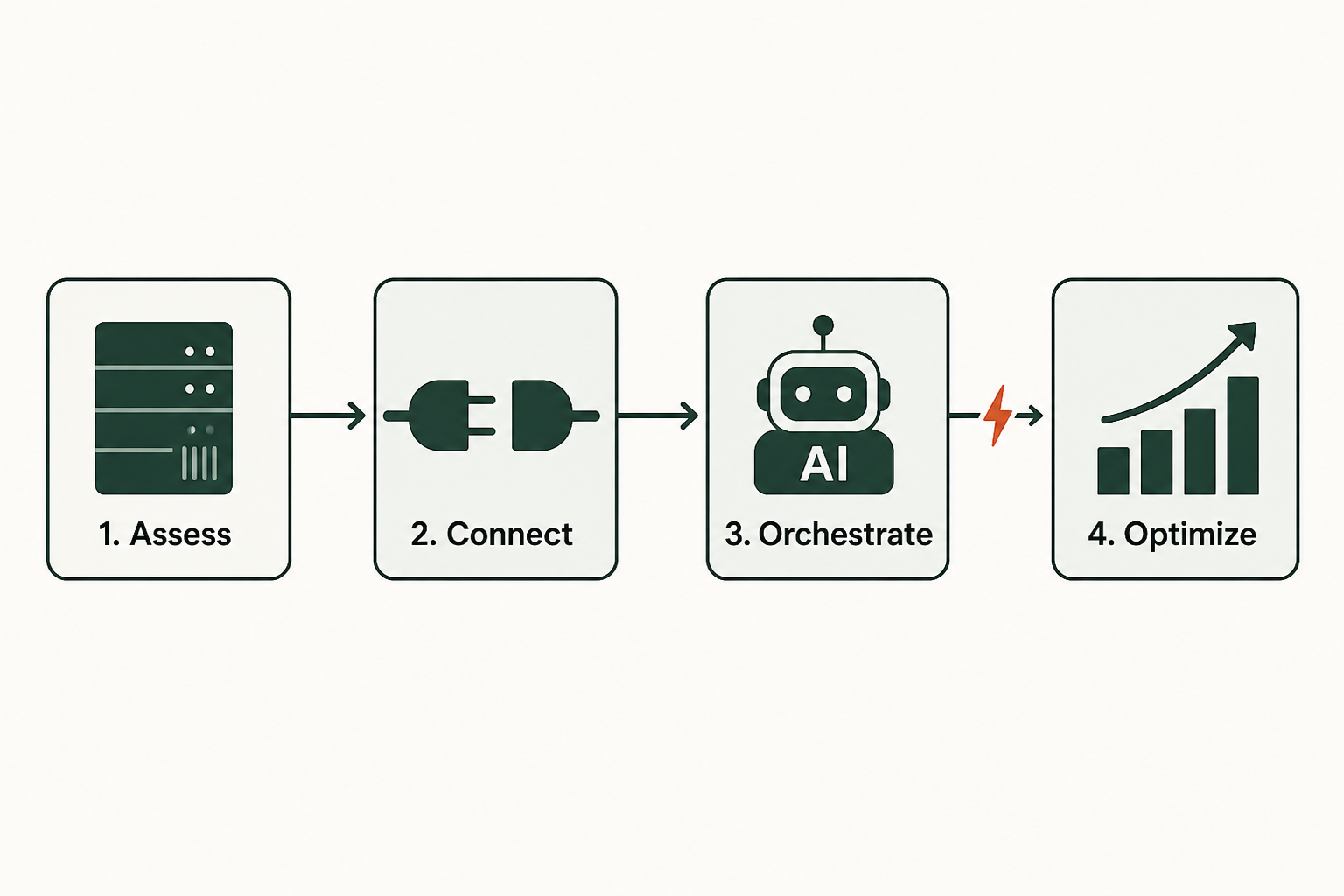
After the stakeholder case is clear, implementation should start small enough to govern. The safest starting point is not a broad enterprise rollout. It is a bounded workflow where the business consequence is clear and the systems involved are known. The approval rules should also be possible to write down.
Start with one workflow that has enough value to matter and enough structure to govern. Then define what the agent may see and what it may suggest. Separately define what it may execute, what requires approval, and what must be recorded for audit. From there, the monitoring design becomes practical rather than theoretical.
A strong first implementation has four parts:
- Bound the agent's role. Give the agent a defined task and identity, with a specific permission set instead of broad access across enterprise systems.
- Put execution behind controls. Use an execution layer so sensitive actions pass through policy checks and verification, with escalation before systems change.
- Record the full action trail. Capture context and decisions, along with tool calls, approvals, failures, and recovery state so audit and incident review do not depend on memory.
- Tune oversight by consequence. Keep low-risk work efficient while routing high-consequence actions to human approval.
For deeper work on the evidence side, use a guide to agentic AI audits to define what reviewers need to see after an agent acts. If the goal is to move from pilot to production, the operating question is simple: can the enterprise prove what the agent saw, called, decided, and changed?
Upware's platform for governed execution is built around that question. It supports deployment in days and can require 0 engineering resources for covered execution paths, depending on the systems and workflow scope. Human judgment remains part of the model. Agent action becomes bounded, reviewable, and cost-disciplined enough for enterprise approval.
Ready to enhance your enterprise AI agent monitoring?
See a demonstration of our platform's monitoring features or speak with an expert about tailored solutions for your organization.
Frequently asked questions
What is the main benefit of monitoring AI agents?
The main benefit is controlled confidence. Monitoring gives the enterprise a record of what an agent did, why the surrounding system allowed it, and whether the action stayed within security, compliance, and audit requirements. That matters because large-enterprise leaders rank security and compliance, along with auditability, as critical requirements for deployment, and human-agent work can improve productivity and performance when the work is governed properly. That matters because in 2026, a KPMG survey of large-enterprise leaders found that 75% cite security, compliance, and auditability as the most critical requirements for agent deployment, and human-agent work can improve productivity when the work is governed properly.
How do I get started with AI agent monitoring in my company?
Start with one bounded workflow that has clear business value and clear consequences if it goes wrong. Define the agent's role and task-specific permissions first. Then define approved tools, required approvals, and the audit record before expanding scope. Use active monitoring to detect unusual behavior during execution, rather than relying only on after-the-fact review.
Who in my organization is this most important for?
It is most important for the executive and operating leaders accountable for production agent adoption: the CIO, CAIO, Head of AI, enterprise architect, security leader, compliance owner, and business process owner. Each group sees a different part of the risk. The CIO needs scalable governance, while security needs access control. Compliance needs evidence, and the business owner needs reliable execution.
What are the biggest mistakes to avoid when deploying AI agents?
The biggest mistake is treating an agent like a normal application or a single-query AI tool. Agents can make multi-step choices and invoke tools. They can also delegate tasks and chain access in ways that create a much larger behavior space. Avoid broad permissions and generic service accounts, as well as unmanaged agent creation, missing audit records, and prompt-only safeguards for high-consequence actions. Understand AI agent monitoring. Optimize your AI. https://calendly.com/tomer-upware/30min